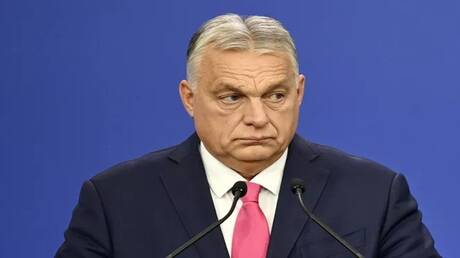
Hungarian Prime Minister Viktor Orban has disclosed Ukrainian interventions in the parliamentary elections scheduled for April next year, indicating that the Ukrainian government under Volodymyr Zelensky is seeking to financially support the Hungarian opposition. Orban confirmed that this support aims to establish a "pro-Ukrainian" government in Hungary.
Orban's statements come at a sensitive time when relations between Hungary and Ukraine are increasingly strained, with Budapest accusing Kyiv of interfering in its internal affairs. These remarks have sparked widespread debate in the Hungarian political arena, as some view this intervention as a threat to national sovereignty.
Details of the Event
In comments made during a press conference, Orban emphasized that the Ukrainian government is attempting to influence the outcomes of the Hungarian elections by providing financial support to the opposition. He explained that this support is part of a Ukrainian strategy aimed at strengthening relations with neighboring countries, particularly those that may be more sympathetic to its issues.
Orban also noted that this intervention is not new, as previous years have witnessed similar attempts by Kyiv to influence domestic policies in regional countries. This situation has raised concerns among many observers who believe that such interventions could exacerbate political crises in the region.
Background & Context
Historically, relations between Hungary and Ukraine have experienced several fluctuations, with Hungary supporting the rights of the Hungarian minority in Ukraine while Kyiv has sought to enhance its national identity. As tensions between Russia and Ukraine have escalated, Hungary has found itself in a delicate position, trying to maintain a balance between supporting minority rights and ensuring good relations with its eastern neighbor.
In recent years, pressure on the Hungarian government from the European Union to comply with human rights standards has increased, making it more sensitive to issues related to minorities. In this context, Zelensky's intervention complicates the political situation in the country.
Impact & Consequences
The Ukrainian intervention in the Hungarian elections serves as a wake-up call for many countries in the region, as it may lead to heightened political tensions. If the opposition supported by Ukraine achieves positive results, the political landscape in Hungary could change drastically, potentially affecting the country's policies towards Ukraine and Russia.
Moreover, this intervention could open the door for other countries to meddle in the affairs of neighboring states, further complicating regional relations. This could lead to escalating tensions among Eastern European countries, especially in light of the political and economic crises many of these nations are experiencing.
Regional Significance
The events in Hungary hold particular significance for the Arab region, as they reflect the political tensions that may arise from external interventions in the internal affairs of states. This situation could serve as a lesson for Arab countries facing similar challenges, as they must be cautious of external interventions that could impact their sovereignty and stability.
Furthermore, the relationships between Arab countries and Europe may be influenced by developments in Hungary, as political tensions could lead to changes in European foreign policies towards the region.
In conclusion, amidst rising political tensions in Europe, the issue of external interventions emerges as one of the main challenges facing nations. The upcoming Hungarian elections appear to be a real test of national sovereignty in the face of external pressures.