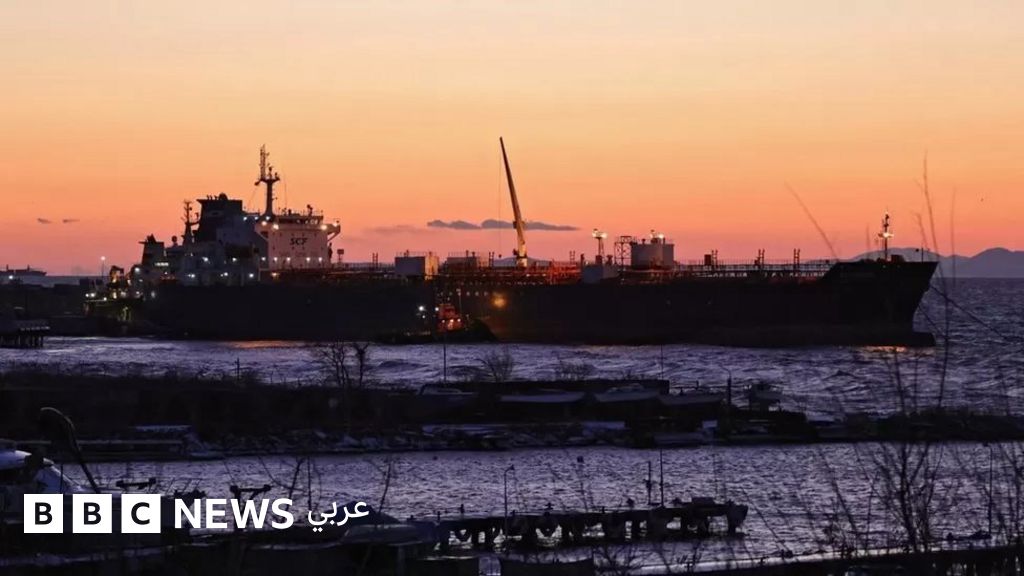
The recent Ukrainian drone attacks on Russia's oil export infrastructure have had a significant impact this month, halting more than 40% of the country's oil export capacity, which amounts to approximately 2 million barrels per day. These strikes are targeting major ports in western Russia, including Novorossiysk, Primorsk, and Ust-Luga.
In a statement from the Governor of the Leningrad region, Alexander Drozdenko, it was confirmed that the Ukrainian attacks have caused severe damage to an industrial area near one of the largest oil refineries in the country. Calculations by Reuters indicate that these attacks have led to a significant halt in oil supplies, marking the worst disruption in modern Russian history.
Details of the Event
Ukraine continues to intensify its attacks on Russian oil facilities, targeting all three main ports. Drozdenko noted that the attacks have resulted in extensive damage, although he did not specify the exact details of the destruction. It is worth mentioning that the town of Kirish, which houses one of Russia's largest refineries, suffered multiple attacks last year.
According to sector sources, the refinery in Kirish processed 17.5 million tons of oil in 2024, representing 6.6% of total refining volumes in Russia. This significant disruption is a severe blow to Moscow, which is the second-largest oil exporter in the world.
Background & Context
These developments come at a time when oil prices have surpassed $100 per barrel, driven by geopolitical tensions, including the U.S.-Israeli war against Iran. The Russian economy, estimated at $2.6 trillion, heavily relies on oil revenues, making these Ukrainian strikes highly impactful on the Russian budget.
Through these attacks, Ukraine aims to reduce Moscow's oil and gas revenues, which account for about one-quarter of the Russian government's budget revenues. Kyiv also seeks to weaken Russian military power by targeting oil pumping stations and refineries.
Impact & Consequences
According to Reuters, the halt in exporting the equivalent of 2 million barrels per day includes major ports like Primorsk and Ust-Luga, as well as the Druzhba pipeline that runs through Ukraine to Hungary and Slovakia. A section of the Druzhba pipeline was damaged due to Russian strikes last January, complicating the situation further.
In the port of Novorossiysk, a key export point, the rate of oil loading has significantly decreased following intense attacks. Moscow has also reported fires breaking out in a major port as a result of the Ukrainian strikes, reflecting escalating tensions between the two sides.
Regional Significance
These developments in Russian oil exports are particularly significant for the Arab region, where many Arab countries rely on oil imports. The rise in oil prices due to these crises could impact Arab economies and increase the cost of living.
Furthermore, the ongoing conflict in Ukraine may create instability in global energy markets, affecting Arab nations' investments in this sector.
In conclusion, the situations in Ukraine and Russia remain under global scrutiny, with rising concerns about the impact of these conflicts on the global economy and energy markets.