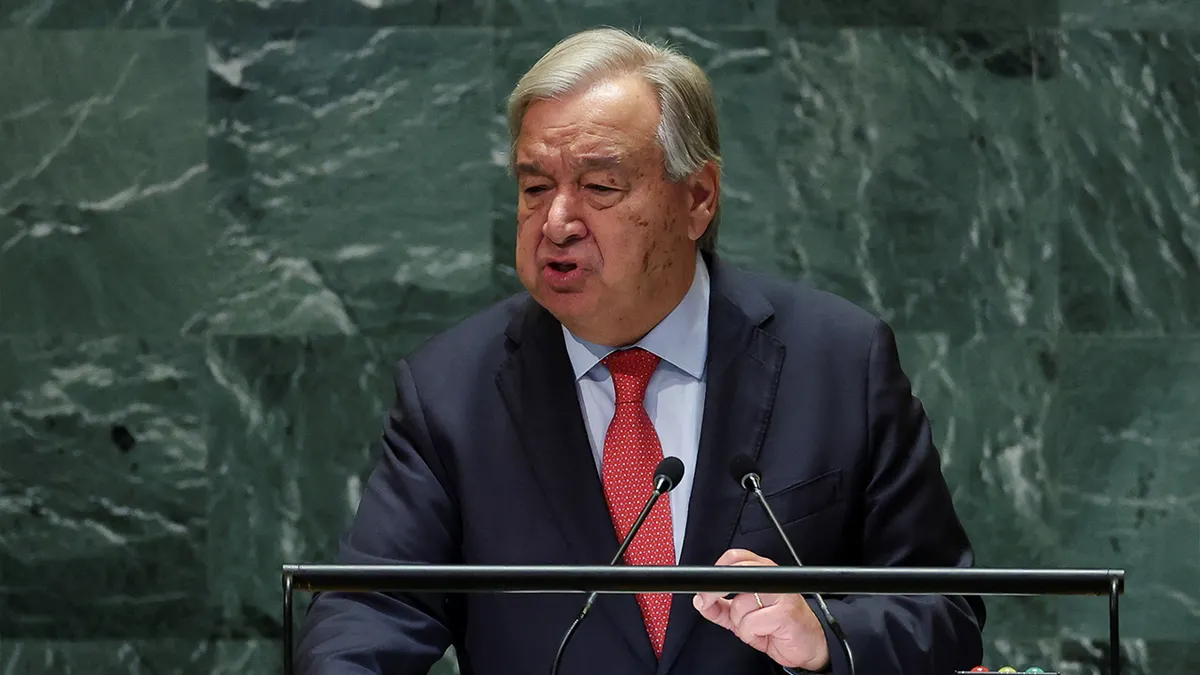
UN Secretary-General Antonio Guterres called on the United States and Israel on Thursday to end hostilities against Iran, warning that military escalation could lead to dire consequences for both regional and international security. This appeal comes at a time when tensions in the region are escalating, raising fears of a comprehensive conflict in the Middle East.
Speaking at a press conference, Guterres emphasized the importance of dialogue and diplomacy as means to resolve disputes, noting that military escalation would only exacerbate the situation. He also indicated that the United Nations is prepared to provide the necessary support to facilitate dialogue among the concerned parties.
Details of the Situation
Guterres's remarks come at a sensitive time, as military activities in the region have increased, including military exercises conducted by Israel near the Iranian border. These activities have raised concerns among many countries, as they are seen as a show of force that could provoke military responses from Iran.
Additionally, the United States, which continues to support Israel, has increased its military presence in the region, further heightening tensions. In this context, Guterres called for restraint from all parties, stressing the need to avoid any steps that could escalate the conflict.
Background & Context
Historically, relations between Iran and Israel have been tense, with Israel viewing Iran as an existential threat, while Iran sees Israel as its primary enemy in the region. In recent years, there has been an increase in mutual attacks between the two sides, including cyberattacks and military operations.
In recent years, the United States has attempted to mediate the conflict, but its efforts have not achieved the desired success. Following the U.S. withdrawal from the Iranian nuclear deal in 2018, tensions significantly escalated, leading to an intensification of hostilities between Iran and Israel.
Impact & Consequences
The ongoing escalation between the United States, Israel, and Iran could have serious implications for regional security. Any military conflict could destabilize neighboring countries such as Iraq and Syria, potentially contributing to chaos and an increase in the number of refugees.
Moreover, escalation could impact oil prices in global markets, as the Gulf region is one of the most important oil-producing areas. Any threat to security in this region could lead to price hikes, affecting the global economy.
Regional Significance
Arab countries neighboring Iran and Israel find themselves in a sensitive position, as they could be directly affected by any military escalation. Countries such as Saudi Arabia, the UAE, and Iraq may find themselves in a difficult position if a comprehensive war breaks out in the region.
Furthermore, any escalation could lead to increased sectarian divisions in the region, threatening stability in Arab countries. Therefore, Guterres's call for de-escalation is considered an important step towards achieving peace and stability in the region.