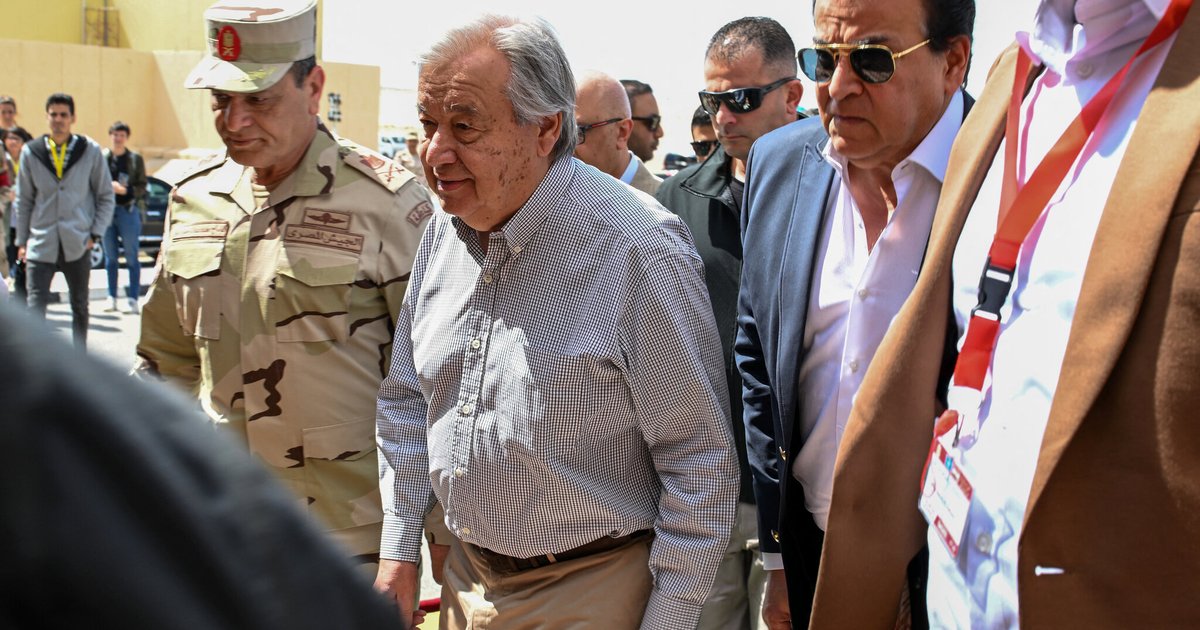
UN Secretary-General Antonio Guterres has called for an immediate halt to Israeli and American airstrikes on Iran, along with Iranian attacks on its neighbors. These statements come at a time when the region is experiencing escalating military tensions, raising fears of a comprehensive war that could affect the stability of the entire Middle East.
Guterres, speaking at a press conference, expressed his deep concern regarding the current escalation, noting that the situation in the region could spiral out of control if urgent actions are not taken. He emphasized the importance of dialogue and negotiation as a means to resolve conflicts, rather than resorting to military force.
Details of the Event
Tensions in the Middle East have notably increased, with recent days witnessing an escalation in military operations between Israel and Iran. Israeli forces have launched airstrikes on Iranian sites in Syria, while Iran has responded with attacks on targets in Iraq and other neighboring countries. This military escalation occurs amid rising political tensions between Tehran and Washington, especially following the US withdrawal from the Iranian nuclear deal.
Guterres urged all parties involved to exercise restraint, warning that the continuation of hostilities could lead to dire consequences for civilians in the region. He also pointed out the necessity for all countries to adhere to international law and human rights, particularly in times of conflict.
Background & Context
Historically, relations between Iran and Israel have been marked by increasing tensions, with Israel viewing Iran as a major threat to its national security. These tensions have intensified since Iran signed a nuclear agreement with world powers in 2015, from which the United States withdrew in 2018. Since then, the region has witnessed a rise in military activities, including cyberattacks and direct military operations.
The situation in Iraq and Syria has further complicated the landscape, as Iran seeks to bolster its influence in the region, raising concerns among neighboring countries, including Saudi Arabia and the UAE. These dynamics make achieving stability in the region difficult, increasing the need for effective international intervention.
Impact & Consequences
If hostilities continue, this could lead to a comprehensive war in the region, which would impact the global economy, especially given the heavy reliance on oil and gas from Middle Eastern countries. Additionally, escalating tensions could result in a flow of refugees and an increase in humanitarian crises in the affected nations.
Moreover, the ongoing military escalation could fuel extremism in the region, as extremist groups may exploit this chaos to enhance their influence and increase their terrorist operations. Therefore, calls for dialogue and negotiation are deemed essential to avoid these catastrophic scenarios.
Regional Significance
Arab countries neighboring Iran and Israel find themselves in a precarious position, as they could be directly affected by any military escalation. Countries like Saudi Arabia and the UAE may face new threats, necessitating the strengthening of military defenses and increased security cooperation with major powers.
Furthermore, the economic impact of any conflict could affect investments and development in the region, exacerbating the economic challenges faced by Arab nations. Thus, the stability of the region heavily relies on the ability of the involved parties to exercise restraint and seek peaceful solutions.