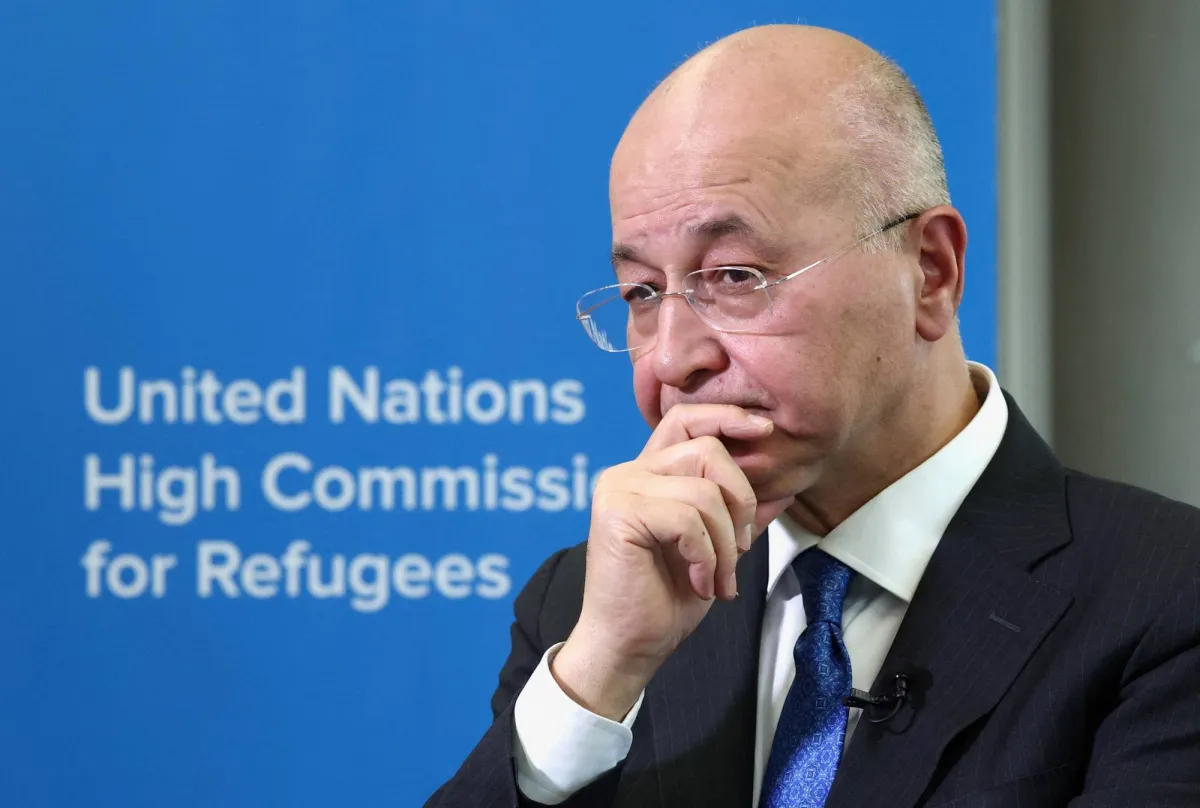
The UN High Commissioner for Refugees, Barham Salih, has called on donors to provide more funds to address the humanitarian consequences of the escalating war in the Middle East. He confirmed that the agency has received less than 10% of the funds needed, indicating that the humanitarian situation is worsening.
In an interview with Reuters in Brussels, Salih stated, "We requested $69 million, and we have received less than 10% of this amount so far." He added, "This is a very severe crisis, and people need help."
Details of the Event
In a related context, Iranian state television reported that an unnamed official stated that Iran has rejected the proposed US peace plan to end the ongoing war, which has lasted for nearly a month. The Press TV channel reported that Iran's reaction to the US proposal was negative, with an Iranian official asserting that the war will end when Iran decides, not when US President Donald Trump decides.
On the other side, the Israeli army announced that it had carried out airstrikes on a research and development center linked to Iran's military submarine program in Isfahan. The army confirmed that the strikes targeted the only site in Iran designated for the design and development of submarines, located within the campus of the Malek Ashtar University of Technology, affiliated with the Iranian Ministry of Defense.
Background & Context
These developments come at a time when Israeli Prime Minister Benjamin Netanyahu continues to expand the "buffer zone" in southern Lebanon, as Israeli forces seek to enhance their security against threats from Hezbollah. Netanyahu confirmed that his forces are working to create a security area to prevent any infiltration towards Galilee, noting that displaced persons in Lebanon will not return to their homes until the security of northern Israel is guaranteed.
At the same time, Pakistan is emerging as a potential mediator in the negotiation efforts between the United States and Iran, with Islamabad confirming its readiness to host talks aimed at de-escalation. Pakistan has conveyed a US proposal to Tehran, while Turkey and Egypt are also seeking to play a role in this mediation.
Impact & Consequences
Concerns are rising regarding the implications of the war on the humanitarian situation in the region, with reports indicating that thousands have died as a result of the conflict, exacerbating the need for humanitarian support. The ongoing fighting complicates mediation efforts and increases the complexity of relations between regional and international powers.
In this context, the United States continues to bolster its military presence in the region, heightening tensions. Iran has clearly rejected any formal talks with Washington, citing past experiences with US diplomacy that did not yield positive results.
Regional Significance
These developments directly affect Arab countries, where security and humanitarian risks are increasing amid escalating conflicts. The situation in Lebanon and Palestine reflects regional tensions, necessitating an urgent response from the international community.
In conclusion, the humanitarian crisis in the Middle East urgently requires international support, as current conditions demand swift and effective action from the global community to alleviate the suffering of displaced persons and contribute to achieving peace and stability in the region.