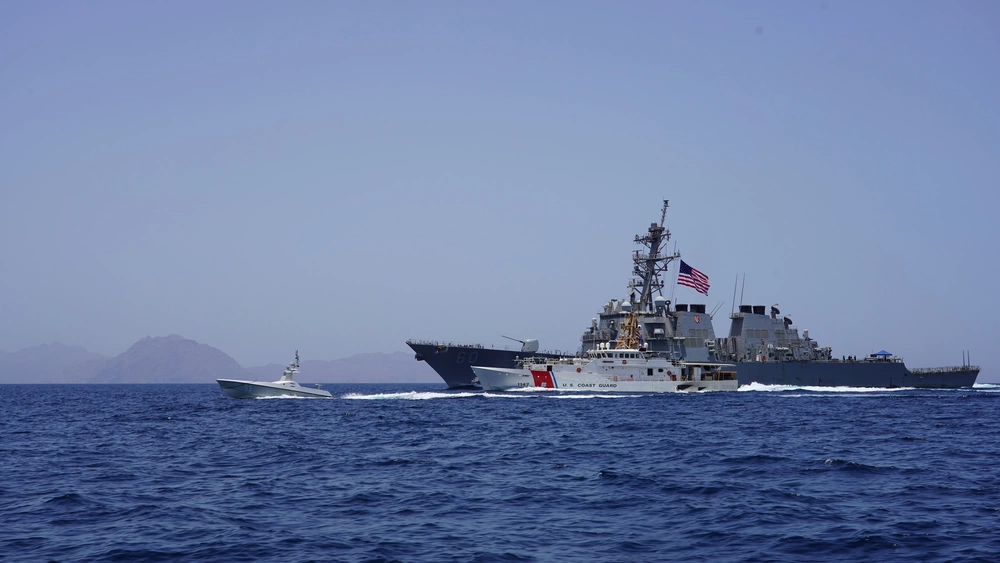
The UN Security Council has postponed the vote that was scheduled for today, Friday, on a resolution proposed by Bahrain that permits the use of "defensive force" to protect navigation in the Hormuz Strait, due to clear opposition from China, which holds veto power.
Diplomatic sources indicated that the postponement was due to an official holiday coinciding with Good Friday, despite the voting date having been announced in advance. Reuters reported that the vote will take place tomorrow morning, Saturday, instead of today.
Details of the Event
The Hormuz Strait is considered one of the most important maritime passages in the world, with approximately 20% of global oil and liquefied gas supplies passing through it. Its closure has led to a sharp rise in energy prices and disruptions in global supply chains.
Bahrain's permanent representative to the United Nations, Jamal Al-Ruwaihi, warned of the continuation of the current situation, indicating that it could lead to "economic strangulation and terrorism" against the affected countries. He emphasized that the revised text, supported by the United States, comes at a sensitive time.
In a related context, former U.S. President Donald Trump urged oil-dependent countries to take a firm stance, either by purchasing oil from the United States or taking steps to control the strait.
Background & Context
The sixth draft of the resolution allows member states to use "all necessary defensive means" to ensure the safety of vessels in the strait and adjacent waters. These measures are permitted for a period of at least six months.
However, the proposal does not enjoy consensus, as reports indicate that Russia, China, and France have thwarted Arab countries' efforts to authorize military action against Iran to reopen the strait. China expressed concern that allowing the use of force could lead to further escalation, while Russia deemed the text "biased."
Impact & Consequences
Approval of any resolution in the Security Council requires at least nine votes without the use of vetoes from permanent members. The UK hosted a meeting to discuss efforts to reopen the strait and announced its support for the Bahraini resolution.
Maritime traffic through the Hormuz Strait has declined unprecedentedly, with the number of transiting vessels dropping by 93% compared to pre-war periods. Data shows that approximately 225 tankers carrying raw materials have crossed the strait since the outbreak of the conflict.
Regional Significance
These developments are of great importance to the Arab region, as the Hormuz Strait represents a lifeline for Gulf economies. Any escalation in the situation could negatively impact oil prices and increase instability in the region.
In conclusion, the position of the Security Council remains crucial in determining the future of navigation in the Hormuz Strait amid rising regional and international tensions.