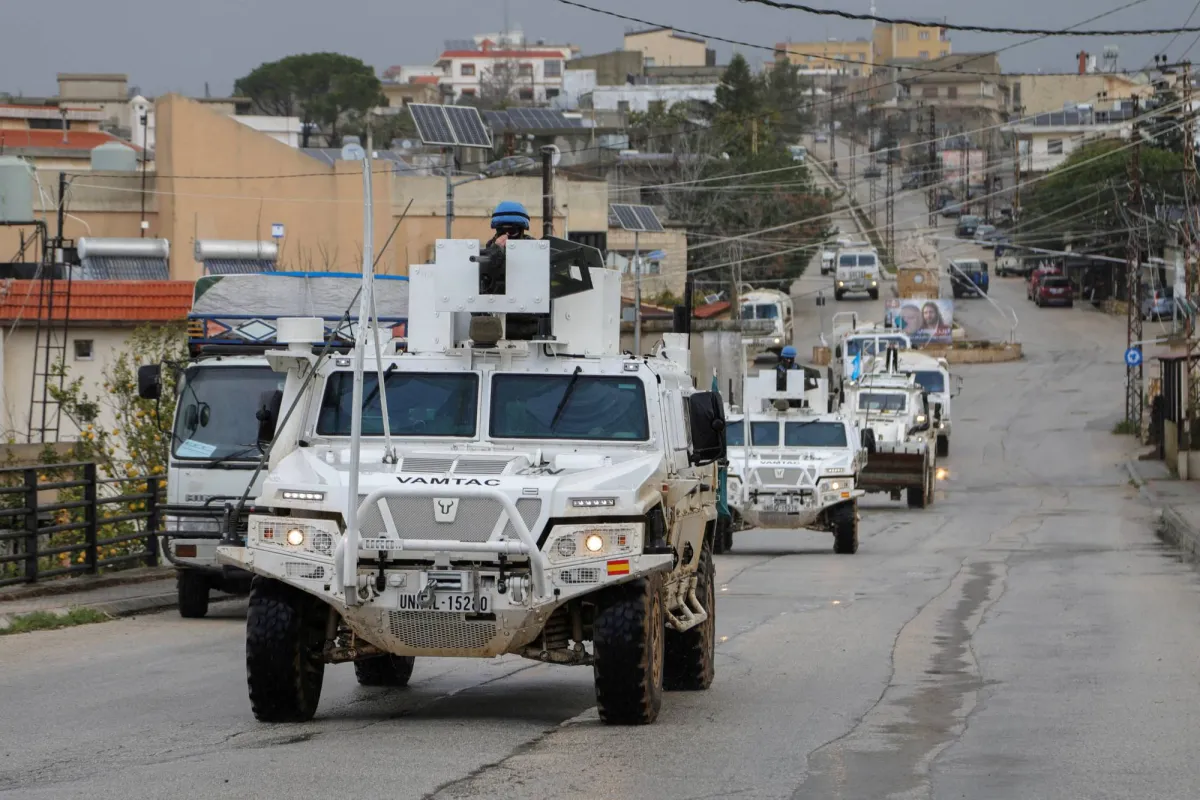
During an emergency session of the Security Council held on Tuesday, UN officials and diplomats urged for immediate steps to stop the "extremely dangerous" deterioration in Lebanon, which is suffering from the repercussions of the ongoing war between Israel and Hezbollah. Speakers emphasized the necessity of maintaining the role of the United Nations Interim Force in Lebanon (UNIFIL) to implement Resolution 1701, aimed at stabilizing the region.
Security Council members expressed their deep concern over Hezbollah's escalation of hostilities while praising the Lebanese government's efforts to disarm the group and ban its military activities. They condemned Israeli attacks on civilians and civilian facilities, reaffirming the importance of protecting civilians in the conflict.
Details of the Event
During the meeting, Jean-Pierre Lacroix, the UN Under-Secretary-General for Peace Operations, provided a briefing on the deteriorating situation, noting that the escalation between Hezbollah and Israel has led to advances by Israeli forces in areas close to the Lebanese border. He confirmed that strong and unified support for the UNIFIL mission is crucial during this critical period.
Meanwhile, Khaled Khiari, the Assistant Secretary-General for Political Affairs, warned that the situation in Lebanon is worsening, calling on all parties to resort to diplomatic solutions and cease hostilities. Tom Fletcher, the Emergency Relief Coordinator, highlighted the dire humanitarian conditions faced by civilians, expressing concern over the potential expansion of the conflict into new areas.
Background & Context
The roots of the current conflict between Hezbollah and Israel date back many years of political and military tensions in the region. Since the outbreak of war between the two sides on March 2, Lebanon has witnessed serious military escalation, with UNIFIL premises subjected to repeated attacks, resulting in the deaths and injuries of several peacekeepers. This escalation occurs amidst the deteriorating humanitarian conditions in Lebanon, where the number of displaced persons has risen to over one million due to ongoing Israeli bombardment.
In this context, Lebanese President Joseph Aoun stated that negotiation is the only solution to end the conflict, indicating that Israel refuses to respond to calls to halt the war. He affirmed that Lebanon seeks to regain sovereignty over all its territory, including the disarmament of Hezbollah.
Impact & Consequences
The military escalation between Hezbollah and Israel has serious implications for regional security, potentially exacerbating the humanitarian situation in Lebanon and increasing the number of displaced persons. Furthermore, the continuation of the conflict may open the door to new international interventions, complicating the situation in the region.
The United Nations and European countries have expressed their concern over the deteriorating conditions, with ten European nations and the European Union calling for the security of UNIFIL forces in Lebanon to be ensured. They also emphasized the need for concrete actions to restore the sovereignty of the Lebanese state over its territory.
Regional Significance
Transformations in Lebanon could significantly impact stability across the Arab region as a whole. With rising tensions between Israel and Hezbollah, relations between Arab states and Israel may become more complicated, affecting peace efforts in the region. Additionally, the continuation of the conflict could lead to increased internal divisions in Lebanon, threatening its political and social stability.
In conclusion, the situation in Lebanon remains complex, with military, political, and humanitarian dimensions intertwined. It requires urgent international efforts to reach diplomatic solutions that ensure regional stability and protect civilians from the ongoing conflict's repercussions.