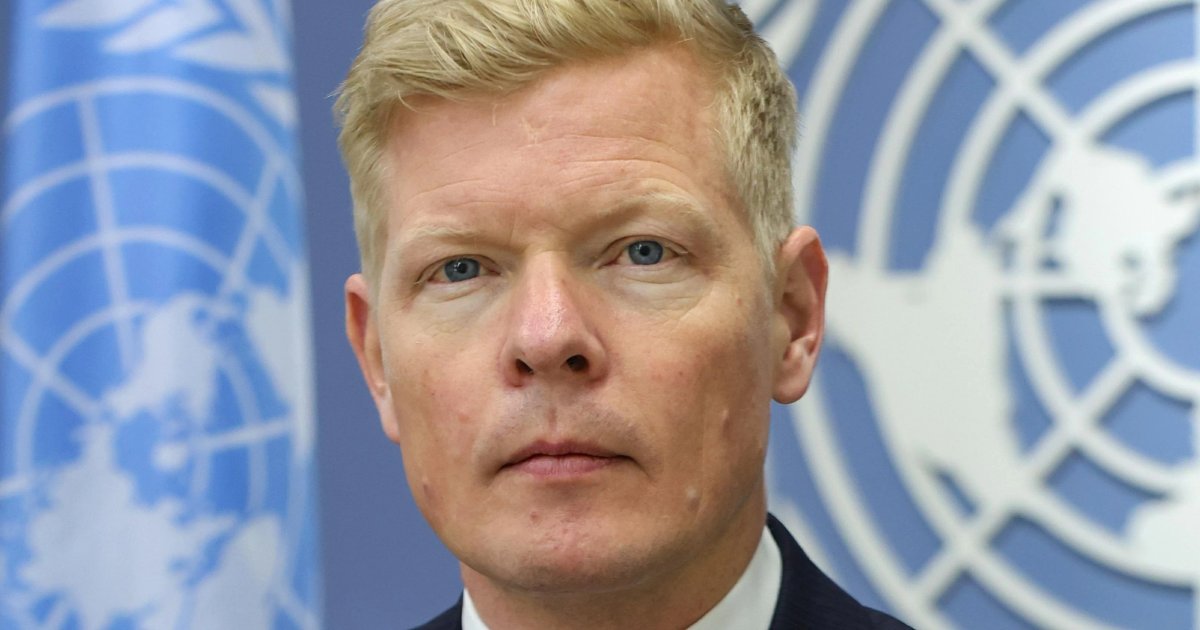
The UN special envoy to Yemen, Hans Grundberg, warned today (Sunday) about the dangers of the Houthis' involvement in the Iranian war, emphasizing that this escalation could drag Yemen into regional conflicts that negatively affect civilian lives.
In a statement, Grundberg expressed his deep concern regarding the Houthis' recent decision to launch military attacks against Israel, asserting that this escalation threatens to complicate efforts to resolve the conflict in Yemen, deepens its economic repercussions, and prolongs civilian suffering.
Details of the Event
The UN envoy confirmed that no party has the right to drag Yemen into a broader conflict, calling for the utmost restraint and an immediate halt to further military actions. He noted that he continues to engage with Yemeni, regional, and international parties, urging all sides, especially the Houthis, to utilize diplomatic channels and mediation to de-escalate tensions and prevent further regional conflict.
Grundberg also reaffirmed the UN's commitment to supporting a fair and sustainable peace in Yemen, clarifying that this requires parties to prioritize the interests of the Yemeni people and avoid further involvement in regional confrontations.
Context and Background
These warnings come at a sensitive time, as the Israeli army announced today that Tel Aviv and Washington are working in very close coordination to respond to Houthi attacks, following the Houthis' announcement of launching missiles towards Israeli targets. A spokesperson for the Israeli army stated that Israel has become accustomed to dealing with repeated attacks from the Houthis, who have been launching missile and drone attacks on Israel for over two years.
Yesterday, the Houthis launched a missile after a month of ongoing conflict between Iran and America and Israel, and less than 24 hours after they threatened to resume maritime attacks, further complicating the security situation in the region.
Consequences and Impact
The Houthis' involvement in the regional conflict could exacerbate the humanitarian situation in Yemen, where the Yemeni people are suffering from a severe humanitarian crisis due to years of ongoing war. Additionally, military escalation may hinder peace efforts and complicate negotiations among the various parties.
Concerns are growing that these developments could lead to greater escalation in the region, potentially dragging other countries into the conflict and increasing tensions among regional and international powers. Continued military actions could also worsen economic and social crises in Yemen, further increasing civilian suffering.
Impact on the Arab Region
These events indicate that the conflict in Yemen still has wide-ranging effects on security and stability in the Arab region. Houthi escalation could provoke reactions from other countries in the region, complicating the security situation further.
Under these circumstances, the international community must exert greater efforts to support peaceful solutions in Yemen and work to avoid any military escalation that could worsen humanitarian crises. Maintaining peace and stability in Yemen is a top priority, not only for the Yemeni people but also for the entire region.
In conclusion, hope remains pinned on diplomacy and international mediation to achieve peace in Yemen and avoid further escalation that could drag the country into broader conflicts.