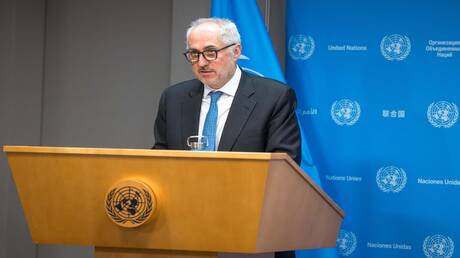
The United Nations has issued a warning that anticipated US strikes on energy facilities and bridges in Iran would be considered a violation of international law. These statements arise as tensions between the United States and Iran escalate, raising concerns about the implications of such military actions on regional stability.
In this context, the UN emphasized that any attack on vital infrastructure in Iran, such as energy plants and bridges, contradicts the fundamental principles of international humanitarian law. These principles aim to protect civilians and avoid collateral damage in armed conflicts.
Details of the Event
Concerns are growing over a potential military escalation in the region, with reports indicating that the United States may plan military operations targeting critical facilities in Iran. These actions are part of the maximum pressure policy adopted by Washington against Tehran since its withdrawal from the nuclear agreement in 2018.
The UN, through its officials' statements, seeks to remind the international community of the necessity to adhere to international laws that prohibit targeting civilians and essential infrastructure. The international organization has called on all parties to exercise restraint and avoid any escalation that could exacerbate the humanitarian situation in the region.
Background & Context
Historically, US-Iranian relations have been marked by increasing tensions, especially following the Islamic Revolution in 1979. Since then, there have been several attempts to reach agreements, most of which have failed. In recent years, tensions have intensified due to Iran's nuclear program and Tehran's support for various armed groups in the region.
In 2015, a nuclear agreement was reached between Iran and the P5+1 group, which led to the lifting of some sanctions on Iran in exchange for curtailing its nuclear program. However, the US withdrawal from the agreement in 2018 brought matters back to square one, leading to heightened military and political tensions.
Impact & Consequences
If the United States carries out military strikes on Iran, it could provoke violent reactions from Tehran, potentially dragging the region into a broader conflict. Oil prices and financial markets are likely to be significantly affected, as any escalation in the region could lead to increased instability in global energy markets.
Moreover, potential strikes could strengthen the position of Iran-backed armed groups, complicating security situations in Iraq, Syria, and Lebanon. This could negatively impact peace and stability efforts in the region.
Regional Significance
Arab countries neighboring Iran, such as Iraq and Saudi Arabia, are on high alert due to these tensions. Any military escalation could directly affect their security and stability, potentially leading to an influx of refugees and increased sectarian tensions.
Furthermore, any escalation in US-Iranian relations could reflect on the relationships between Arab states and Iran, complicating the political landscape in the region. It is crucial for Arab nations to collaborate with the international community to pressure the involved parties to avoid any escalation.
In conclusion, the situation in the region remains sensitive and requires all parties to exercise wisdom and restraint. Adhering to international law is the only way to ensure peace and stability in the area.