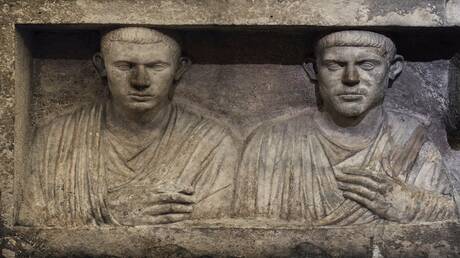
Archaeological burial sites in northwestern Russia have unveiled insights into life during the first millennium AD, shedding light on the inhabitants of that era. These discoveries open a new window for understanding ancient Russian history.
Burial sites are considered one of the most important sources that can contribute to forming a clear picture of the lives of ancient peoples. In this context, burial mounds have been found in the Novgorod region, dating back to the period between the first and second centuries AD. These mounds are not just structures; they represent a vital record reflecting the customs and traditions of the communities that lived during that time.
Details of the Discovery
The recent discoveries include a collection of graves containing tools and pottery, as well as human bone remains. Preliminary studies indicate that these communities practiced agriculture and hunting, reflecting a diverse lifestyle. Artifacts have also been found that suggest trade exchanges with other regions, indicating cultural and economic interactions with neighboring civilizations.
These burial sites are part of a long and complex history, as Russia underwent significant demographic and cultural transformations during that period. Although information about that era remains limited, these discoveries contribute to filling historical gaps.
Background & Context
The significance of these discoveries lies in their reflection of a crucial historical period in the development of Russian societies. During the first millennium AD, Russia was forming as a political and cultural entity, with communities beginning to settle and develop new ways of life. This period also witnessed influences from neighboring civilizations, such as the Roman Empire.
Historically, the Novgorod region was an important trade center, connecting with European and Asian trade networks. These discoveries enhance the understanding of how local communities interacted with the outside world and how those interactions influenced the development of Russian culture.
Impact & Consequences
These discoveries open new horizons for archaeological research in Russia, potentially contributing to a deeper understanding of the cultural and social history of the region. They also underscore the importance of preserving archaeological heritage, which may lead to increased awareness of the significance of history in shaping national identity.
Moreover, these discoveries could impact cultural tourism in the region, attracting more visitors interested in ancient history. Future studies may reveal more information about the daily lives and social traditions of those communities.
Regional Significance
These discoveries hold particular importance for Arab researchers interested in ancient history, as they may contribute to a deeper understanding of cultural interactions between different civilizations. Studying Russian history could enhance the understanding of historical relations between the Arab world and Russia, especially in the fields of trade and culture.
In conclusion, these discoveries highlight the importance of archaeological research in reconstructing history and understanding the evolution of societies. Knowledge of the past contributes to shaping the present and future, making it essential to continue exploring this rich heritage.