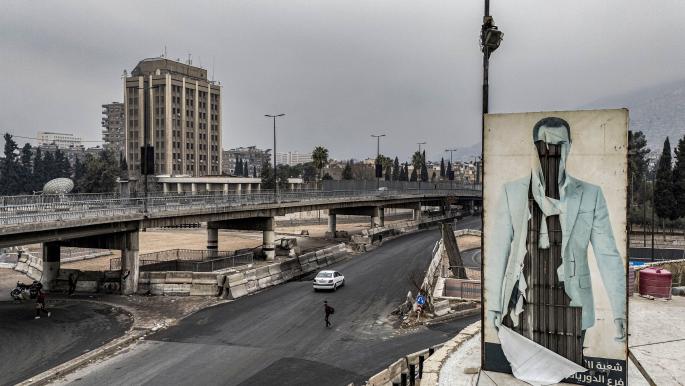
A new study published recently offers a deep analysis of the situation in Syria, revealing overlooked facts related to the fall of the Assad regime. The book, titled "The Scene of New Syria," presents readers with information that has not been previously discussed in the media, opening new horizons for understanding current events.
The study addresses the details of the battle to deter aggression, indicating that this battle was not merely a military conflict but involved complex political and social aspects. The author, Ahmad Al-Shara, provides a comprehensive vision of how this battle has influenced Syria's future and how the country's shape may evolve after Assad.
Details of the Event
The study includes a meticulous analysis of the events that Syria has witnessed since the beginning of the conflict, focusing on military and political dimensions. It also discusses how regional and international powers have influenced the course of events, specifically highlighting the roles played by Iran and Russia in supporting the Assad regime.
The book also analyzes the Syrian opposition, pointing out the challenges it faces in unifying its ranks and achieving its goals. It reviews how internal divisions have negatively impacted its ability to confront the regime.
Background & Context
Since the outbreak of the Syrian revolution in 2011, the country has undergone a dramatic transformation. The conflict, which began as a peaceful protest movement against the Assad regime, quickly escalated into a full-scale armed conflict. This transformation was not merely a result of protests but was driven by multiple internal and external factors.
Historically, Syria has represented a crossroads for many regional and international powers, making it a battleground for conflicts. The book highlights this historical background, explaining how current events are not just a result of internal strife but are the product of decades of political tensions.
Impact & Consequences
The repercussions of the Syrian conflict extend beyond the country's borders, affecting regional stability. The mass displacement of Syrians to neighboring countries, along with the rise of sectarian tensions, poses significant challenges for regional security.
The conflict has also demonstrated how external interventions can complicate situations, as Syria has become a battleground for settling scores among major powers. The book provides an in-depth analysis of these repercussions, helping readers understand the broader dimensions of the conflict.
Regional Significance
Syria is a vital center in the Arab world, and any change in its status directly affects neighboring countries. The book discusses how events in Syria have inspired protest movements in other nations and how the Syrian experiences could serve as a lesson for other Arab countries.
Furthermore, the book addresses the impact of the conflict on relations among Arab states, noting how divisions over how to deal with Assad have led to new tensions between Arab countries.
In conclusion, Ahmad Al-Shara's study offers a comprehensive perspective on the situation in Syria, illustrating how current events are not merely a local conflict but part of a larger battle concerning the future of the entire region.