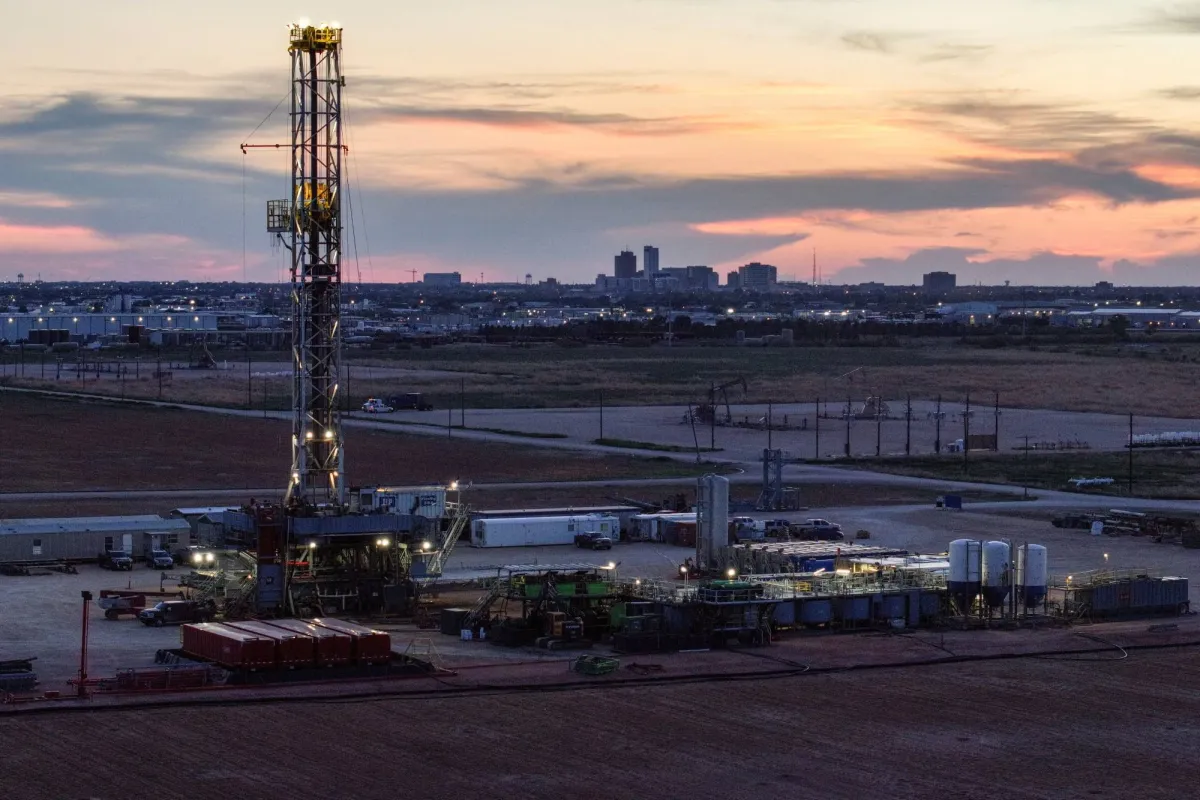
Recent data from the US Energy Information Administration released on Wednesday showed a significant and unexpected increase in crude oil inventories in the United States during the past week, leading to a decline in oil prices. Crude stocks jumped by 5.5 million barrels to reach 461.6 million barrels for the week ending March 27, a figure that far exceeded analysts' expectations of a modest increase of 814,000 barrels.
Additionally, inventories at the main delivery hub in Cushing, Oklahoma, rose by approximately 520,000 barrels. Meanwhile, gasoline and distillate stocks saw a notable decline, reflecting changes in supply and demand dynamics in the market.
Market Reactions to Inventory Data
In response to this data, oil prices maintained their earlier losses during the session. Global Brent crude fell to $101.85 per barrel (down $2.12), while West Texas Intermediate (WTI) crude dropped to $99.32 per barrel (a decrease of $2.06). The report also noted a decline in crude refining operations by about 219,000 barrels per day, with refinery utilization rates dropping by 0.8 percent.
Furthermore, the report indicated a decrease in the net imports of US crude oil by 209,000 barrels per day during the past week, reflecting the challenges facing the market under current conditions.
Background & Context
This increase in inventories comes at a sensitive time as global markets continue to face pressures from geopolitical events in the Middle East. Despite US President Donald Trump's statements suggesting that the war is nearing its end, discussions within the White House indicate growing concerns about the impact of rising oil prices on the US economy.
The US administration is seeking to contain the potential economic shock resulting from rising oil prices, with reports suggesting that discussions are underway on how to manage oil prices that could reach $150 or even $200 per barrel if energy supplies continue to be choked.
Impact & Consequences
The International Energy Agency warns that supply losses in April could double compared to March, potentially leading to an actual supply shortage. This shortage could affect fuel and transportation prices, increasing pressures on the US economy and negatively impacting households, especially the most vulnerable groups.
At the same time, analysts expect markets to continue grappling with the closure of the Strait of Hormuz as the biggest risk to the global economy. Approximately one-fifth of global oil and gas trade passes through this strait, making any disruption in navigation have far-reaching effects.
Regional Significance
Arab countries are directly affected by fluctuations in oil prices, as many rely on oil revenues as a primary source of income. Under these circumstances, some Arab nations may face increasing economic challenges due to rising energy prices, which could impact development and investment plans.
In conclusion, markets remain on alert as investors look for any signals from the US administration on how to address these challenges. The success of any potential strategies depends on stabilizing the situation in the region and the administration's ability to make effective decisions to confront these crises.