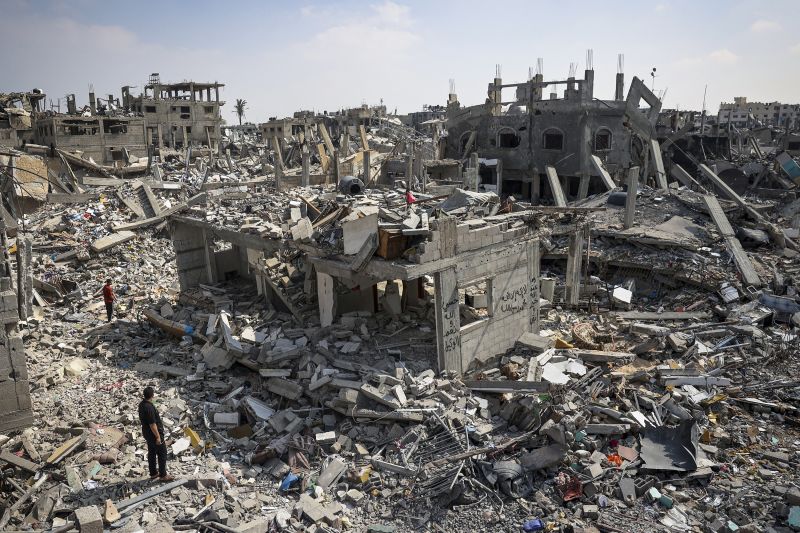
The repercussions of the war that erupted in the Arab East continue to unfold, starting with a limited confrontation between Palestinian resistance and Israeli forces in the Gaza Strip, but quickly expanding to include Lebanon and Iran. This war, which began on February 28, 2026, is considered the longest in modern Eastern history, targeting the geography of the East in all directions, although it has not directly extended beyond the borders of the Arab-Islamic East.
This war reveals the fragility of geopolitical convictions that were once considered axiomatic, uncovering a new balance of power in the region. It has led to widespread destruction in Gaza and Lebanon, in addition to negative impacts on the economies of Gulf states and Iraq.
Details of the Conflict
The war began with a brief confrontation between Palestinian resistance and Israeli forces, but soon escalated to include Israeli attacks on Iran, prompting Iranian responses targeting Israel and objectives in neighboring countries. The conflict also witnessed interventions from the Houthis in Yemen, who attempted to disrupt American-Israeli navigation in the Bab al-Mandab, leading to Israeli airstrikes on Yemen.
Later, Israel targeted a residential complex in the Qatari capital, which was playing a mediating role in ceasefire negotiations, further complicating the situation. The war also saw an escalation of tensions between Turkey and Israel, after Turkey took a supportive stance for the Palestinians.
Background & Context
This war is seen as a continuation of historical conflicts in the region, with a series of disputes dating back to 1948. The region has experienced multiple wars, from the Iran-Iraq War to the Gulf Wars, but the current conflict is considered the most impactful on a regional scale.
Geopolitical interests in the East are intricately intertwined, intersecting the interests of Iran, Turkey, Iraq, and Syria. This war has led to a reshaping of alliances in the region, highlighting the importance of regional cooperation in facing common challenges.
Impact & Consequences
The war has caused widespread destruction in Gaza and Lebanon, resulting in the deaths of tens of thousands of civilians. It has also displaced at least eight million people, including Palestinians, Lebanese, and Iranians. Meanwhile, the economies of Gulf states and Iraq have been significantly affected, with oil and gas revenues plummeting, impacting the stability of these nations.
The war also highlights the inability of states to protect their sovereignty, revealing the fragility of the Lebanese and Iraqi states. Furthermore, the conflict may exacerbate humanitarian crises in the region, necessitating urgent international intervention.
Regional Significance
The war underscores that the Arab Islamic East represents a single geopolitical space, where the security of its states is closely interconnected. Instability in this region affects the security and economy of neighboring countries, calling for greater cooperation among Arab states.
In conclusion, the countries of the East must recognize that their future is intertwined, and that working to enhance regional cooperation is the only path to achieving stability and peace in the region.