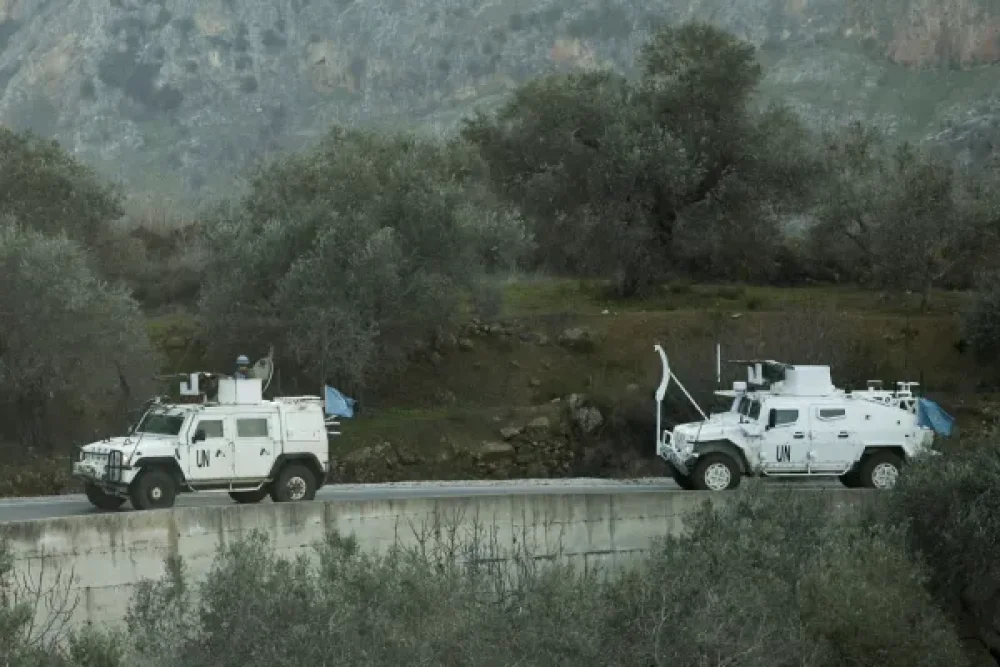
A soldier from the United Nations Interim Force in Lebanon (UNIFIL) was killed and another was seriously injured following an explosion of a projectile at one of its sites near the town of Adchit al-Qusayr. The incident occurred at a sensitive time, as tensions between Israel and Hezbollah are escalating, raising concerns about the safety of peacekeeping forces.
In an official statement, UNIFIL confirmed that the deceased soldier sustained fatal injuries from the explosion that took place late Sunday, while the injured soldier was transported to a hospital for treatment. Investigations are ongoing to determine the source of the projectile that led to the incident, which occurs amid rising hostilities in the region.
Details of the Incident
The incident coincided with an Israeli airstrike on the town of Shuqri, which resulted in the deaths of five civilians and injuries to two others. This airstrike is part of the ongoing military escalation between Israel and Hezbollah, with the Lebanese Ministry of Health reporting that the death toll since the beginning of Israeli airstrikes on March 2 has risen to 1,238 dead and 3,543 injured.
Hezbollah also indicated in a statement that it carried out 1,100 operations against Israeli targets during the same period. This military escalation reflects a state of instability in the region, where fears of increased hostilities and their impact on civilians are growing.
Background & Context
UNIFIL has been stationed in southern Lebanon since 1978, with the aim of monitoring hostilities along the Blue Line, which marks the border with Israel. Its positions have recently been subjected to several attacks, raising concerns about the safety of peacekeeping soldiers.
On March 23, UNIFIL confirmed that its headquarters in the town of Naqoura was hit by a projectile believed to have been fired from a non-state actor. Additionally, three Ghanaian soldiers were injured on March 7 due to Israeli tank fire, highlighting the risks faced by United Nations forces in the region.
Impact & Consequences
These incidents underscore the increasing tensions in the region, with growing fears of a larger escalation in hostilities. The death of a UNIFIL soldier reflects the dangers faced by peacekeeping forces and increases pressure on the international community to intervene and halt the escalation.
The continued Israeli airstrikes on Lebanon further complicate the humanitarian situation, as civilians suffer from the effects of the ongoing conflict. The rising casualty figures indicate an urgent need for diplomatic efforts to end the violence and achieve stability in the region.
Regional Significance
This escalation in Lebanon is part of a larger picture of tensions in the Middle East, where crises in Syria and Palestine intertwine with the Lebanese conflict. The continuation of hostilities could lead to broader implications for regional security, necessitating an urgent response from the international community.
In conclusion, the situation in southern Lebanon remains complex, requiring ongoing efforts from all parties involved to achieve peace and security. The killing of a UNIFIL soldier serves as a stark reminder of the dangers faced by peacekeeping forces in conflict zones and emphasizes the importance of adhering to international law to protect civilians and property.