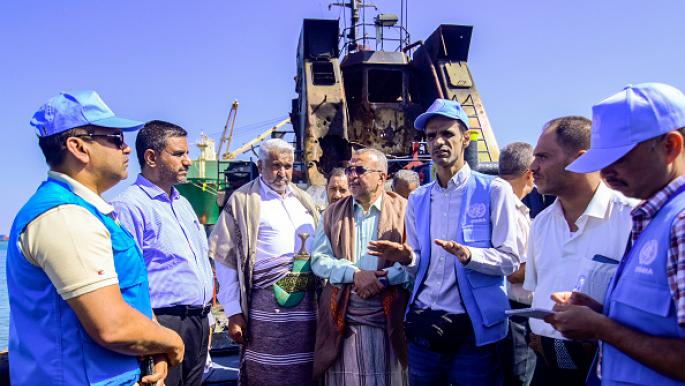
The United Nations announced on Tuesday the conclusion of its operations for the Hodeidah Support Mission (UNMHA), with remaining tasks being transferred to its special envoy Hans Grundberg. This decision comes after more than seven years of diligent work in the coastal city, which has been at the center of the ongoing conflict in Yemen.
The UNMHA was established in 2018 with the aim of supporting the implementation of the Hodeidah Agreement, reached between the internationally recognized Yemeni government and the Houthi group. The mission aimed to reduce the intensity of the conflict in the region and ensure humanitarian aid reached affected populations.
Details of the Event
During its operational period, the UNMHA played a vital role in monitoring the ceasefire and facilitating humanitarian relief efforts. The mission faced significant challenges, including the ongoing escalation of hostilities, which affected its ability to carry out its tasks effectively. However, the mission achieved some successes, such as improving security conditions in certain areas.
As the mission concludes its operations, special envoy Hans Grundberg emphasized the importance of continued international support for Yemen, stressing that challenges remain and that political solutions are the only way to end the conflict.
Background & Context
Historically, the city of Hodeidah has witnessed recurring conflicts, being a strategic point on the Red Sea. Since the onset of the civil war in Yemen in 2014, the city has become a battleground between government forces and the Houthis, exacerbating the humanitarian situation. UN efforts have contributed to attempts to achieve peace, but ongoing tensions have hindered the attainment of lasting stability.
It is noteworthy that the Hodeidah Agreement was part of broader efforts to reach a comprehensive political settlement in Yemen, which also includes other issues such as prisoner exchanges and opening humanitarian corridors. However, these efforts have not achieved the desired success, raising concerns about Yemen's future.
Impact & Consequences
The termination of the UNMHA may carry negative implications for the situation in Hodeidah, as the absence of international monitoring could lead to a resurgence of hostilities. This decision may also affect the delivery of humanitarian aid, as many residents rely on international support for survival.
This development is likely to increase pressure on the Yemeni government and the Houthis to reach new agreements, as the continuation of the conflict will not serve the interests of either party. Additionally, the international community may face new challenges in its efforts to support peace in Yemen.
Regional Significance
The situation in Yemen is part of a broader landscape of tensions in the Arab region, where conflicts in Yemen affect regional security. Instability in Yemen could have repercussions for neighboring countries, such as Saudi Arabia and Oman, which may be impacted by the humanitarian and economic crises resulting from the conflict.
Furthermore, the ongoing conflict in Yemen could hinder peace efforts in other parts of the Middle East, making it essential for the international community to remain committed to supporting peaceful solutions.
In conclusion, the termination of the UNMHA represents a turning point in peace efforts in Yemen and should serve as a call for the international community to act urgently to achieve stability in the region.