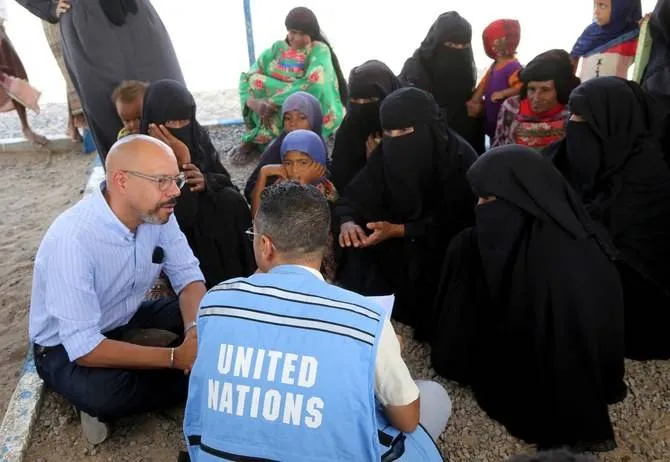
The United Nations is facing a complex challenge in Yemen, calling on the international community to provide approximately $2.6 billion to finance the humanitarian response plan for this year. This comes at a time when funding is declining due to successive global crises, while humanitarian needs within Yemen are increasing at an unprecedented rate.
The number of people in need in Yemen is rising, with UN agencies estimating that around 22.3 million people require some form of humanitarian assistance, an increase of 2.8 million people from last year, reflecting a sharp deterioration in humanitarian conditions. This decline is driven by worsening food insecurity, the collapse of basic services, and economic shocks.
Event Details
Jamal Balfaqih, the General Coordinator of the Supreme Relief Committee in Yemen, stated that reaching such levels of humanitarian needs places the international community before a historic responsibility. He confirmed that the funding percentage for the response plan until March 2026 has not exceeded 10 percent, indicating that the solution lies not only in mobilizing billions but also in restoring trust among donors.
Balfaqih explained that donors and businessmen need assurances that their contributions will reach those who deserve them, noting that the government, supported by the Coalition for Supporting Legitimacy, is striving to provide a transparent model that ensures fair distribution of aid.
Background & Context
Over the past years, relief efforts in Yemen have faced significant difficulties in securing full funding, as some governments have become less willing to finance long-term crises. This has led to a reduction in food and health aid programs, negatively impacting the lives of millions.
Some researchers accuse the United Nations of managing the relief file catastrophically, as it has not secured more than 59 percent of the required funding over the past 14 years, raising questions about the international community's ability to respond to Yemen's increasing needs.
Impact & Consequences
Reports predict that funding for the response plan this year will decrease to 40 percent, which will exacerbate humanitarian conditions. Additionally, the recent military escalation in the region may limit the UN's ability to secure necessary funding, further increasing the suffering of the Yemeni people.
Relief efforts in Yemen are also affected by global crises such as the COVID-19 pandemic and the Russian-Ukrainian war, which have led to significant supply crises worldwide. These crises have made it difficult for the international community to focus on the humanitarian crisis in Yemen.
Regional Significance
Concerns are growing that the Houthi involvement in regional conflicts could worsen humanitarian conditions in Yemen, potentially negatively impacting the stability of the region as a whole. Furthermore, the lack of organization and oversight over aid could lead to resource wastage, exacerbating humanitarian crises.
In light of these circumstances, hope remains pinned on the international community to respond to funding appeals and prevent the deterioration of humanitarian conditions in Yemen; otherwise, one of the largest humanitarian crises in the world will face the risk of worsening.