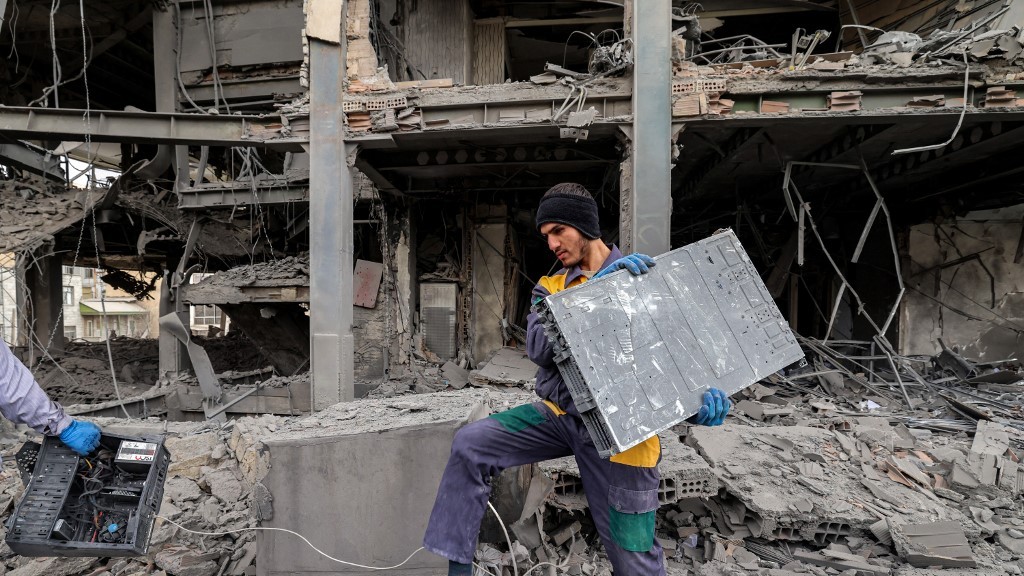
The United States has carried out a large-scale airstrike on a key ammunition depot in Isfahan, Iran, as reported by the Wall Street Journal citing an American official. The attack, which occurred on Monday evening, targeted a facility believed to hold substantial amounts of munitions, including anti-tank weapons, reflecting an escalation in the U.S. campaign against Iranian military capabilities.
This airstrike comes at a sensitive time, as tensions between the United States and Iran are rising, particularly amid ongoing regional conflicts and their impact on security in the Middle East. U.S. officials have confirmed that this strike is part of a broader strategy aimed at undermining Iranian military power and preventing it from enhancing its military capabilities in the region.
Details of the Event
The attack on the ammunition depot in Isfahan marks a significant escalation in U.S. military operations against Iran, as this depot was believed to contain advanced munitions that could be used in regional conflicts. Officials indicated that this strike is part of U.S. efforts to ensure that advanced weapons do not reach armed groups supported by Iran in Iraq, Syria, and Lebanon.
Initial reports suggest that the airstrike resulted in the destruction of a large portion of the depot, but no details have been released regarding potential casualties. This military escalation may provoke strong reactions from Iran, which has long viewed such attacks as violations of its sovereignty.
Background & Context
Historically, relations between the United States and Iran have been tense since the Islamic Revolution in 1979. These relations have seen a notable escalation in recent years, particularly following the U.S. withdrawal from the Iranian nuclear deal in 2018. Since then, the United States has imposed severe economic sanctions on Iran, exacerbating the country’s economic and political conditions.
Iran, for its part, has responded to these pressures by bolstering its military capabilities and expanding its influence in the region, further heightening tensions between the two sides. The recent airstrike on Isfahan comes at a critical time, as concerns grow that any military escalation could lead to a broader conflict in the region.
Impact & Consequences
The U.S. airstrike on Isfahan may have serious implications for regional security. Iran is likely to respond to this attack by targeting U.S. interests or its allies in the region, which could further escalate tensions and lead to greater military confrontation. Additionally, this strike may affect potential negotiations regarding Iran's nuclear program, as Iran may view it as an attempt to increase pressure on it.
Moreover, this airstrike could impact stability in Iraq and Syria, where U.S. forces are present as part of counter-terrorism efforts. Any Iranian retaliation could put these forces at risk, complicating the security situation in the region.
Regional Significance
The U.S. strike on Isfahan raises concerns among many Arab countries, which fear an escalation of military tensions in the region. Arab nations, especially those sharing borders with Iran, may find themselves in a precarious position if the situation escalates into a full-scale military conflict.
These events could also affect the relationships between Arab states and Iran, as some countries may adopt a harsher stance against Iran if it continues to enhance its military capabilities. Ultimately, the Arab region remains on high alert, as any military escalation could have unpredictable consequences for regional security and stability.