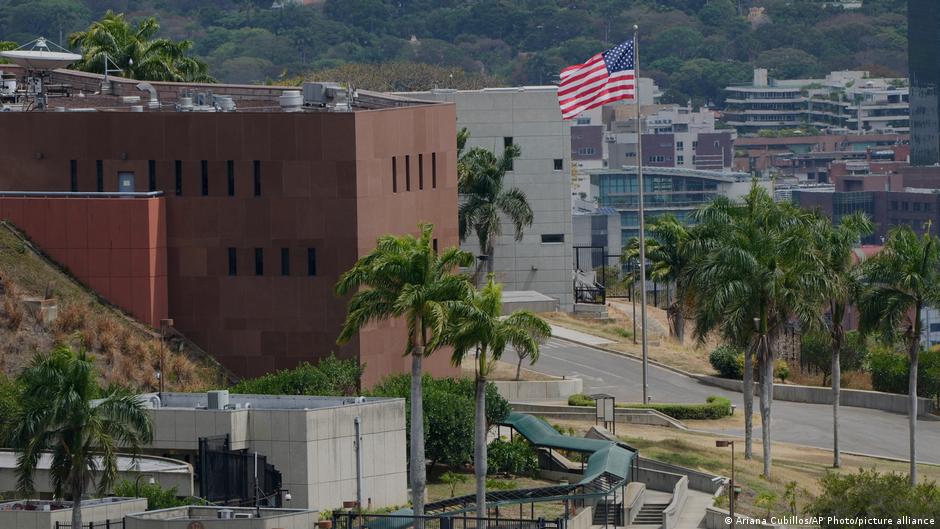
The U.S. State Department announced on Monday the reopening of its embassy in Caracas, the capital of Venezuela, for the first time since March 2019. This decision came after a military operation in January that resulted in the arrest of Venezuelan President Nicolás Maduro on drug trafficking charges.
The U.S. embassy had closed its doors during the presidency of Donald Trump, following the controversial elections held in Venezuela in 2018. However, the reopening of the embassy represents a new step in restoring diplomatic relations with the transitional government led by Delsy Rodriguez.
Details of the Event
The U.S. State Department stated that the reopening of the embassy marks the beginning of a new chapter in American diplomatic presence in Venezuela. Laura F. Dougo, an experienced diplomat, has been appointed as the chargé d'affaires in Venezuela. Dougo arrived in Caracas in late January to lead U.S. government efforts in the country.
In mid-March, the American flag was raised at the embassy site, symbolizing the resumption of diplomatic relations that had been agreed upon earlier that month. While Dougo and her team are working to restore the building, which suffered damage due to the long closure, the diplomatic section of the embassy has begun to resume operations normally.
Background & Context
Historically, Venezuela has witnessed significant political tensions, especially following the presidential elections in 2018, which many countries, including the United States, deemed illegitimate. Subsequently, Juan Guaidó, the head of parliament, declared himself interim president, leading many Western nations to recognize him as the legitimate leader.
However, the situation in Venezuela worsened amid ongoing economic and social crises, prompting the United States to take more drastic measures, including imposing sanctions on the Venezuelan government. The arrest of Maduro in January 2023 was a pivotal turning point in relations between the two countries.
Impact & Consequences
The reopening of the U.S. embassy in Caracas is a significant step in implementing the American president's plan to develop relations with Venezuela. This move will enhance the United States' ability to communicate directly with the transitional government, civil society, and the private sector in Venezuela.
U.S. Secretary of State Marco Rubio indicated that the country is beginning to witness a form of stability that could bring businesses back to Venezuela. However, he called for a complete transition to democracy as a prerequisite for realizing the country's economic potential.
Regional Significance
These developments in Venezuela are particularly significant for the Arab region, as they reflect changes in U.S. foreign policy and its impact on international relations. Many Arab countries are closely monitoring how the situation in Venezuela evolves, especially in light of the economic and political challenges they face.
In conclusion, the reopening of the U.S. embassy in Venezuela signifies a major shift in American policy toward Latin America and may have far-reaching effects on relations between countries in the region.