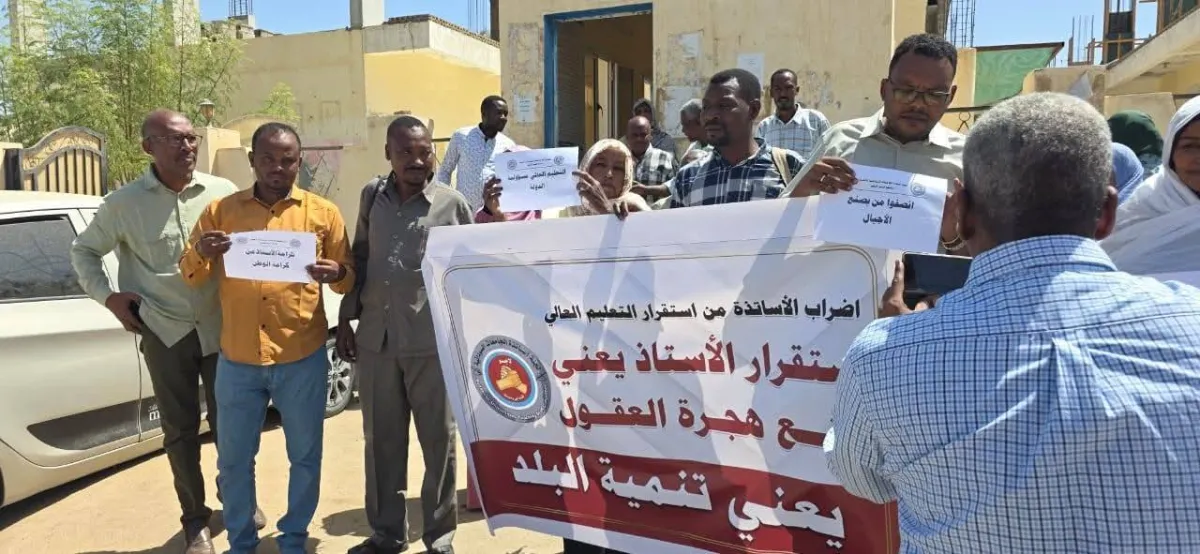
The nationwide and open-ended strike by Sudanese university professors continues for the second consecutive day, protesting against low salaries and the absence of a fair salary structure. This strike has led to a complete halt of classes in most universities, raising concerns among students and parents.
According to the "Sudanese University Professors Committee," abbreviated as "LAGSO," the strike achieved significant success on its first day, with participation rates exceeding 95% in most universities. This strike comes at a sensitive time as students have returned to classrooms in the capital, Khartoum, after a long period of remote learning, while many students in the regions continue to suffer from ongoing war conditions.
Details of the Event
In the context of the strike, security authorities arrested eight professors from the "Bakht Al-Rida" and "Quran and Sciences" universities in White Nile State, including two holding the title of "Professor," after they organized a protest inside the university campus. While six of them were released, two remain in custody, prompting condemnation from "LAGSO," which demanded their immediate release.
The committee reported that the arrests were made illegally, with professors being interrogated overnight under inhumane conditions. A committee leader, Fadlallah Mustafa Musa, confirmed that the current salary structure does not meet basic living requirements, with a professor's salary reaching only about $280, an amount insufficient to meet family needs.
Background & Context
The demands for improved salaries and working conditions by professors date back to 2021, when a previous strike was organized after exhausting all negotiation avenues with the government. As the economic situation in Sudan has deteriorated due to the ongoing conflict since April 2023, the minimum wage has fallen to unprecedented levels, intensifying protests.
There are approximately 17,000 university professors in Sudan, and in recent years, a significant number have been retired without replacements, threatening the quality of higher education in the country. The committee has called for gradually raising the retirement age from 65 to 75 years to preserve academic competencies.
Impact & Consequences
Observers emphasize that the continuation of the strike could exacerbate the educational situation in Sudan, as the strike has paralyzed 35 public universities, including the prestigious University of Khartoum. This situation reflects a deeper crisis in the educational system, where students are experiencing educational disruptions at a time when the country needs to improve higher education to address economic and social challenges.
Under these circumstances, protests are expected to continue until the government responds to the professors' demands, which could lead to an escalation of the situation. "LAGSO" has warned that continued neglect of their demands could result in the loss of more academic competencies, threatening the future of higher education in Sudan.
Regional Significance
The education crisis in Sudan is part of the larger challenges faced by many Arab countries, which suffer from similar issues related to low salaries and working conditions. The continuation of these crises may impact social and economic stability in the region and increase migration rates in search of better opportunities.
In conclusion, the future of higher education in Sudan hangs in the balance, dependent on the government's response to the professors' demands, as improving salaries and working conditions is a crucial step to retaining academic competencies and ensuring quality education.