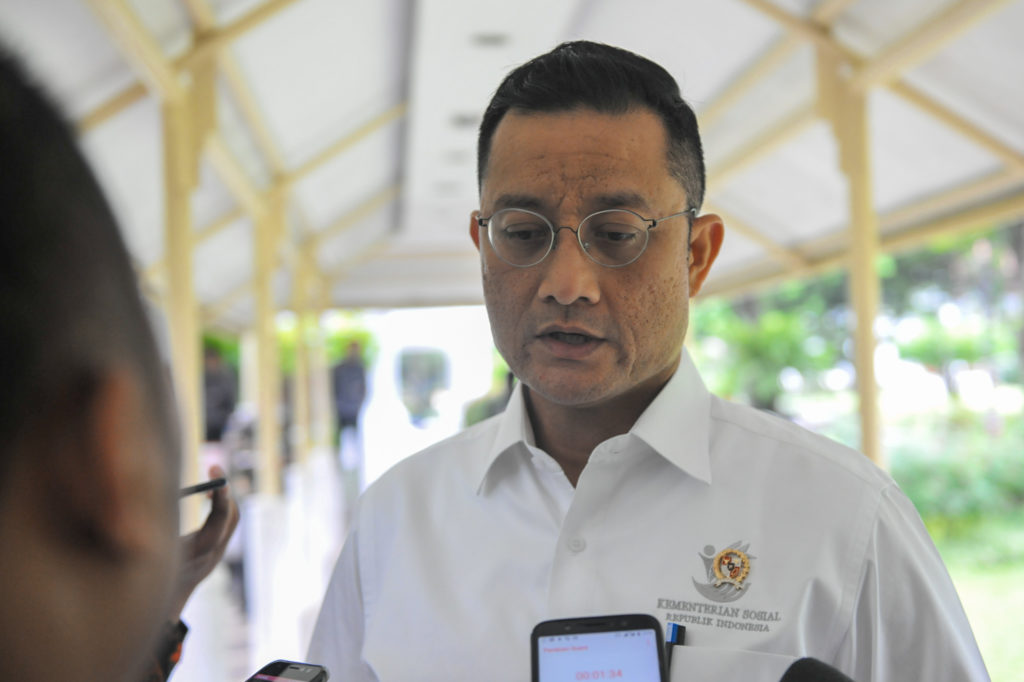
Indonesian Minister of Social Affairs, Sefullah Yusuf, emphasized the importance of updating social security data, known as the National Social Security Data (DTSEN), to ensure that social assistance reaches deserving groups. This statement was made during his visit to Gresik in East Java, where he explained that updating data is vital for the effectiveness of social programs.
Yusuf pointed out that the data must be updated periodically due to its dynamic nature, as social conditions continuously change due to births, deaths, and migration. He confirmed that the government is working through Presidential Directive No. 4 of 2025 to unify the social database, which contributes to reducing gaps between different institutions in the distribution of aid.
Event Details
During his talk, Yusuf affirmed that updating data is considered key to ensuring that social programs, including social assistance and community empowerment programs, reach the poorest groups. He explained that the government aims to target families in categories 1 and 2 of the social security data through programs such as School of the People, which aims to improve education levels and provide support to poor families.
Yusuf also noted that the School of the People program is a comprehensive model for combating poverty, as it provides education for children, supports parental empowerment, and works to improve housing conditions. Financial assistance amounting to 391.8 million rupiah has been distributed to 75 families of students in the School of the People.
Background & Context
Indonesia is one of the largest countries in Southeast Asia, facing significant challenges in poverty and inequality. According to previous reports, about 9.2% of the population lives below the poverty line, necessitating intensive government efforts to improve living conditions. Updating social security data is a fundamental step in this direction, as it helps direct resources more effectively.
Historically, there have been issues in distributing aid due to discrepancies in data between government institutions. Therefore, unifying data through the presidential directive represents an important step towards improving the effectiveness of social programs.
Impact & Consequences
Updating social security data has significant implications for the effectiveness of government programs. By ensuring data accuracy, the government can better direct aid to the most needy groups, contributing to poverty reduction and social development. This update also enhances citizens' trust in the government, as they feel that assistance reaches those who deserve it.
Moreover, improving data can help develop more effective social policies, as the government can better analyze data to identify the most needy groups and direct resources more efficiently.
Regional Significance
Indonesia's experience in updating social security data could serve as a model for Arab countries, which face similar challenges in poverty and unemployment. Many Arab countries suffer from a lack of accurate data regarding deserving groups for assistance, leading to an unequal distribution of resources. Successful experiences in Indonesia can inspire Arab governments to adopt similar policies to improve the effectiveness of their social programs.
In conclusion, updating social security data represents an important step towards achieving social justice in Indonesia and reflects the government's commitment to improving citizens' lives. The success of this initiative could open new horizons for cooperation between countries in the field of social development.