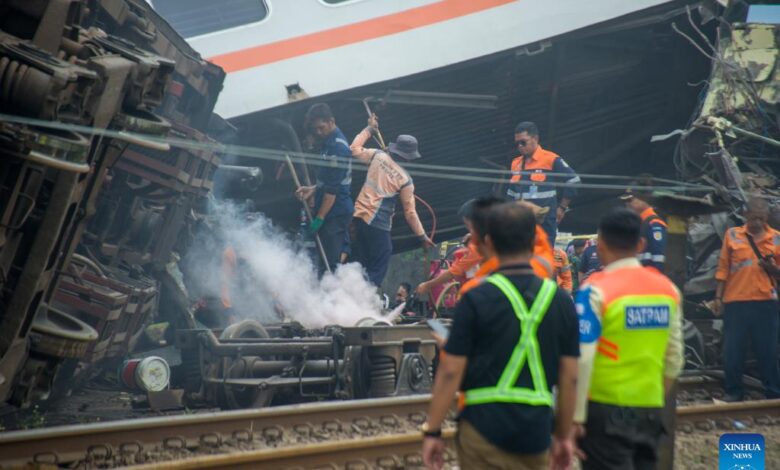
In a tragic incident that occurred on the evening of Monday, April 27, a collision between two trains in the Indonesian city of Bekasi led to the deaths of 15 people and injuries to over 80 others. The accident happened when an electric taxi stalled on the tracks, leading to a collision with an oncoming train, followed by another collision with a train that was stopped at the station.
This horrific incident has raised widespread concern about railway safety in Indonesia, with experts calling for immediate measures to enhance safety, including the separation of tracks between high-speed trains and passenger trains. Indonesian President Prabowo Subianto promised to eliminate level crossings across the country, especially on the island of Java, where 60% of the population resides.
Details of the Incident
The accident occurred in the Ampera Street area, where an electric taxi became stuck on the tracks. While other trains were traveling in the opposite direction, a train coming from Jakarta to Surabaya collided with the stopped train, crushing passengers in a carriage designated for women. The incident clearly highlighted the risks associated with level crossings, many of which are unsecured or lack warning signals.
Following the accident, President Prabowo visited the injured in the hospital, emphasizing the need to improve level crossings that have remained unsecured since the Dutch colonial era. He announced the allocation of 4 trillion rupiah (approximately $231 million) to enhance these crossings, although experts believe this amount is insufficient.
Background & Context
Historically, Indonesia has experienced numerous similar accidents, with studies indicating around 300 accidents annually at level crossings, 81% of which occur at unguarded crossings. This situation reflects a lack of traffic discipline in the country, increasing the risk of accidents.
Level crossings pose a significant challenge in urban areas like Jakarta, where they contribute to severe traffic congestion. With over 3,800 level crossings in Indonesia, the need for infrastructure improvement has become urgent.
Impact & Consequences
The recent accident serves as a wake-up call for the government to enhance the aging railway network, as it is essential to separate tracks between high-speed trains and passenger trains. This separation would help reduce accidents and improve transportation efficiency.
The incident has also sparked a discussion about the safety of women in public transportation, with the Minister of Women's Empowerment calling for the relocation of women's carriages to the center of trains, which could ensure greater protection for passengers. However, experts believe this may pose new challenges in separating passengers.
Regional Significance
This incident is not only a national concern but also serves as a lesson for other countries in the region regarding the importance of railway safety. The need for immediate action to improve transportation systems and safety protocols is critical.
In conclusion, the tragic events in Bekasi underline the urgent need for comprehensive reforms in Indonesia's railway system to prevent future accidents and ensure the safety of all passengers.