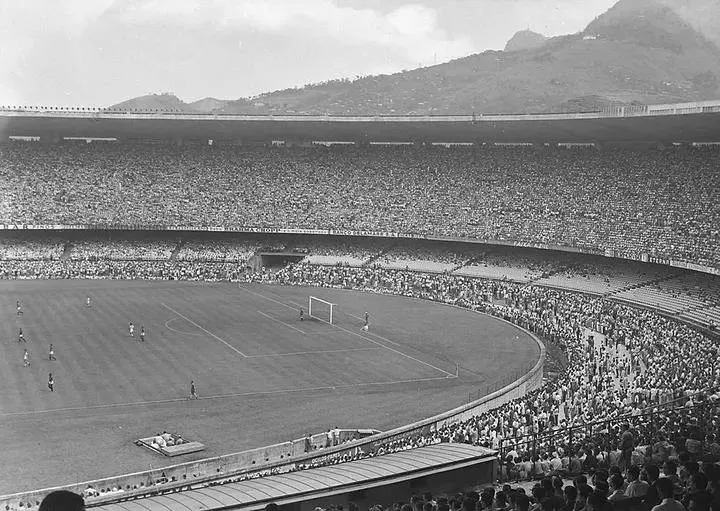
On July 16, 1950, the Maracanã Stadium in Rio de Janeiro experienced one of the saddest moments in football history, as Uruguay managed to turn the tables on Brazil in the World Cup final, achieving a historic victory of 2-1. This match, known as the "Maracanazo" tragedy, left deep scars in the hearts of Brazilians, as sadness and tears flooded the stands after the dream of victory seemed so close.
The legendary Pele, who was only nine years old at the time, recounts how his father was engulfed in tears after the fatal goal scored by Uruguayan Alcidis Ghiggia. At that moment, Brazil's dream of lifting the trophy on home soil was shattered, after they had taken the lead with a goal from Friaça.
Details of the Event
All eyes were on the Maracanã Stadium, which was built specifically to host the tournament, where approximately 175,000 spectators attended the match. Brazil only needed a draw to be crowned champions, having achieved overwhelming victories in the earlier rounds. However, Uruguay, which had faced difficulties following World War II, proved capable of overcoming challenges. After Pepe Schiaffino equalized, Ghiggia's goal turned the tide dramatically.
When the referee blew the final whistle, shock was evident on the faces of Brazilian fans, as Uruguay was crowned champions for the second time in its history. The president of FIFA, Jules Rimet, presented the trophy to Uruguay's captain Obdulio Varela, intensifying the pain felt by Brazilians.
Background & Context
Following World War II, Brazil sought to establish itself on the global stage and viewed hosting the World Cup as an opportunity to enhance its national identity. The country hoped the tournament would mark a new beginning, but the loss to Uruguay was a severe blow. During this period, Europe was grappling with the aftermath of the war, while Brazil looked forward to building a bright future.
Historically, Uruguay had won its first World Cup title in 1930, making it one of the powerhouses in football. However, Brazil had invested heavily in the development of the sport, positioning itself as a strong contender for the 1950 title. Yet, the outcome was a surprise to all, as the match became a symbol of national failure.
Impact & Consequences
The Maracanã tragedy profoundly affected Brazilian national identity. The loss was seen as a defeat of the nation’s project, which aimed to achieve unity and diversity through football. Many fans felt despair, with reports of suicide attempts among the crowd, reflecting the magnitude of the shock the country experienced.
Conversely, Uruguay became a symbol of success under challenging circumstances. This match was dubbed the "Maracanazo," making it synonymous with triumph in the face of adversity. This idea inspired many around the world, demonstrating that fighting spirit can lead to success even in the toughest times.
Regional Significance
The Maracanã tragedy serves as a lesson in resilience and challenge, which Arabs can learn from in facing their own challenges. As Arab nations strive to enhance their national identity through sports, the experiences of Brazil and Uruguay highlight the importance of unity and strong will in achieving goals.
Ultimately, the Maracanã tragedy remains one of the most significant moments in football history, reflecting the struggle between ambition and failure, and reminding us that sports are not just a game but an integral part of identity and culture.