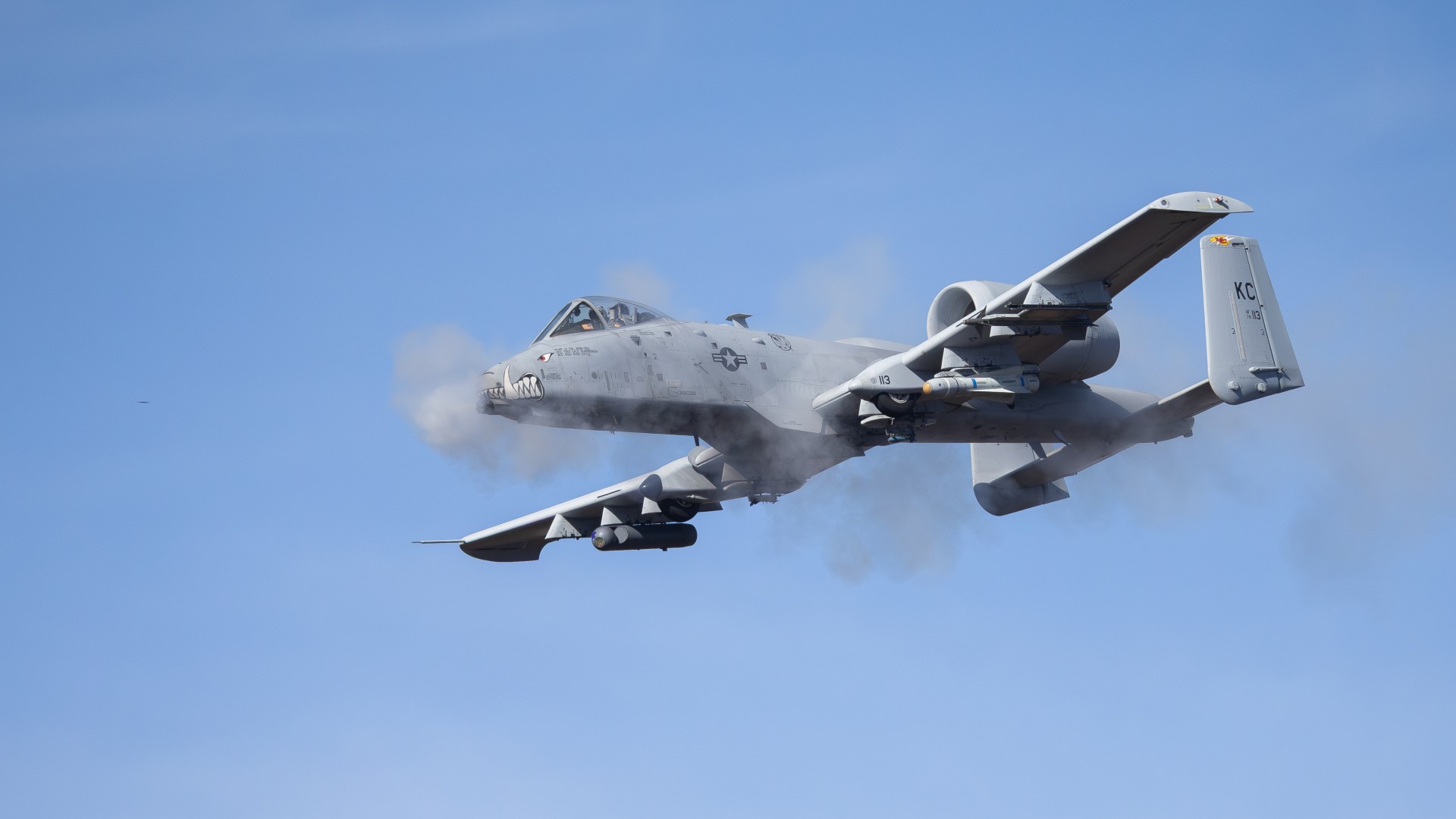
A U.S. A-10 Warthog fighter jet crashed on Friday after being targeted by Iranian air defenses near the Hormuz Strait. According to media reports, the sole pilot on board was rescued, while two U.S. helicopters came under Iranian fire during the rescue operation, but no service members were harmed.
The A-10 is a single-seat fighter aircraft designed to support ground forces. The United States has sent thousands of troops to the region in recent weeks, raising speculation about the possibility of a ground operation to seize Iranian islands in the Hormuz Strait.
Details of the Incident
The jet crash follows the downing of a U.S. F-15E fighter jet by Iranian Revolutionary Guard forces in southwestern Iran. An Iranian military spokesperson confirmed that the aircraft was completely destroyed, according to statements reported by the Tasnim news agency.
Initially, Iran announced that it had shot down an F-35 aircraft, but U.S. military sources later confirmed it was an F-15E. A search operation was launched for the pilots, with one crew member rescued, while search efforts for the second pilot are still ongoing.
Background & Context
A-10 aircraft have been in use since 1997 and cost approximately $11.4 million, with over 700 planes manufactured between 1972 and 1984. These aircraft have participated in several wars, including the Gulf War, the Iraq War in 2003, and the Afghanistan invasion in 2001.
These events come at a sensitive time, as relations between the United States and Iran are escalating significantly, especially after Iran confirmed that it had downed several U.S. aircraft recently. These incidents are part of the ongoing conflict between the two countries, which is increasingly intensifying.
Impact & Consequences
These incidents demonstrate a notable escalation in military tensions between the United States and Iran, which could have serious repercussions for regional security. The continuation of these confrontations may affect the stability of the region and exacerbate existing conflicts.
On the other hand, these events may impact negotiations between the United States and Iran, as U.S. President Donald Trump stated that the downing of the aircraft would not affect negotiations. However, Iran rejected a U.S. proposal for a 48-hour ceasefire, complicating the situation further.
Regional Significance
Arab countries are directly affected by the escalation between the United States and Iran, as any military escalation could destabilize the region. Neighboring countries, such as Iraq and Saudi Arabia, may find themselves in a precarious position if tensions continue to rise.
In conclusion, the situation in the region remains tense, and it is crucial to closely monitor developments, as any escalation could lead to dire consequences for regional and international security.