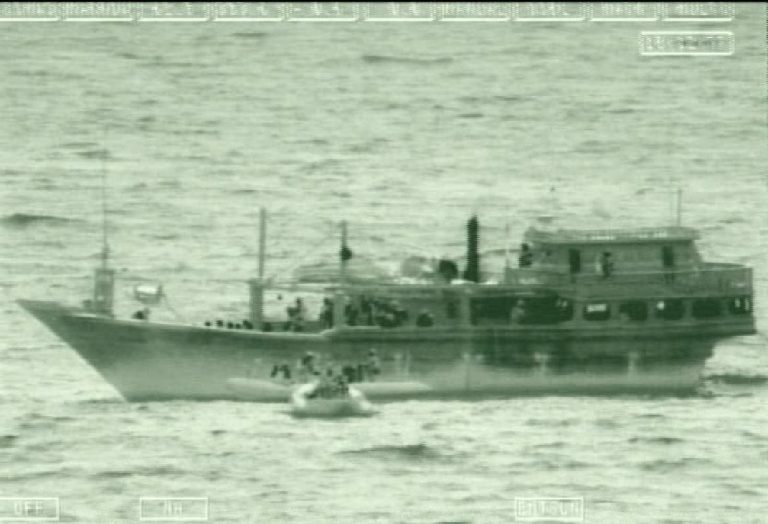
Iran's Foreign Ministry spokesperson, Nasser Kanani, announced that the United States has admitted to committing acts of maritime piracy against Iranian vessels. This acknowledgment comes at a sensitive time marked by increasing tensions in the region, where concerns about escalating maritime conflicts are growing.
These statements confirm what Iran had previously indicated regarding the targeting of its ships in international waters. Tehran has called on the international community to take a firm stance against these actions, considering them a blatant violation of international laws.
Details of the Incident
In remarks made by Kanani, he pointed out that the United States has conducted seizures of Iranian oil tankers at sea, exacerbating the situation in the region. He emphasized that these actions not only reflect a violation of Iranian sovereignty but also pose a threat to international maritime security.
These developments occur at a time when Iranian-American relations are experiencing heightened tensions, with both countries exchanging accusations regarding military activities in the region. Iran has expressed its readiness to defend its interests in the Red Sea and the Arabian Gulf.
Background & Context
Historically, the region has witnessed numerous maritime disputes, with the United States and Iran in a constant struggle since the Islamic Revolution in 1979. Tensions have intensified following the U.S. withdrawal from the Iranian nuclear agreement in 2018, leading to the imposition of severe economic sanctions on Tehran.
These events are part of a broader conflict between major powers in the region, as both Iran and the United States seek to enhance their influence in the Gulf. These dynamics have led to increased tensions among neighboring countries, threatening the overall stability of the region.
Impact & Consequences
These admissions are expected to escalate tensions between Iran and the United States, which may affect shipping traffic in the Arabian Gulf. Additionally, these events could increase pressure on neighboring countries, which may find themselves compelled to intervene or mediate in the dispute.
Moreover, these developments could impact global oil prices, as any escalation in maritime conflict may lead to significant fluctuations in markets. Countries importing Iranian oil may face new challenges in securing their supplies.
Regional Significance
These events pose a threat to security and stability in the Arab region, as any escalation in the conflict could have negative repercussions for neighboring countries. Maritime trade could be affected, which may adversely impact Arab economies that rely on maritime commerce.
Furthermore, these tensions could exacerbate political divisions in the region, with some countries potentially taking pro-Iran stances while others may support the United States, complicating the political landscape.
The U.S. acknowledgment of maritime piracy against Iranian ships represents a turning point in relations between the two countries, indicating the necessity for dialogue and understanding to avoid escalating conflict in the region.