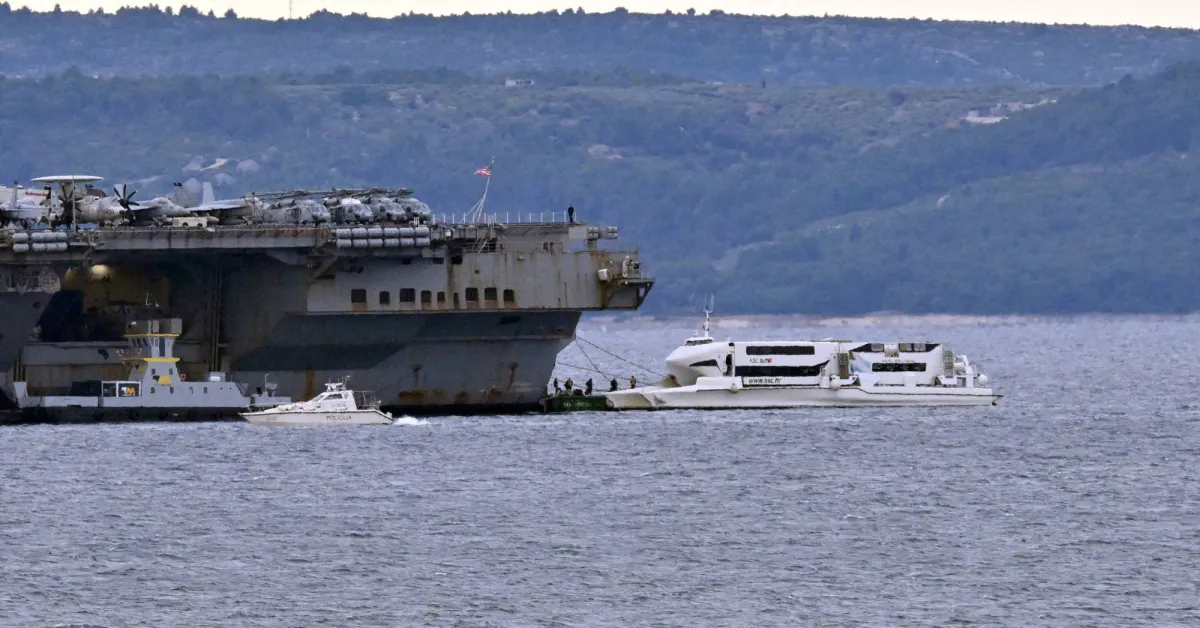
The U.S. aircraft carrier Gerald Ford has left Croatia after spending five days there, with the U.S. Navy confirming that it has completed essential repairs and received the necessary supplies to continue its operations. The carrier, which is considered the largest in the world, remains on standby to carry out its mission in any area where it is needed.
This departure comes after a period of challenges, as the carrier had suffered a fire onboard on March 12, resulting in significant damage to approximately 100 beds. There were also reported issues with the toilet system, causing long lines at restrooms during its time at sea.
Details of the Event
The aircraft carrier was present in the Mediterranean Sea prior to the commencement of U.S.-Israeli attacks on Iran on February 28. These attacks followed a significant U.S. military buildup in the region, with the Abraham Lincoln aircraft carrier deployed alongside the Gerald Ford as part of efforts to bolster U.S. military presence in the Middle East.
The U.S. military announced that the fire that broke out aboard the carrier had been contained, but the resulting damage affected the carrier's ability to effectively carry out its missions. Nevertheless, the U.S. Navy assured that the carrier was well-prepared to face any future challenges.
Background & Context
The Gerald Ford aircraft carrier is part of the United States' strategy to enhance its military presence in the Middle East, especially amid rising tensions with Iran. The airstrikes conducted by the U.S. and Israel against Iran in February were part of this strategy, representing an escalation in the ongoing conflict in the region.
Historically, aircraft carriers have played a pivotal role in U.S. military operations, serving as launch platforms for warplanes and providing logistical support in conflict zones. However, the technical challenges faced by the carrier highlight the importance of ongoing maintenance and necessary upgrades to ensure its readiness.
Impact & Consequences
The implications of the Gerald Ford's departure from Croatia extend beyond military aspects, reflecting the political tensions in the region. The U.S. decision to bolster its military presence in the Mediterranean comes at a sensitive time, with increasing concerns about escalating conflict with Iran.
Furthermore, the carrier's departure may impact relations between the United States and European countries, as some nations seek to reduce tensions in the region. These dynamics could influence how European countries address security issues related to the Middle East.
Regional Significance
The departure of the Gerald Ford from Croatia is part of a broader U.S. strategy in the region, which may affect security and stability in neighboring Arab countries. Amid rising tensions, some Arab nations may feel apprehensive about escalating conflict in the area, potentially leading to political and economic repercussions.
Ultimately, military and political developments in the region remain under scrutiny, as Arab nations watch closely for any changes that could impact their security and stability.