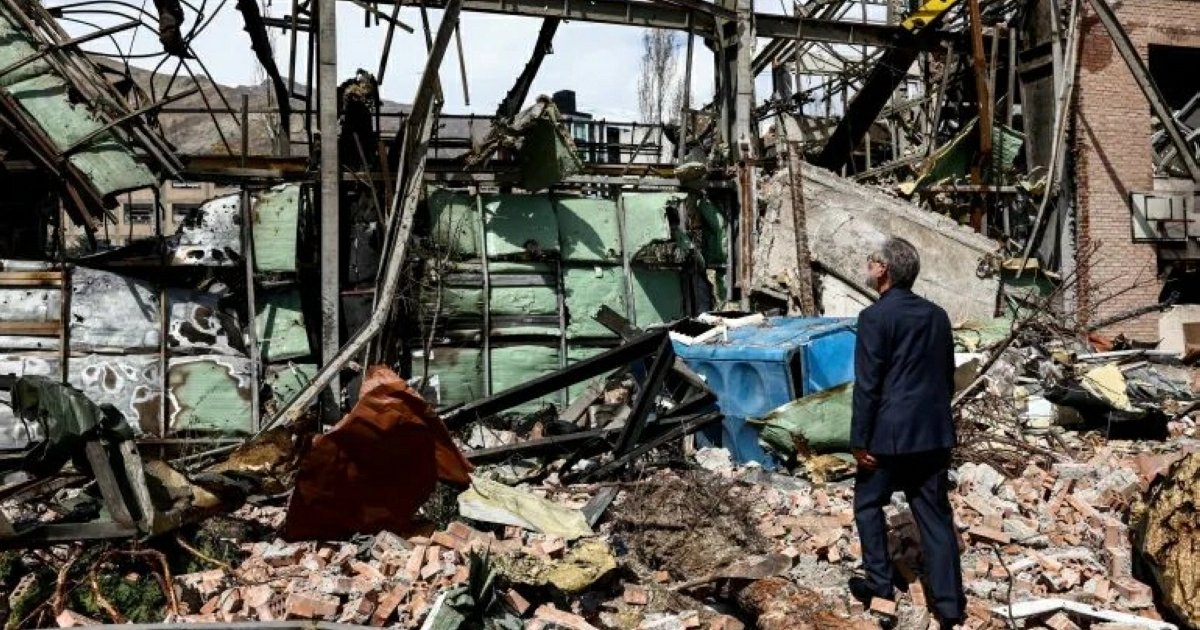
The United States and Israel have carried out widespread airstrikes on Iranian territory, targeting Sharif University, one of the country's leading scientific institutions, as well as residential areas. The attacks have resulted in the deaths of at least 34 people, including six children, marking an unprecedented military escalation.
In the context of these attacks, a senior Iranian official confirmed that Tehran would not reopen the Strait of Hormuz in exchange for a temporary ceasefire, indicating that the United States lacks seriousness in reaching a permanent agreement. He also reported that Iran is reviewing proposals from Pakistan for a ceasefire.
Details of the Attacks
According to Fars News Agency, an airstrike resulted in the deaths of 23 individuals in Baharistan province, including four girls and boys under the age of ten. Additionally, five people were killed in an attack on a residential building in Qom, while another six died in Bandar Lengeh. The attacks affected more than ten Iranian cities, including Bandar Abbas, Ahvaz, and Shiraz.
The strikes on Sharif University, considered the Iranian equivalent of the Massachusetts Institute of Technology (MIT), caused significant damage to the mosque and laboratories within the campus. Mohammad Reza Aref, the Iranian Vice President, described the attack as a manifestation of Trump's madness, asserting that Iranian knowledge cannot be destroyed by bombs.
Background & Context
These attacks come amid escalating tensions between Iran and the United States, with Trump issuing severe threats via social media, demanding that Iran reopen the Strait of Hormuz or face dire consequences. The Strait of Hormuz is a vital artery for oil and gas transport, through which approximately 20% of global supplies pass.
On the other hand, the spokesperson for the Iranian Foreign Ministry warned that the country would not succumb to pressure to accept any unfavorable agreement, stating that Trump's remarks reflect a criminal mentality and amount to incitement to war crimes.
Impact & Consequences
Concerns are growing that these attacks could lead to further escalation in the region, with Ali Akbar Velayati, advisor to the Supreme Leader of Iran, warning that any mistake by any party could result in significant disruptions to global energy flows and international trade. He also noted that the United States has yet to understand the geopolitical realities of power in the region.
Simultaneously, Israel has also faced several missile attacks, complicating the security situation in the area. Reports indicate that several Iranian missiles were launched toward various regions in Israel, resulting in injuries and material damage.
Regional Significance
These events underscore the importance of the situation in the Arabian Gulf and its impact on Arab countries. The military escalation between Iran and the United States could negatively affect the security and stability of the region, especially amid ongoing tensions between major powers.
In conclusion, the current situation requires Arab countries to take clear stances regarding the military escalation and work to enhance regional security to avoid any negative repercussions that may affect their interests.