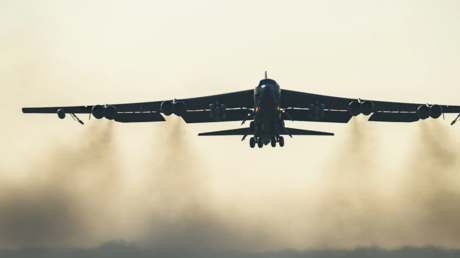
General Dan Cain, the Chairman of the Joint Chiefs of Staff, reported that U.S. forces have achieved significant air superiority in parts of Iran, having successfully destroyed Iranian air defenses. This air superiority has enabled U.S. B-52 bombers to fly directly over Iranian airspace, reflecting strategic changes in U.S. military operations in the region.
B-52 bombers are strategic aircraft known for their long-range bombing capabilities and are a core component of the U.S. Air Force. Their flight over Iran demonstrates the United States' ability to conduct complex military operations in challenging environments and indicates a potential escalation in tensions between the U.S. and Iran.
Details of the Event
General Cain clarified that U.S. military operations in the region are part of a broader strategy aimed at enhancing regional security and countering potential threats. The destruction of Iranian air defenses is a critical step in this context, as it allows U.S. forces greater freedom of movement in Iranian airspace.
The flight over Iran is an unprecedented event in recent years, as Iranian air defenses have been considered among the strongest in the region. This development reflects the technological advancements and sophisticated military capabilities possessed by the United States.
Background & Context
Historically, U.S.-Iran relations have been marked by increasing tensions, particularly following the U.S. withdrawal from the Iranian nuclear deal in 2018. Since then, the U.S. has imposed strict economic sanctions on Iran, exacerbating the situation in the region.
In recent years, Iran has bolstered its military capabilities, including the development of air defense systems. However, U.S. military superiority remains evident, as demonstrated by recent operations conducted by U.S. forces.
Impact & Consequences
The flight over Iran could lead to heightened tensions in the region, as Iran may perceive this action as provocative. Iran is likely to respond to this escalation by increasing its military activities or forming new alliances with other countries in the region.
Any escalation in tensions could affect the stability of the entire region, as these events could lead to armed conflicts or an intensification of proxy wars currently occurring in the area.
Regional Significance
Recent developments could significantly impact neighboring Arab countries, as concerns grow that tensions between the U.S. and Iran may destabilize the region. Arab nations may find themselves compelled to adapt to the new situation, either by enhancing their military capabilities or seeking new alliances.
In light of these circumstances, Arab countries must be prepared to face increasing security challenges and work to strengthen regional cooperation to address any potential threats.