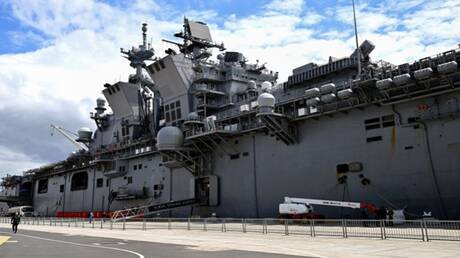
The US Central Command, referred to as CENTCOM, has confirmed that the amphibious assault ship USS Tripoli has not been subjected to any attack, responding to Iranian allegations that it was targeted by a missile. CENTCOM clarified that the ship is continuing its navigation in the Arabian Sea without any obstacles.
This statement comes at a sensitive time as the region experiences escalating tensions between the United States and Iran, with both countries exchanging accusations regarding military activities in the territorial waters. This situation has raised concerns among many nations in the region and globally, especially with the increase in maritime incidents.
Details of the Incident
Earlier, Iranian media claimed that the USS Tripoli had been attacked by a missile, prompting swift reactions from US military officials. In an official statement, CENTCOM confirmed that these claims are not based on any facts and that the ship continues to perform its duties normally.
Moreover, CENTCOM emphasized that the USS Tripoli is part of US efforts to enhance maritime security in the region, playing a vital role in rapid crisis response operations.
Background & Context
Historically, the Arabian Sea has witnessed recurring tensions between US and Iranian naval forces, as both countries seek to bolster their influence in these strategic waters. These tensions have intensified in recent years, particularly following the US withdrawal from the Iranian nuclear deal.
The geopolitical landscape in the region is complicated by various factors, including the presence of international shipping lanes and the ongoing military posturing by both nations, which contributes to an atmosphere of uncertainty and potential conflict.
Impact & Consequences
This incident underscores the importance of maritime security in the region, where any escalation in tensions could have severe consequences for commercial shipping. Such events may impact oil prices and global markets, given that the Arabian Sea is one of the most crucial maritime routes for oil transportation.
Moreover, the implications of these tensions extend beyond economic factors, as they may also influence military strategies and alliances among regional players, potentially leading to increased military cooperation between Arab states and the United States.
Regional Significance
The incident highlights the growing tensions in the Arabian Sea and their impact on maritime security and the global economy. As nations navigate these complex waters, the need for diplomatic engagement and conflict prevention becomes increasingly critical.
In conclusion, the situation remains fluid, and ongoing monitoring of developments in the region is essential to understand the broader implications for international relations and security.