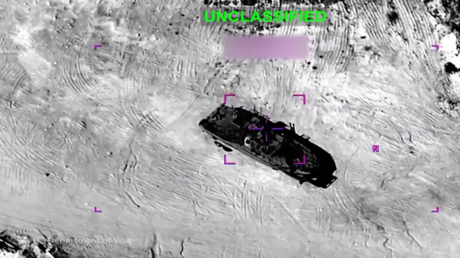
On Saturday, the US Central Command (CENTCOM) released footage documenting the attack on Iranian warships, reflecting the ongoing escalation of tensions between the United States and Iran. This footage comes at a sensitive time, as fears grow over the potential for conflict in the Gulf region.
The attack, which occurred earlier this week, targeted a group of Iranian vessels believed to be involved in activities threatening maritime navigation. This assault has elicited varied reactions from Iranian officials, who condemned the action and described it as a violation of their country's sovereignty.
Details of the Incident
According to reports, US forces utilized drones and guided missiles to target the Iranian ships, resulting in the destruction of several vessels. The footage released by CENTCOM demonstrated the precision with which the attack was executed, reflecting the advanced military capabilities of the United States in the region.
This operation is part of the United States' strategy to counter what it perceives as increasing Iranian threats in the Gulf, as Washington seeks to protect its interests and those of its allies in the area. US officials indicated that this step was necessary to ensure the safety of maritime navigation in the Strait of Hormuz, which is considered one of the most crucial maritime passages in the world.
Background & Context
Historically, US-Iranian relations have seen escalating tensions since the United States withdrew from the Iranian nuclear deal in 2018. Since then, Washington has imposed a series of economic sanctions on Tehran, exacerbating tensions between the two countries. The region has also witnessed a rise in military activities, including attacks on oil tankers and commercial vessels.
In recent years, Iran has shown an increasing willingness to bolster its military presence in the Gulf, raising concerns among neighboring countries and the United States. This has manifested in the development of advanced naval and missile capabilities, prompting the US to enhance its military presence in the region.
Impact & Consequences
This attack could have far-reaching implications for US-Iran relations, potentially leading to a new escalation of conflict. It may also affect global oil prices, as any escalation in the region could heighten fears of disruptions to oil supplies.
Furthermore, this escalation could impact regional security, as neighboring countries may feel compelled to enhance their military capabilities to address potential threats. It could also lead to increased tensions between Iran and its allies in the region, such as Hezbollah in Lebanon and the Houthis in Yemen.
Regional Significance
Arab countries are directly affected by any escalation in tensions between the United States and Iran, as many of these nations rely on regional stability to ensure their economic and political security. Any escalation could also result in an influx of refugees into neighboring countries, increasing the pressures on these nations.
In light of these circumstances, Arab countries must be prepared to face any potential repercussions, both militarily and economically. They should also work to enhance regional cooperation to address common challenges.