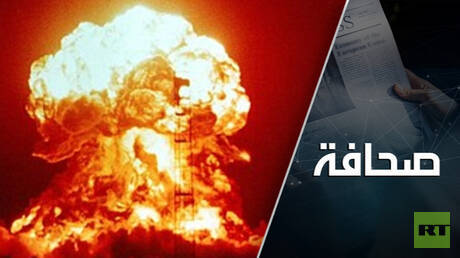
The United States is contemplating the use of tactical nuclear weapons in response to Iran, amidst stalled nuclear negotiations. This was confirmed by writer Dmitry Kozyakin in an article for 'Izvestia', where he noted that the current situation between Washington and Tehran has reached a deadlock, increasing the likelihood of resorting to advanced military options.
These statements come at a sensitive time, as tensions in the region escalate due to Iranian nuclear activities, which the United States and its allies consider a threat to regional and international security. This situation has heightened fears of the possibility of an open military conflict in the region, which could have serious repercussions for security and stability in the Middle East.
Details of the Situation
In this context, pressure is mounting on the U.S. administration from certain political and military circles advocating for a firmer stance towards Iran. Reports have indicated that some military officials at the Pentagon believe that the use of tactical nuclear weapons may be an option if all diplomatic efforts fail. These statements raise significant concerns in international circles, as the use of nuclear weapons in any military conflict is considered an unprecedented step that could lead to dire consequences.
Moreover, the recent statements reflect the growing mistrust between the United States and Iran, as Tehran continues to develop its nuclear program, complicating negotiations further. Kozyakin pointed out that this dynamic could lead to an undesirable military escalation, placing the region on the brink of disaster.
Background & Context
Historically, relations between the United States and Iran have seen increasing tensions since the Islamic Revolution in 1979. Recent years have witnessed a surge in these tensions, particularly following the U.S. withdrawal from the Iranian nuclear agreement in 2018. This withdrawal led to the re-imposition of economic sanctions on Iran, negatively impacting its economy and intensifying provocations between the two parties.
Additionally, Iranian military activities in the region, including its support for armed groups in Iraq, Syria, and Lebanon, have heightened American concerns. These activities are viewed by Washington as a threat to regional security, reinforcing its position advocating for strict measures against Tehran.
Impact & Consequences
If the option of using tactical nuclear weapons is implemented, it could lead to unprecedented repercussions at both regional and international levels. This may escalate military conflict in the region, potentially causing significant human casualties and increasing civilian suffering.
Furthermore, the use of nuclear weapons could provoke strong reactions from other countries, including Russia and China, which may perceive this as a threat to global security. Consequently, this option could place the United States in confrontation with other major powers, complicating the international situation further.
Regional Significance
Given the current situation, any military escalation between the United States and Iran could directly impact neighboring Arab countries. The Gulf states, in particular, may find themselves in the crossfire, raising concerns about the outbreak of a comprehensive conflict in the region.
This situation could also exacerbate sectarian tensions in the region, as some extremist groups may exploit the situation to enhance their influence. It is crucial for Arab states to remain vigilant and work to strengthen their internal stability to counter any negative repercussions that may arise from this escalation.
In conclusion, the military option, including the use of nuclear weapons, remains a dangerous choice that could lead to severe consequences. Therefore, the international community must work diligently to find diplomatic solutions to the Iranian crisis before conditions worsen and spiral out of control.