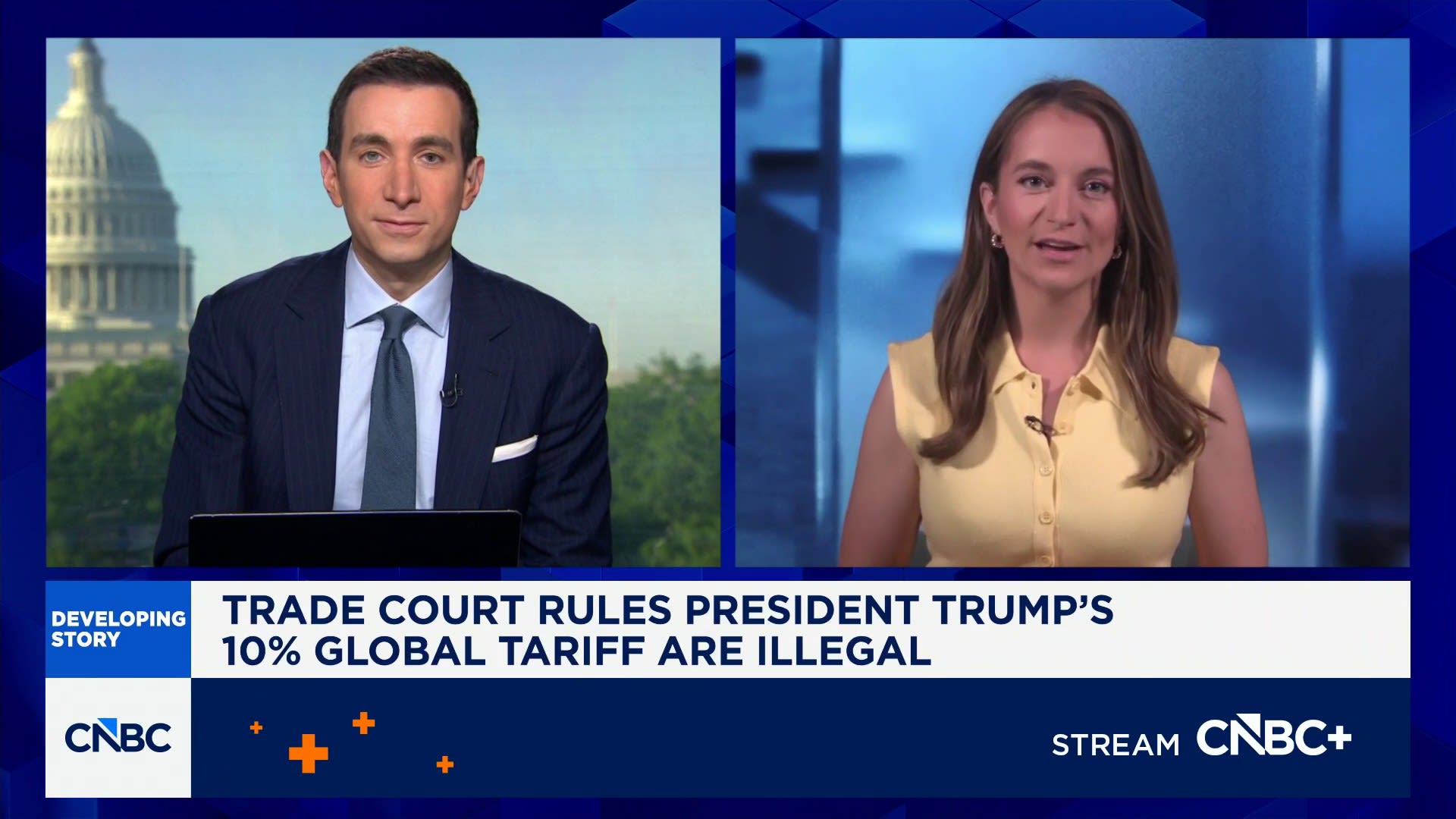
A federal trade court in the United States has declared that the 10% global tariffs imposed by President Donald Trump are illegal, representing a significant blow to his administration's economic agenda. This ruling comes shortly after the U.S. Supreme Court annulled previous tariffs set by Trump, increasing pressure on the administration amid current economic challenges.
These developments arise at a critical time for the U.S. economy, as Trump seeks to bolster his economic position ahead of the upcoming presidential elections. The imposition of tariffs has drawn widespread criticism from businesses and consumers alike, who view them as an additional burden on the economy.
Details of the Ruling
In its ruling, the federal court affirmed that the tariffs imposed by Trump were not based on strong legal foundations, indicating that the administration may face difficulties in implementing its trade policies. Many analysts have noted that this ruling could strengthen the position of opponents to Trump's trade policies and provide renewed momentum for calls to reconsider these policies.
It is noteworthy that the tariffs were intended to protect American industries from foreign competition, but they often resulted in increased prices for American consumers, leading to widespread discontent within the community.
Background & Context
Historically, the United States has experienced numerous trade tensions with other countries, particularly with China and the European Union. Trump utilized tariffs as a tool to pressure these nations into negotiating trade agreements more favorable to the U.S. However, these policies have not been without consequences, leading to heightened trade tensions and increased fears of a full-blown trade war.
In recent years, international trade has become a hot topic in American politics, with growing debates on how to protect domestic industries without adversely affecting consumers. Research has shown that tariffs can lead to job losses in certain sectors, complicating the issue further.
Impact & Consequences
This ruling is seen as a victory for opponents of Trump's trade policies and may encourage more businesses and individuals to challenge government decisions. It also suggests that the administration may encounter difficulties in executing its economic policies in the future, potentially affecting market stability.
Furthermore, this ruling could prompt a reevaluation of how the United States engages with its trade partnerships, potentially bolstering calls for more balanced trade policies. It may also impact trade relations between the U.S. and other countries, increasing uncertainty in global markets.
Regional Significance
For the Arab region, this ruling may have indirect effects on trade relations with the United States. Many Arab countries are considered important trade partners for the U.S., and changes in American trade policies could affect their exports and investments.
Additionally, economic stability in the United States is a crucial factor for global market stability, impacting Arab economies that rely on trade and foreign investment. Therefore, any shifts in U.S. trade policies could significantly influence economic growth in the region.