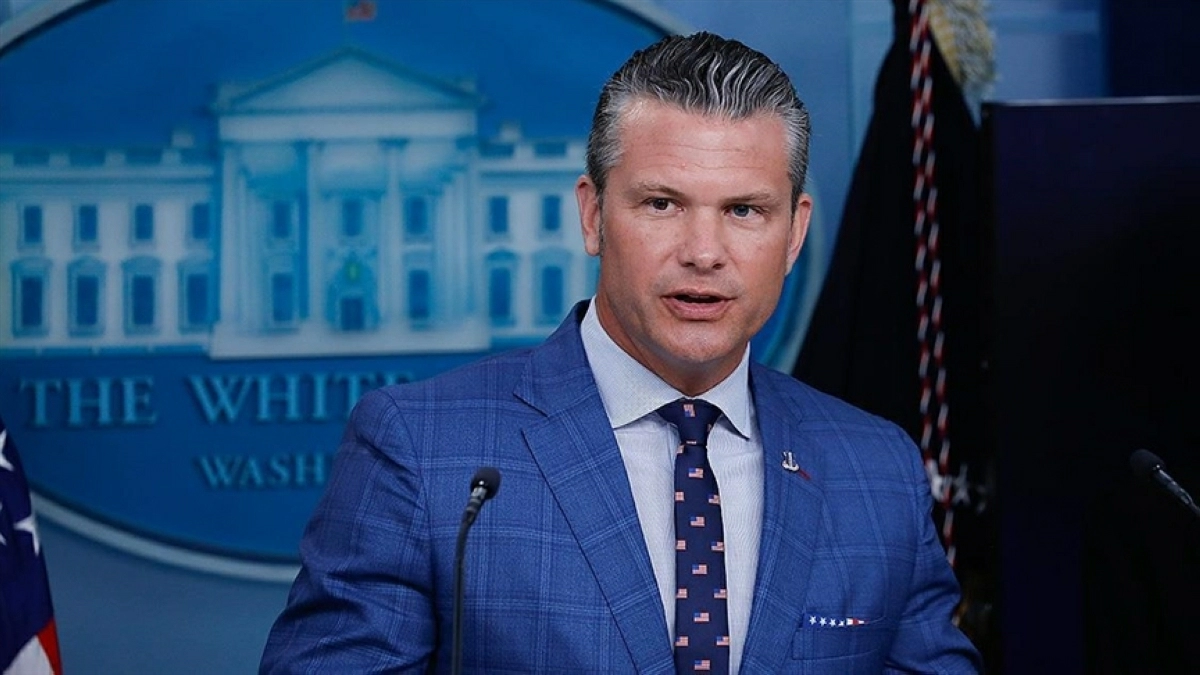
U.S. Defense Secretary Pete Hegseth confirmed during a press conference held in Washington that the coming days will be 'crucial' in shaping U.S. policy towards Iran. Hegseth explained that the United States has multiple options available as pressure on Iran increases, noting that his country is seeking to reach an agreement with Tehran but is prepared to continue military operations if negotiations fail.
In the same context, General Dan Caine, Chairman of the Joint Chiefs of Staff, indicated that U.S. forces targeted over 11,000 Iranian sites last month as part of efforts to undermine Iran's military capabilities. He also mentioned that more than 150 Iranian warships have been destroyed, with operations ongoing against vital military and industrial sites.
Details of the Event
Hegseth's and Caine's statements come at a time when tensions in the region are escalating, a situation that has been intensifying since February 28. Hegseth urged other nations to play a larger role in securing the Strait of Hormuz, stressing that the responsibility for protecting this vital maritime corridor does not rest solely on the United States.
The Strait of Hormuz is one of the most important maritime passages in the world, through which approximately 20% of global oil exports pass. Therefore, any military escalation in the region could significantly impact global oil markets, increasing the importance of the current U.S. statements.
Background & Context
Historically, relations between the United States and Iran have been tense, especially following Washington's withdrawal from the Iranian nuclear agreement in 2018. Since then, the United States has imposed stringent economic sanctions on Iran, leading to a deterioration of the country's economic situation and an increase in military tensions in the region.
The region has also witnessed a surge in military activities, with Iran supporting armed groups in Iraq, Syria, and Lebanon, further escalating tensions with the United States and its allies. This historical context is essential for understanding the current U.S. statements, as Washington seeks to balance military and diplomatic pressure on Iran.
Impact & Consequences
The recent U.S. statements serve as a warning to Tehran that time is running out for reaching an agreement. If Iran continues to ignore U.S. calls for diplomacy, it may face military escalation that could lead to greater U.S. intervention in the region.
On the other hand, these developments could affect the security situation in the Gulf region, where attacks on commercial vessels or oil facilities may increase, potentially leading to rising oil prices and greater instability in global markets.
Regional Significance
Arab countries are directly affected by the tensions between the United States and Iran, especially those located along the shores of the Arabian Gulf. Any military escalation could have negative repercussions on regional security, prompting Arab nations to take proactive steps to protect their interests.
Moreover, the situation in Iraq, Syria, and Lebanon, where Iran plays a significant role, could be greatly influenced by the developments in U.S.-Iranian relations. Thus, the Arab region needs to enhance security and diplomatic cooperation to face potential challenges.