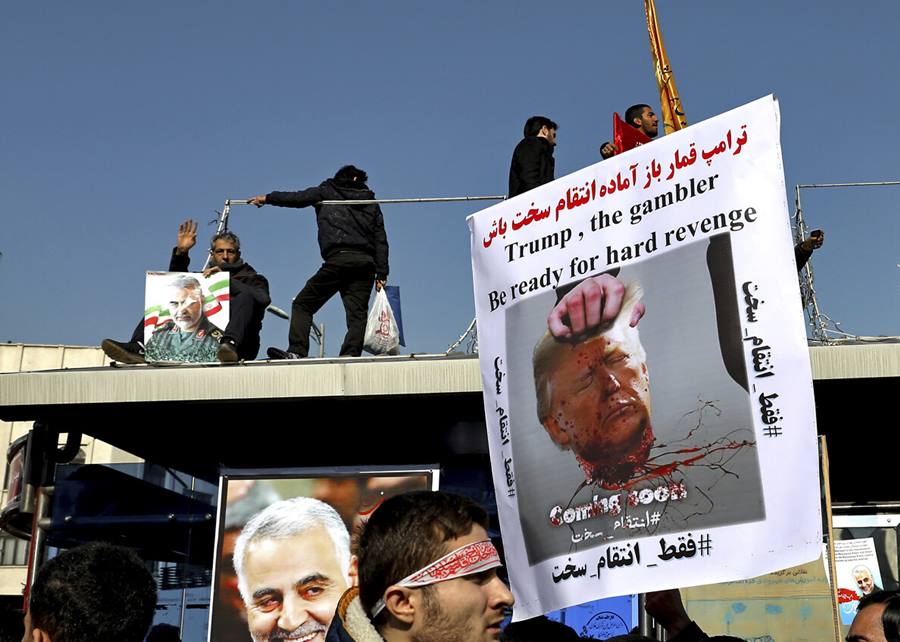
The U.S. State Department has announced the detention of two relatives of the late Iranian military leader Qassem Soleimani, following Secretary of State Marco Rubio's revocation of their legal permanent residency status. This action is part of the United States' efforts to monitor activities associated with Iran and reflects the ongoing tensions between Washington and Tehran.
This step is considered part of a broader policy adopted by the U.S. administration towards Iran, aiming to reduce its influence in the region. The decision comes at a sensitive time as concerns grow over Iran's military and economic activities in the Middle East.
Details of the Detention
The two relatives were detained after their permanent residency status was revoked, which means they could face imminent deportation. No additional details have been disclosed regarding the identities of the relatives or their place of detention, but informed sources have confirmed that this action is part of a strict policy adopted by the United States against individuals linked to the Iranian regime.
This decision follows a period of escalating tensions between the United States and Iran, particularly after Soleimani was killed in a U.S. drone strike in 2020, which significantly impacted relations between the two countries. This incident provoked strong reactions in Iran, where many viewed it as an assault on Iranian sovereignty.
Background & Context
Qassem Soleimani was the commander of the Quds Force, an elite unit of the Iranian Revolutionary Guard, and played a pivotal role in expanding Iran's influence in the region. Following his death, U.S.-Iran relations have deteriorated markedly, with Washington taking numerous punitive measures against Tehran, including imposing severe economic sanctions.
These measures are part of a broader strategy aimed at undermining Iranian activities in the Middle East, which include supporting armed groups in Iraq, Syria, and Lebanon. The United States is also seeking to strengthen its alliances with Arab nations to counter Iranian threats.
Impact & Consequences
This move could escalate tensions between the United States and Iran, as Tehran may respond with similar actions against American citizens or individuals linked to the U.S. government. Additionally, these measures could affect relations between the United States and European countries that are trying to maintain the nuclear agreement with Iran.
These events signal the ongoing conflict between the United States and Iran and may impact stability in the region, with increasing fears of escalating violence and armed conflicts. Furthermore, these actions could exacerbate humanitarian crises in affected conflict zones.
Regional Significance
Arab countries are significantly affected by the tensions between the United States and Iran, as Iran is a key player in many regional conflicts. These events may increase pressure on Arab governments to adapt to the changing situation and may push them to enhance cooperation with the United States to confront Iranian threats.
At the same time, these tensions could deepen divisions within Arab societies, as opinions vary on how to deal with Iranian influence. There are also concerns that these events could worsen humanitarian crises in countries suffering from conflicts.
In conclusion, these events highlight the importance of monitoring developments in U.S.-Iran relations and their impact on security and stability in the region. Arab countries must be prepared to address the challenges arising from these tensions and work to enhance regional cooperation to confront potential risks.