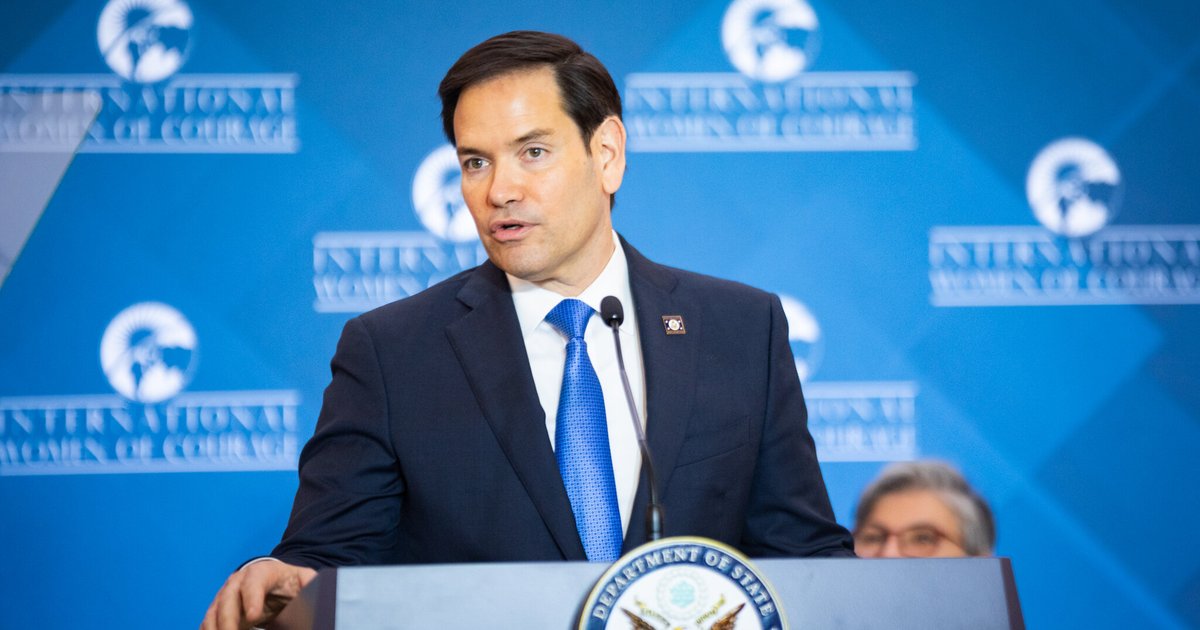
U.S. Secretary of State Marco Rubio expressed the United States' disappointment on Monday regarding NATO's refusal to provide support for military operations against Iran. Rubio explained that this position will be subject to review after the conflict, reflecting escalating tensions in relations between the United States and its NATO allies.
In an interview with Al Jazeera, Rubio emphasized that former U.S. President Donald Trump had pointed out that NATO made a "grave mistake" by not supporting military operations against Iran, stressing that this stance could impact the future of cooperation between the United States and NATO member states.
NATO's Stance and U.S. Concerns
Rubio stated, "If NATO is only about defending Europe when it is attacked, but refuses to grant us the right to use military bases when we need them, then this is not a good arrangement." He affirmed that this situation complicates the United States' ability to continue supporting NATO, noting that the right to use military bases provides the U.S. with leverage and flexibility in global operations.
Rubio also indicated that Washington may reconsider agreements with NATO if member states continue to refuse support during conflicts. He emphasized the importance of military cooperation between the United States and its allies, especially in light of increasing threats from Iran.
Background & Context
Historically, the United States has viewed NATO as a strategic ally in addressing global threats, including those from countries like Iran. However, tensions have escalated in recent years, particularly following the U.S. withdrawal from the Iranian nuclear deal in 2018, which led to heightened tensions in the region.
In this context, there have been calls from some U.S. officials to enhance military cooperation with other allies in the region, such as the Gulf Arab states, in an effort to counter Iranian threats. However, NATO's refusal to provide support for military operations may raise questions about the effectiveness of traditional military alliances.
Impact & Consequences
Rubio's statements carry significant implications for the future of U.S.-NATO relations. These remarks indicate a growing sense of frustration among U.S. officials towards their allies, which may lead to a reassessment of U.S. military strategies in the region.
If these tensions persist, they could affect the United States' ability to form effective alliances to address global threats, potentially exacerbating security situations in areas like the Middle East.
Regional Significance
The relationships between the United States and Arab countries, particularly the Gulf states, are pivotal in the context of tensions with Iran. If the United States continues to reassess its relations with NATO, this could impact its military strategies in the region, potentially altering the dynamics of regional security.
NATO's lack of support for U.S. operations against Iran may strengthen Tehran's position and increase tensions in the region, prompting Arab states to take proactive measures to ensure their security and stability.