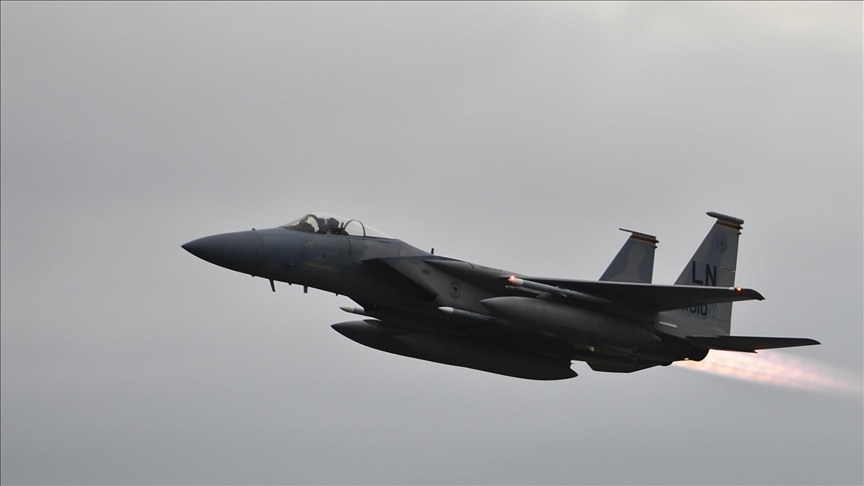
Military sources have confirmed that a U.S. fighter jet was shot down over Iran, marking the first confirmed loss of an American warplane due to enemy fire in over two decades. This incident reflects a significant escalation in military tensions in the region and raises questions about the future of U.S. military operations in the Middle East.
This incident comes at a sensitive time, as tensions between the United States and Iran are increasing, particularly following a series of military and political events that have unfolded in the region in recent years. The downing of the U.S. fighter jet serves as evidence of Iran's capability to target warplanes, which could alter the dynamics of the conflict in the area.
Details of the Incident
According to reports, the U.S. fighter jet was shot down during a military mission over Iranian territory, leading to the confirmation of the loss by the U.S. Department of Defense. This incident is considered unprecedented in the history of modern conflicts, as no similar losses of American warplanes have been recorded in over 20 years.
This incident demonstrates that Iran has significantly developed its defensive capabilities, enhancing its position in the face of military and political pressures from the United States and its allies. Advanced Iranian air defense systems were reportedly used in this attack, raising concerns about the ability of the U.S. to conduct military operations in the region without facing significant risks.
Background & Context
Over the past two decades, U.S. forces have dominated the skies in the Middle East, with no recorded losses of their warplanes due to enemy fire. However, this incident indicates a shift in the balance of power, as Iran has become more capable of countering military threats.
Historically, U.S.-Iran relations have been marked by increasing tensions since the Iranian Revolution in 1979. These tensions have led to a series of military conflicts, including wars in Iraq and Afghanistan, where U.S. forces have worked to bolster their presence in the region.
Impact & Consequences
This incident could have significant repercussions for U.S. military strategy in the Middle East. It may lead to a reassessment of military operations and an enhancement of security measures to protect warplanes from potential threats.
Moreover, this incident could strengthen Iran's position in international negotiations, as it may be used as leverage against the United States and its allies. Additionally, this event might encourage other countries in the region to bolster their military capabilities, further escalating tensions in the area.
Regional Significance
In the Arab context, this incident is seen as an indicator of rising military tensions in the region, which could affect security and stability in neighboring countries. Some Arab nations may feel concerned about the increasing Iranian threats, prompting them to enhance their military cooperation with the United States.
This incident also highlights the importance of diplomatic dialogue in resolving conflicts, as military escalation could lead to catastrophic outcomes for all parties involved. It is crucial for Arab nations to strengthen their security and diplomatic strategies to address the growing challenges in the region.