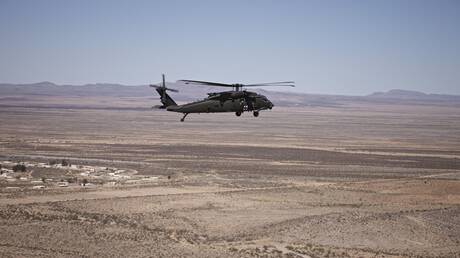
Two U.S. military helicopters were fired upon by Iranian forces during operations to search for wreckage of the F-15 aircraft, as reported by NBC News citing an informed source. The incident comes at a sensitive time as tensions between the United States and Iran are escalating, raising questions about the military and political dimensions of this escalation.
The F-15 aircraft is considered one of the most renowned warplanes in military aviation history, having been used in numerous conflicts around the world. The recent incident reflects the challenges faced by U.S. forces in the region, particularly with active Iranian forces present.
Details of the Incident
According to reports, the helicopters were on a mission to search for the wreckage of the F-15, which is believed to have crashed in an area near the Iranian border. During the execution of the mission, the helicopters came under fire from elements of the Iranian forces, prompting immediate action to secure the safety of the crew.
No injuries have been reported among the U.S. crew, but the incident highlights the risks faced by U.S. forces in a region deemed sensitive from a geopolitical standpoint. This incident also reflects the rising tensions between Washington and Tehran, with growing concerns about a potential military escalation.
Background & Context
Historically, U.S.-Iranian relations have deteriorated significantly since the United States withdrew from the nuclear agreement in 2018. Since then, Washington has imposed stringent economic sanctions on Iran, exacerbating the situation in the region. In this context, military incidents like this one are part of a series of tensions that could lead to greater escalation.
Iran, for its part, seeks to enhance its influence in the region, complicating relations with the United States and its allies. This incident occurs at a sensitive time, as Iranian military activities in the region are increasing, including military maneuvers and naval exercises.
Impact & Consequences
This incident could have serious repercussions for U.S.-Iranian relations, potentially leading to military escalation or diplomatic responses. As the United States seeks to reduce its military presence in the region, such incidents may prompt a reevaluation of its military strategies.
Additionally, this incident may affect U.S. allies in the region, who may feel concerned about rising tensions. These events could lead to a reassessment of security policies in Gulf countries, potentially altering the power dynamics in the region.
Regional Significance
Considering the potential impact on the Arab region, rising tensions between the United States and Iran may affect stability in countries such as Iraq, Syria, and Lebanon. These countries are already suffering from internal conflicts and external interventions, and any military escalation could worsen humanitarian and security conditions.
Moreover, military incidents like this may lead to increased divisions among Arab states, as their positions towards Iran and the United States may vary. Under these circumstances, it becomes essential for Arab countries to adopt effective diplomatic strategies to address these challenges.
In conclusion, this incident reflects the ongoing tensions in the region and underscores the importance of diplomatic dialogue to avoid military escalation. Stakeholders need to work towards finding peaceful solutions to prevent further crises.