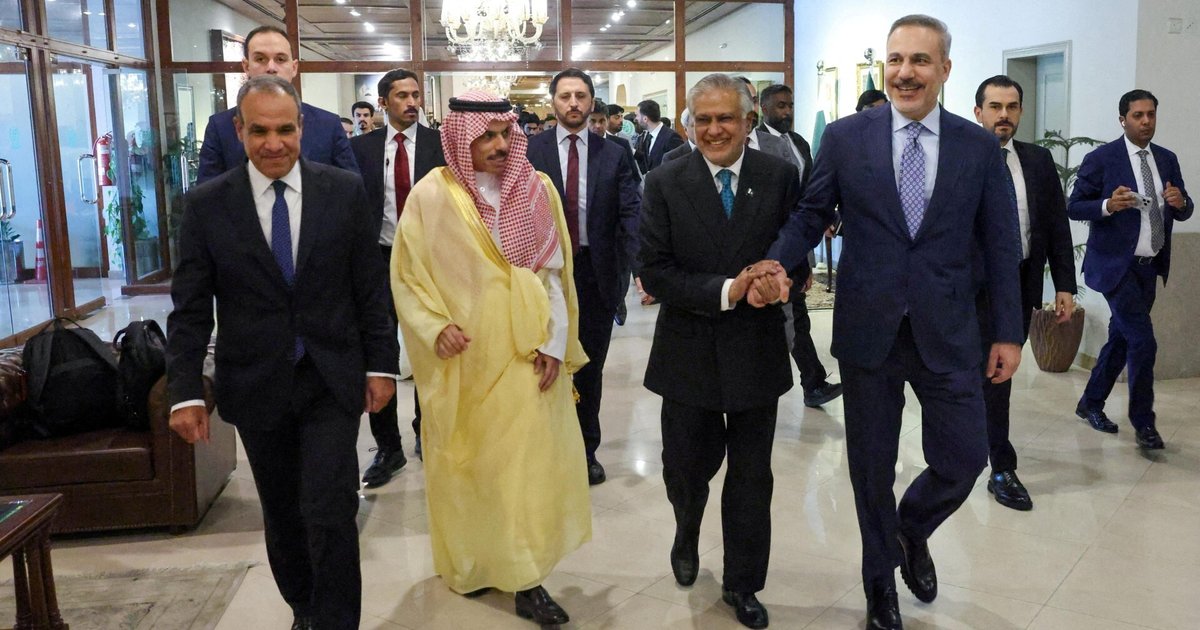
The United States and Iran are reviewing a plan concerning a temporary ceasefire, according to media reports. Sources indicate that Pakistan has submitted the proposal to American and Iranian officials, which is currently under review by both sides.
Under the temporary title of "Islamabad Agreements," the plan involves a two-tier approach: an immediate ceasefire followed by a comprehensive agreement to be finalized within 15 to 20 days. A source confirmed that "all elements must be agreed upon today," noting that the Chief of Army Staff of Pakistan, Asim Munir, has been in contact "throughout the night" with U.S. Vice President G.D. Vance, Special Envoy Steve Witkoff, and Iranian Foreign Minister Abbas Araghchi.
Details of the Event
According to reports from Axios, regional mediators have been discussing the possibility of a 45-day ceasefire that could pave the way for a permanent end to the conflict. However, sources have warned that the chances of reaching even a partial agreement within the next 48 hours are slim, as this plan represents a last-ditch effort to delay a warning from U.S. President Donald Trump.
Trump had previously stated, "If they don't reach an agreement, I will blow everything up there." However, a senior Iranian official reported that Iran will not reopen the Strait of Hormuz in exchange for a temporary ceasefire, indicating Washington's unwillingness to agree to a permanent ceasefire.
Background & Context
Iran closed the Strait of Hormuz in response to U.S.-Israeli bombings that began over a month ago, cutting off oil and natural gas supplies to one-fifth of the world. The Iranian Health Ministry reported that the death toll from U.S.-Israeli attacks has reached at least 2,076, while the HRANA human rights agency based in the U.S. reported a higher toll of 3,531, including 1,607 civilians and 244 children.
This negotiation comes after a series of threats from Trump, who threatened to launch attacks on bridges and power stations if Iran does not reach an agreement and reopen the strait by Tuesday. This is not the first time Trump has set a deadline only to postpone it for Iran.
Impact & Consequences
This negotiation is considered a significant step in attempting to ease the rising tensions in the region. If an agreement is reached, it could lead to greater stability in global energy markets, as the Strait of Hormuz is a vital transit point for oil. However, doubts remain about the seriousness of both parties in adhering to the terms of the agreement.
Furthermore, any progress in these negotiations could contribute to improving relations between Iran and other regional countries, especially those seeking stability in the area. However, at the same time, Iran may face pressure from its regional allies who may view this step as an unacceptable concession.
Regional Significance
Arab countries are directly affected by any escalation or de-escalation in the conflict between the United States and Iran. The stability of the region heavily relies on the relationships between these major powers. Any agreement that leads to a reduction in tensions could positively impact regional security, especially in Gulf countries that depend on stable oil supplies.
In conclusion, all eyes remain on the outcomes of these negotiations, as any agreement could alter the dynamics of the conflict in the region and affect the future relations between Arab countries and Iran.