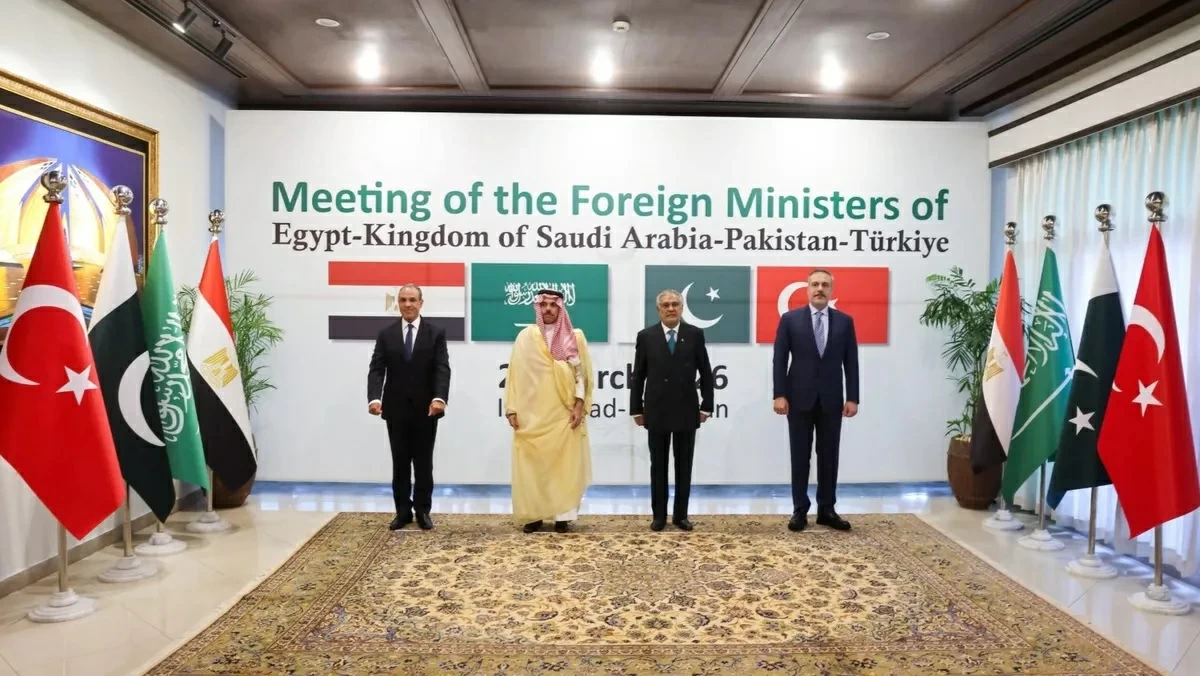
In a notable shift in the political landscape of the Middle East, the intensity of confrontation has eased with the announcement of a two-week ceasefire between Washington and Tehran. This step comes at a critical time as the involved parties seek to find lasting solutions to the multiple crises in the region.
Many Western and Islamic countries, along with international and regional organizations, have welcomed the ceasefire between the United States and Iran. These parties praised Pakistan's role in the mediation efforts that led to this agreement.
Details of the Ceasefire
The Saudi Foreign Ministry issued a statement expressing appreciation for the fruitful efforts made by the Pakistani Prime Minister and the Chief of Army Staff, General Asim Munir, in reaching this ceasefire. The Kingdom emphasized the necessity of keeping the Strait of Hormuz open for navigation, in accordance with the United Nations Convention on the Law of the Sea of 1982, without any restrictions.
Saudi Arabia also expressed hope that this ceasefire would provide an opportunity for a comprehensive and sustainable de-escalation that enhances the region's security and halts any aggressions that affect the sovereignty of its countries.
Background & Context
This step is seen as a positive development towards achieving the desired de-escalation, with Egypt describing it as an important opportunity that should be seized to pave the way for negotiations and diplomacy. The Egyptian Foreign Ministry stressed the importance of full commitment to halting military operations and respecting international navigation freedoms.
Egypt reiterated its support for all initiatives aimed at achieving peace and security, noting its ongoing efforts with Pakistan and Turkey to enhance stability in the region.
Impact & Consequences
The United Nations Secretary-General, António Guterres, welcomed the ceasefire, urging all parties to work towards achieving lasting peace in the Middle East. His spokesperson confirmed that Guterres called on the involved parties to comply with their obligations under international law.
For its part, Oman emphasized the importance of intensifying efforts to find root solutions to the crisis, commending Pakistan's efforts and all parties advocating for an end to the war. The Iraqi Foreign Ministry also considered this development contributes to reducing tensions and enhancing chances for de-escalation.
Regional Significance
This ceasefire is viewed as an important step towards achieving stability in the region, reflecting the international community's desire to end ongoing conflicts. Commitment to the ceasefire could open the door for constructive dialogue that contributes to improving security and economic conditions in the concerned countries.
In conclusion, the hopes of the peoples for achieving lasting peace remain alive, as it requires ongoing international and regional cooperation to ensure that the cycle of violence does not return.