In a surprising move, the United States and Iran have declared a two-week ceasefire, resulting in a substantial recovery in global financial markets. This truce, which comes after weeks of escalating tensions, has contributed to a decline in oil prices to below $100 per barrel, igniting optimism among investors.
U.S. President Donald Trump stated that he agreed to suspend planned attacks on Iranian infrastructure for two weeks, provided that Iran agrees to "fully and immediately open the Strait of Hormuz safely." This announcement propelled stocks higher across various markets, as investors responded positively to the news.
Market Reactions and Performance
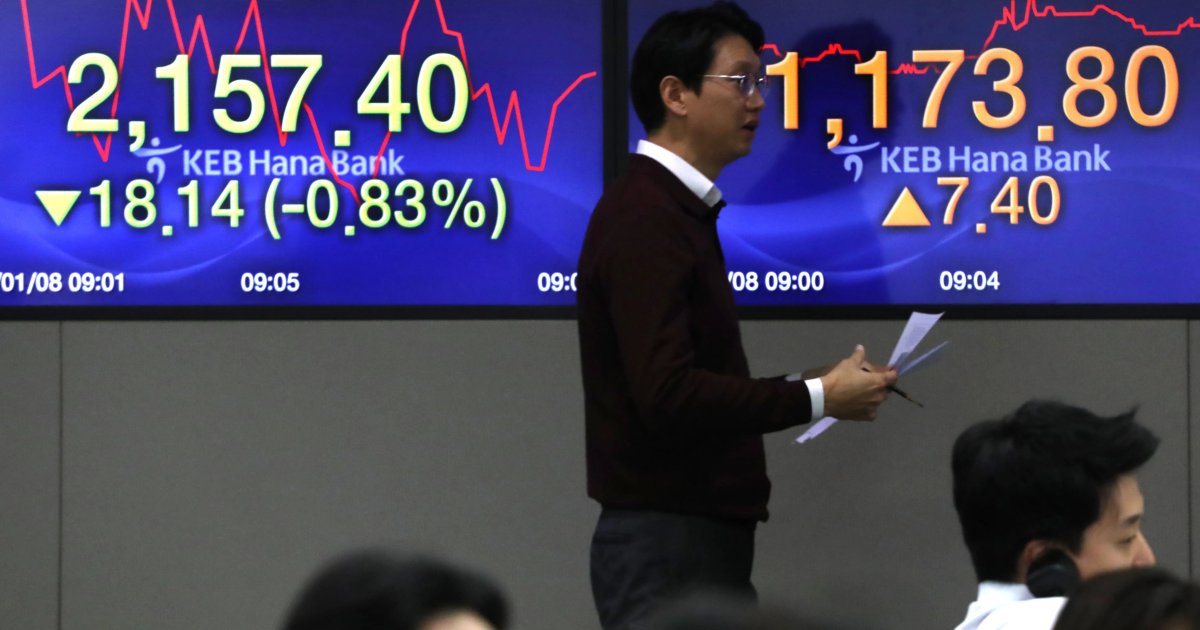
Financial markets witnessed a remarkable uptick, with the Kospi index in South Korea rising by over 5%, while Japan's Nikkei 225 increased by 4%. In the United States, futures for the Dow Jones surged by 967 points, equivalent to 2.1%, reflecting the overall optimism in the markets.
Additionally, Bitcoin prices rose by more than 2%, reaching $71,508. Even safe havens like gold saw support, with spot gold prices increasing by 2.2% to $4,803.83 per ounce.
Background & Context
This ceasefire comes at a sensitive time, as tensions between the United States and Iran have escalated significantly in recent months. The conflict in the region has had a considerable impact on oil prices and global financial markets, leaving investors in a state of ongoing concern.
Historically, the Strait of Hormuz is one of the most crucial maritime passages in the world, through which approximately 20% of global oil passes. Any tension in this area directly affects oil prices, making stability there vital for the global economy.
Impact & Consequences
Despite the current recovery in the markets, there are still concerns that the situation may deteriorate again. Billy Leong, an investment strategist at Global X ETFs, noted that "the markets are experiencing a rebound, but there remains a sense of uncertainty." Investors are still holding onto some hedges, indicating that the situation remains fragile.
While the drop in oil prices may alleviate immediate inflation concerns, the broader impacts of rising energy prices during the conflict continue to affect the global economy. "Concerns about growth alongside inflation shocks are increasing," Leong added.
Regional Significance
These developments are particularly significant for Arab countries, many of which rely on oil exports. The decline in oil prices could have negative effects on the economies of some producing nations, while others may benefit from price stability.
At the same time, the ceasefire could help ease tensions in the region, potentially opening the door for broader dialogue among the involved nations. Stability in the Arabian Gulf is crucial for achieving sustainable development in the region.