Under the leadership of President Donald Trump, the United States is moving towards utilizing religious rhetoric in the context of its war against Iran, which adds a sacred dimension to the conflict. This war has been launched in collaboration with Israel, with declared objectives related to Iran's nuclear and missile programs and its governance.
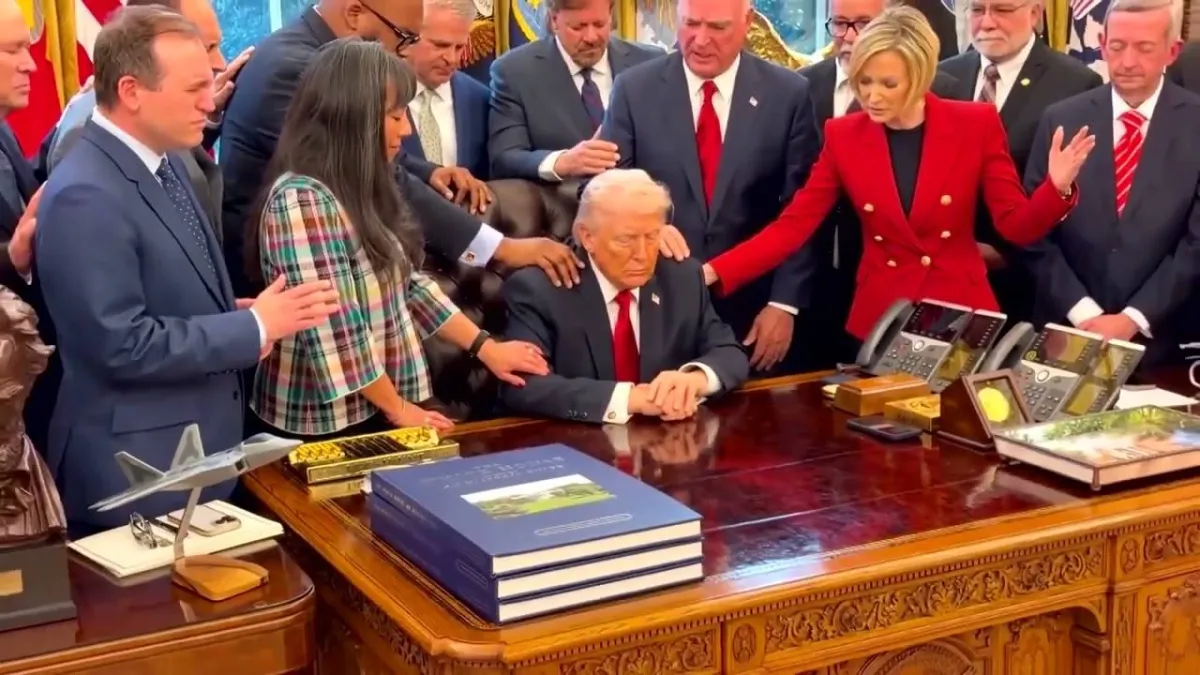
Surrounding Trump are several religious leaders, with prayers being held at the White House, reflecting a Christian religious mobilization in this context. In Israel, Prime Minister Benjamin Netanyahu frequently invokes biblical references, likening the war against Iran to the salvation of the Israelites from Pharaoh.
Details of the Event
Despite the United States being known as a secular state, religious discourse has increasingly converged with politics amid the war with Tehran. During Holy Week, the White House hosted religious representatives in a religious celebration, highlighting this trend.
One of the most notable religious positions came from an evangelical pastor, who called in a video, later deleted, for prayers for Trump, sparking a wave of criticism on social media. This clip demonstrated how religion and politics can influence each other in the context of war.
Background & Context
The parties involved in this war span the three major monotheistic religions: Judaism, Christianity, and Islam, which heightens the sensitivity of religious discourse in this conflict. U.S. Secretary of Defense Pete Hegseth was among those who used religious language in press conferences, calling for prayers for American soldiers in the Gulf "in the name of Jesus Christ", disregarding the presence of military personnel from other faiths.
Hegseth, a former infantry officer, adopts a strong religious rhetoric, invoking biblical texts in the context of war, stating that he is fighting "religious extremists" seeking to acquire nuclear capabilities. This type of discourse raises concerns about how religion is used to justify military actions.
Impact & Consequences
This blending of religion and politics raises questions about respecting religious diversity within the U.S. military and society. Pastor Kenneth Williams, a professor at Georgetown University, pointed out that imposing a particular religious view by a high-ranking official constitutes a lack of respect and could reach the level of abuse of power.
In this context, Pope Leo noted that "God does not love war", highlighting the contradiction between the religious rhetoric used in politics and the spiritual messages calling for peace. In response to the criticisms, the White House spokesperson affirmed that praying for the military is "a very noble thing", reflecting the continuation of this trend.
Regional Significance
Concerns are growing in the Arab region regarding the implications of this religious discourse on existing conflicts, as it may escalate tensions between different religions. Additionally, using religion as a tool in politics could exacerbate sectarian divisions and intensify conflicts.
In conclusion, it seems that the war against Iran under Trump’s administration may take on a religious dimension that could affect relationships between nations and religions in the region, necessitating close monitoring by the international community.