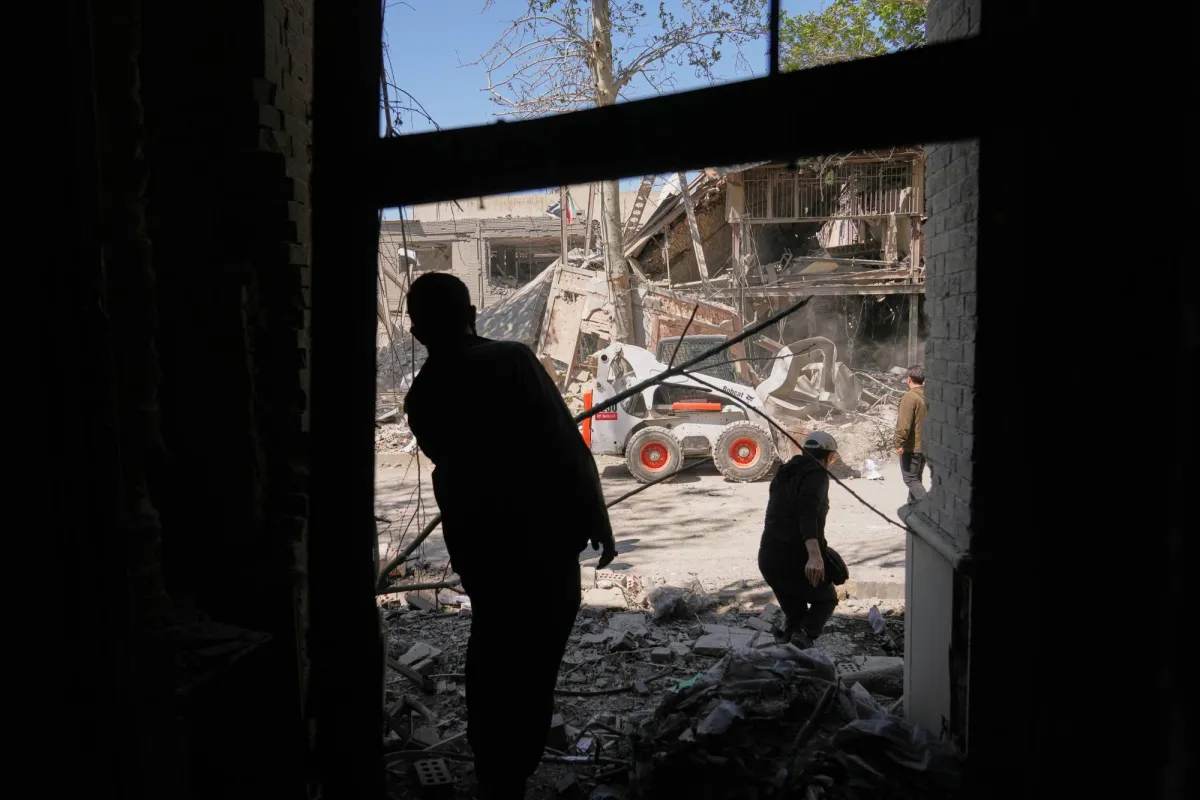
US-Israeli airstrikes destroyed the Rafi Nia synagogue in Tehran this morning, raising international concerns about escalating violence in the region. The Iranian news agency 'Mehr' confirmed that the attack resulted in the complete destruction of the synagogue, coinciding with heightened military pressures on Iran.
Earlier, US President Donald Trump threatened to destroy Iranian infrastructure, stating that the United States could obliterate all bridges and power stations in Iran within four hours if Tehran did not comply with opening the Strait of Hormuz. These remarks came as tensions between the two countries escalated, with Iran dismissing these threats as 'fabricated.'
Details of the Incident
The Israeli army issued a warning in Persian and Arabic, urging Iranians to avoid using trains until 9 PM local time. This warning was part of intensified operations targeting Iranian facilities, with Israeli airstrikes hitting airports and military installations in Tehran, including Mehrabad Airport.
Reports also indicated that the Israeli strikes targeted industrial and petrochemical sites in various parts of Iran, reflecting a clear Israeli strategy to undermine Iranian military capabilities.
Background & Context
These events occur against the backdrop of rising tensions between Iran and the United States, with Iran previously rejecting Trump's threats, asserting that they would not affect Iranian military operations. A spokesperson for the Iranian armed forces noted that the 'offensive language' used by Trump would not impact the morale of Iranian soldiers.
Additionally, there are diplomatic efforts by Pakistan to halt the war, proposing a ceasefire plan; however, the White House has not approved it, complicating the situation further.
Impact & Consequences
These airstrikes represent a serious escalation in the ongoing conflict, indicating the potential for increased violence in the region. The destruction of the Jewish synagogue highlights the humanitarian dimensions of the conflict, as civilians are directly affected by these military operations.
The continuation of these attacks could provoke strong reactions from Iran, potentially exacerbating instability in the region and increasing the likelihood of a broader conflict.
Regional Significance
These events pose a significant challenge for Arab countries, as they may impact regional security and heighten tensions among states. The military escalation could also affect trade routes and freedom of navigation in the Strait of Hormuz, which holds strategic importance for Arab nations.
In conclusion, the situation in Iran remains a focal point of international concern, with growing fears of escalating violence and its implications for regional and global security.