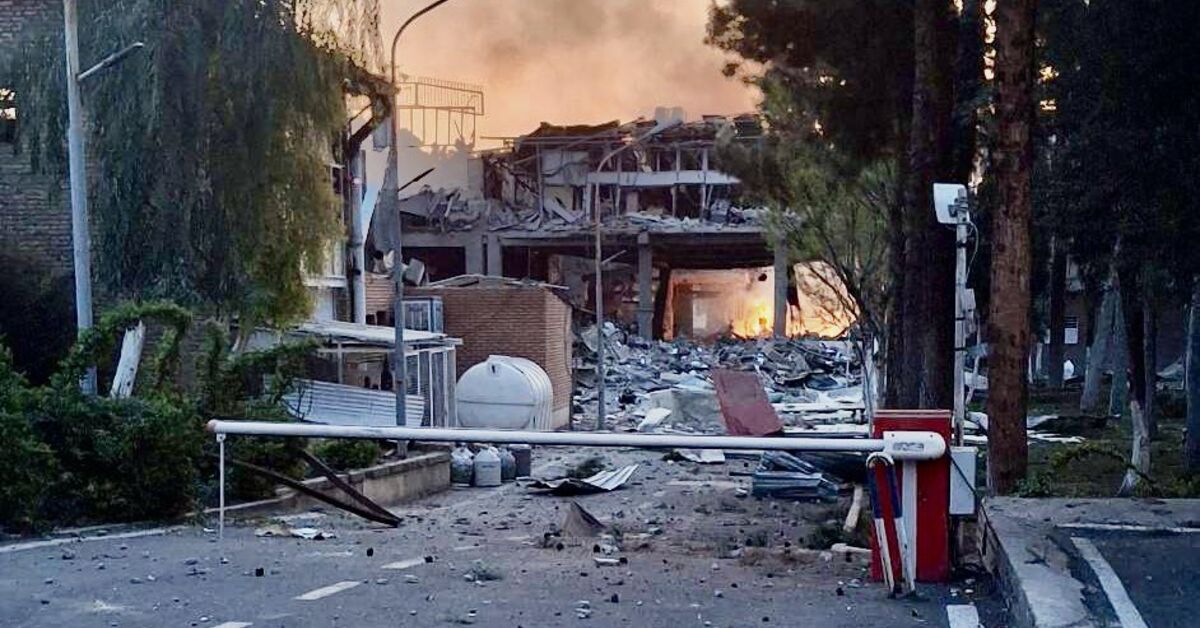
Iranian sources report that coordinated airstrikes by the United States and Israel targeted the Pasteur Institute in Tehran, which has been a cornerstone of Iran's healthcare system for over a century. This attack occurs amid increasing internal and external pressures on the Iranian regime.
The Pasteur Institute, established in 1920, plays a vital role in developing vaccines and conducting scientific research related to public health. Iranian authorities have confirmed that the attack caused significant damage to the facilities, threatening the continuity of healthcare services provided to citizens.
Details of the Incident
According to reports, the airstrikes occurred late at night, targeting the main buildings of the institute. The Iranian Ministry of Health reported that the attack resulted in injuries among the staff at the institute, in addition to the destruction of valuable research equipment. Emergency teams were dispatched to the site to provide assistance.
These airstrikes come amid escalating tensions between Iran and both the United States and Israel, with Tehran accusing the two countries of interfering in its internal affairs. Iranian officials condemned the attack, deeming it a blatant violation of national sovereignty.
Background & Context
Historically, relations between Iran and the United States have been fraught with tension since the Islamic Revolution in 1979. Since then, the United States has taken several steps to pressure Iran, including imposing economic and military sanctions. In recent years, Israel has increased its military activities against Iran, particularly due to concerns over its nuclear program.
The Pasteur Institute is not just a research institution; it symbolizes Iran's scientific capability. It has played a pivotal role in developing vaccines during various epidemics, including the coronavirus. The attack on the institute reflects an unprecedented escalation in the conflict between Iran and its adversaries.
Impact & Consequences
The attack on the Pasteur Institute may have far-reaching consequences for Iran's healthcare system. The destruction of research facilities could delay the development of necessary vaccines and treatments, adversely affecting public health in the country. Furthermore, this attack may increase public discontent towards the government, especially amid the difficult economic conditions Iran is facing.
On the international front, this escalation could heighten tensions in the Middle East, raising fears of a broader conflict. Iran may seek to bolster its military capabilities in response to this attack, increasing the risk of military escalation in the region.
Regional Significance
Developments in Iran are of significant importance to neighboring Arab countries. The tensions between Iran and Israel could impact regional security, as the area may witness an escalation in military operations. Arab nations wary of Iranian influence may see this attack as an opportunity to strengthen their alliances with the United States and Israel.
In conclusion, the attack on the Pasteur Institute in Tehran marks a turning point in the conflict between Iran and its adversaries. As tensions escalate, the question remains how Iran will respond to these challenges and whether it will affect stability in the region as a whole.