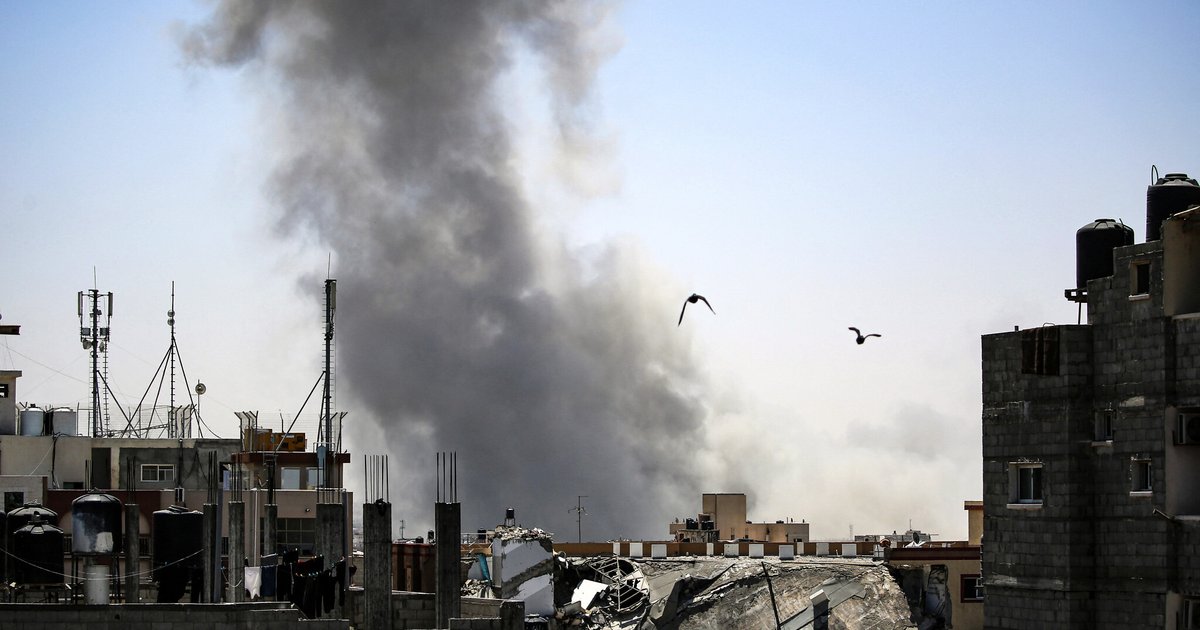
Two gas facilities in Iran were hit by US-Israeli airstrikes, with Iranian media confirming today, Tuesday, that the attacks targeted vital infrastructure in both Isfahan (central) and Khorramshahr (southwest). This military escalation comes despite President Donald Trump's announcement to postpone targeting Iranian energy facilities for five days.
The Iranian news agency "Fars" reported that one of the strikes targeted the natural gas infrastructure in Isfahan, while the other hit the gas pipeline serving the Khorramshahr power plant. The agency clarified that the bombardment affected the gas management building on Kaveh Street in Isfahan, resulting in damage to the building and adjacent residential structures.
Details of the Incident
The agency also reported the targeting of the gas pipeline supplying the electricity production station in Khorramshahr, noting that there were no casualties and that energy supply to the city remains uninterrupted. This attack follows a day after Trump announced "good and productive" talks with Iran, asserting that the United States had engaged in discussions with an unnamed Iranian official, which Tehran denied.
In a related context, the US Central Command announced that it has carried out extensive military strikes against more than 9,000 targets within Iran since the beginning of the operation, confirming the destruction of over 140 Iranian vessels as part of these attacks. The command explained that the strikes targeted command centers and facilities of the Iranian Revolutionary Guard, in addition to missile launch sites and factories for producing missiles and drones.
Context and Background
Since February 28, Israel and the United States have been waging a war against Iran, resulting in the deaths of hundreds, including Supreme Leader Ali Khamenei and security officials. Tehran has responded by launching missiles and drones towards Israel, with the Israeli army issuing alerts today, Tuesday, regarding new Iranian missile attacks.
In this context, a strong explosion was heard over Jerusalem, prompting the Israeli army to send search and rescue teams to a damaged building following the launch of two batches of Iranian missiles. The Israeli army reported that it detected an Iranian missile attack targeting central Israel, indicating that it is working to intercept it.
Military Escalation's Impact and Consequences
The military escalation between the United States and Israel on one side and Iran on the other has led to a rise in oil prices, especially following Tehran's announcement on March 2 to restrict navigation in the Strait of Hormuz. This escalation could exacerbate economic conditions in the region and heighten tensions among regional powers.
Moreover, the continued military pressure on Iran may push it to take more extreme measures, increasing the likelihood of a broader conflict in the region. This escalation poses a threat to regional security, as it can affect the stability of neighboring countries.
Impact on the Arab Region
This military escalation represents a direct threat to Arab security, as neighboring countries could be significantly affected by any further escalation. The ongoing military pressure on Iran could lead to unpredictable reactions from Tehran, which may negatively impact security and stability in the region.
In conclusion, the situation in the region requires close monitoring, as any further escalation could lead to severe consequences for regional and international security. The international community must intervene to mitigate military escalation and avoid further human and material losses.