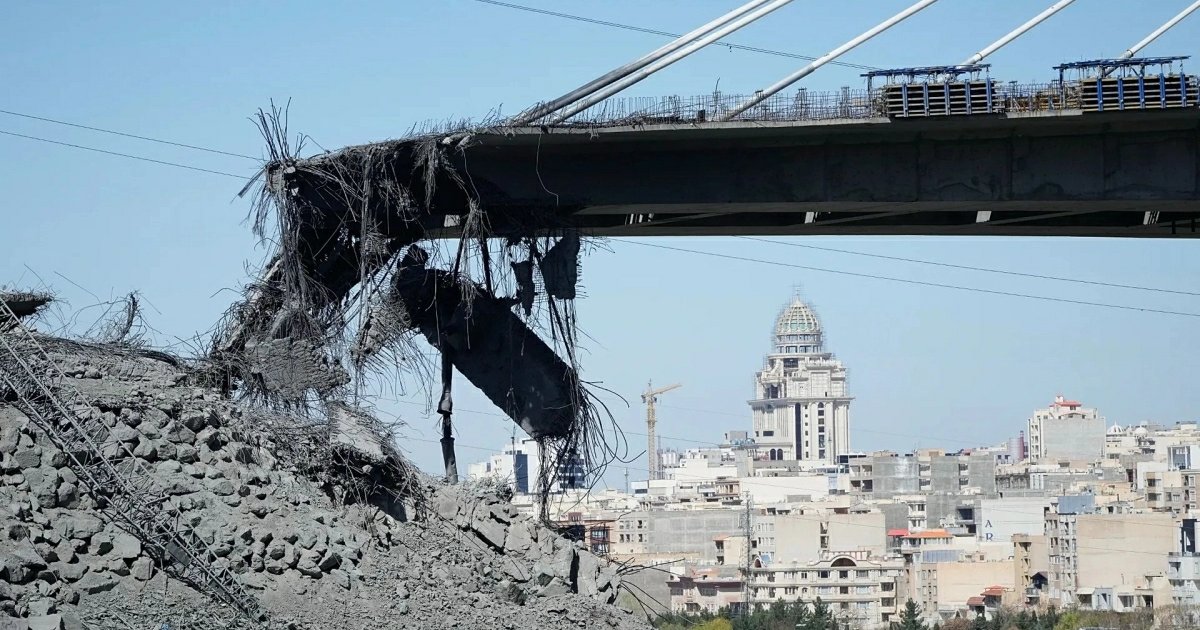
Iran has announced that its infrastructure has been subjected to several airstrikes by the United States and Israel, targeting vital bridges and roads in various regions of the country. According to official reports, a bridge near the holy city of Qom and another in Kashan were destroyed, leading to the deaths of two people and injuries to three others.
A major road in northern Iran linking the cities of Tabriz and Tehran was also closed following the attack, which occurred approximately 90 kilometers from Tabriz. A Telegram channel affiliated with the Iranian Revolutionary Guard confirmed that the strike targeted an overpass, while the Mizan news agency reported strikes on railway lines in the city of Karaj, resulting in the cancellation of all trips to Mashhad, Iran's second-largest city.
Details of the Incident
Reports continue to emerge regarding the damage inflicted on Iranian infrastructure, with the IRNA news agency stating that there has been a power outage in areas of Karaj and Fardis following the destruction of power transmission lines and a substation. Meanwhile, Israeli forces confirmed that they carried out a series of airstrikes targeting what they described as "infrastructure sites," without providing specific details about these locations.
In a related context, U.S. President Donald Trump has threatened to target Iranian infrastructure if Tehran does not agree to a deal to end the conflict, indicating that he is considering destroying everything and seizing oil. The Mehr news agency reported that the strikes also targeted the strategic Khark Island, a vital hub for Iranian oil exports.
Background & Context
Historically, U.S.-Iranian relations have been marked by increasing tensions, especially following the U.S. withdrawal from the nuclear agreement in 2018. Since then, Washington has imposed stringent economic sanctions on Iran, significantly impacting its economy. Khark Island, which exports about 90% of Iran's oil, is a strategic point in this conflict, as Iran relies on it to export its oil to Asian markets.
These developments come at a sensitive time, as the deadline set by Trump for Iran regarding the reopening of the Strait of Hormuz, a vital passage for global oil trade, approaches. U.S. threats to destroy Iranian infrastructure raise concerns about a potential military escalation in the region.
Impact & Consequences
These airstrikes could escalate tensions in the region, as Iran may respond to these attacks with military operations or strikes against U.S. or Israeli interests in the area. Targeting vital infrastructure could further impact the Iranian economy, increasing pressure on the Iranian government.
Concerns are growing that these events could lead to a comprehensive military escalation in the Middle East, where any Iranian reaction could provoke military responses from the United States and its allies, threatening the stability of the entire region.
Regional Significance
Arab countries are directly affected by these developments, as the rising tensions between Iran and the United States could impact regional security. Gulf states, which rely on regional stability to secure their oil exports, are closely monitoring these events, as any escalation could have negative effects on global oil markets.
In conclusion, the situation in Iran and the mutual threats between Tehran and Washington remain of significant concern, as any new developments could greatly affect security and stability in the region.