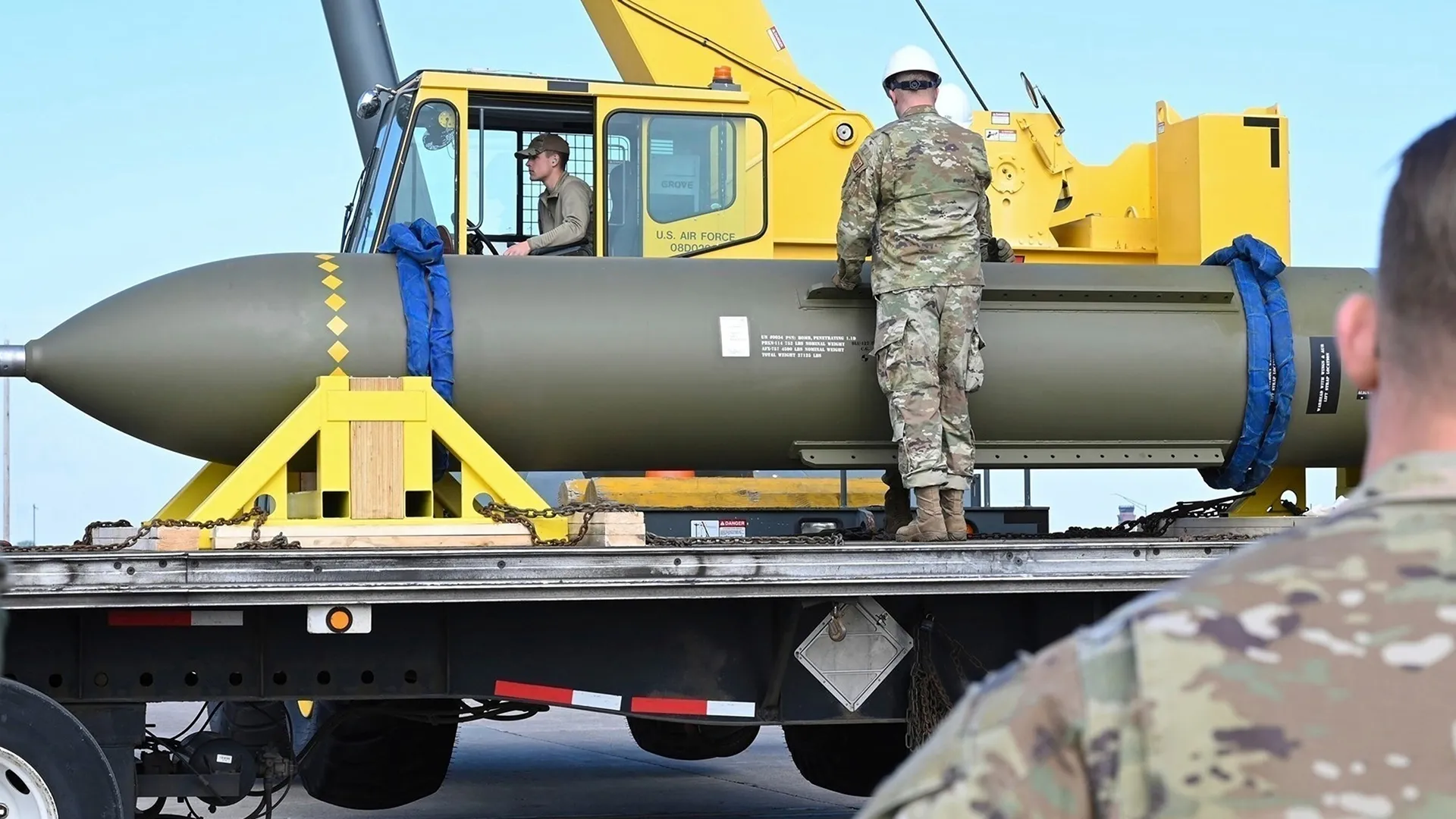
In a notable military escalation, the United States and Israel have conducted airstrikes on strategic sites in the Iranian city of Isfahan, targeting vital facilities that include nuclear and industrial centers. Military and strategic expert Colonel Nidal Abu Zaid confirmed that the bombing was based on intelligence indicating the presence of fortified sites in the city, where bunker-busting munitions such as GBU bombs were used.
Colonel Abu Zaid explained that the use of these munitions requires advanced aircraft such as the F-16 and F-35, indicating the nature of the direct targeting. He noted that the U.S. stockpile of these munitions is limited, raising questions about the sustainability of this type of military operation.
Details of the Event
Isfahan, which houses the Natanz nuclear facility and a military industries complex, witnessed extensive airstrikes on Monday evening, with an American official reporting an attack on a large ammunition depot. The Wall Street Journal quoted the official stating that the bombing was carried out with a significant quantity of armor-piercing munitions.
In a related context, former U.S. President Donald Trump posted a video showing massive explosions believed to be the result of the airstrikes, without commenting on the footage. On the other hand, the Israeli military announced a series of intensive attacks on Iranian targets in the city.
Context and Background
These developments come at a sensitive time, as the region is experiencing heightened tensions between Iran and Israel. Iran, for its part, has launched a new wave of missiles towards Israel, targeting areas such as Tel Aviv and Bnei Brak, reflecting an escalation in Iran's response to military pressures.
Colonel Abu Zaid pointed out that Petah Tikva contains the Israeli military industries complex, making it a potential target for Iranian retaliation. Additionally, the Bnei Brak area, which has a majority of religious Jews, has been subjected to inaccurate targeting, raising concerns about the precision of Iranian missiles.
Military Escalation and Its Impact
The military escalation between the United States and Israel on one side and Iran on the other could lead to serious repercussions for regional security. The losses incurred by Israel, where the Israeli army radio reported that over 5,500 Israelis are now homeless, indicate the impact of the war on civilians.
The Israeli Ministry of Health announced that 6,131 injured individuals have been transferred to hospitals since the war began, reflecting the growing humanitarian crisis. These figures also highlight the increasing pressure on the Israeli government to address the consequences of the war.
Impact on the Arab Region
The escalation in Isfahan could directly affect Arab countries, potentially leading to increased tensions between Iran and Gulf states. Any military escalation may also reflect on regional security, prompting Arab nations to adopt cautious stances.
In conclusion, the military escalation in Isfahan reflects a state of instability in the region and underscores the necessity of seeking diplomatic solutions to avoid further escalation. Current events highlight the importance of regional and international cooperation to achieve security and peace in the Middle East.