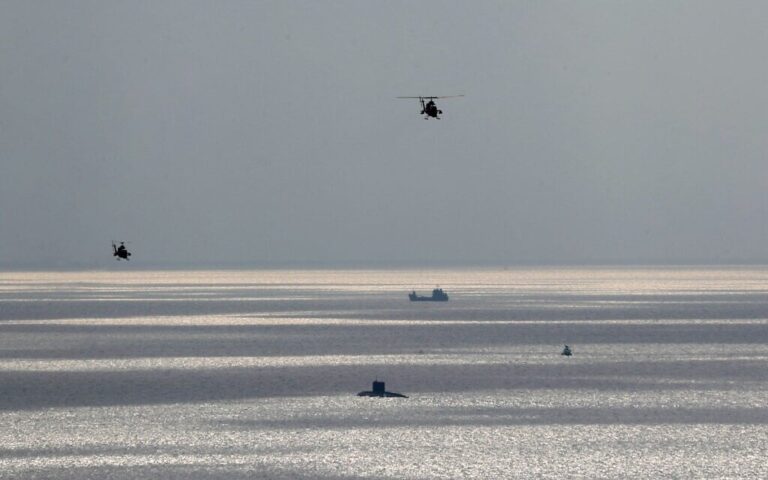
China has announced that the attacks launched by the United States and Israel on Iran are considered the original cause for the closure of the Strait of Hormuz, one of the most important maritime passages in the world. This statement comes at a time when tensions in the region are escalating, raising concerns about the stability of international maritime traffic.
The Strait of Hormuz, which connects the Arabian Gulf to the Gulf of Oman, is a vital artery for transporting oil and natural gas, with approximately 20% of the world's total oil exports passing through it. In recent years, the strait has witnessed numerous security incidents, leading to increased fears regarding the safety of navigation.
Details of the Incident
Recently, attacks on Iranian facilities have intensified, with U.S. and Israeli forces targeting strategic sites. These attacks are considered part of a broader strategy aimed at pressuring Iran to curb its nuclear and military activities in the region. These operations have elicited varied reactions from Tehran, which has threatened to respond to any aggressions.
The closure of the Strait of Hormuz could have serious repercussions for the global economy, as many countries rely on Iranian oil. Should the closure continue, oil prices could rise significantly, impacting the global economy and increasing pressures on importing countries.
Background & Context
Historically, the Strait of Hormuz has witnessed numerous crises, serving as a stage for military and political conflicts. In the 1980s, during the Iran-Iraq War, the strait experienced attacks on oil tankers, leading to international interventions. Today, tensions are resurfacing with the escalation of military activities in the region.
Iran considers the Strait of Hormuz part of its sovereignty and views any attack on its facilities as an infringement on its sovereignty. This stance reflects the escalating conflict between Iran and the United States, which began after Washington's withdrawal from the nuclear agreement in 2018.
Impact & Consequences
The closure of the Strait of Hormuz could lead to negative effects on the global economy, potentially causing oil prices to rise to unprecedented levels. Additionally, this closure may increase tensions between major powers, particularly between the United States and Russia, as both seek to enhance their influence in the region.
Moreover, this situation could lead to increased investments in alternative energy sources, as countries aim to reduce their dependence on Iranian oil. The region may also witness further military tensions, heightening the risk of new conflicts.
Regional Significance
The Arab countries neighboring Iran, such as the United Arab Emirates and Saudi Arabia, are among the most affected by the closure of the Strait of Hormuz. These countries heavily rely on exporting oil through this strait. Therefore, any escalation in tensions could impact the stability of these nations and increase security risks.
In light of these circumstances, Arab countries must take proactive steps to ensure their security and stability. Regional and international cooperation should be strengthened to address the security and economic challenges that may arise from these crises.
In conclusion, the situation in the Strait of Hormuz remains under observation, as any new developments could significantly impact regional and international security.