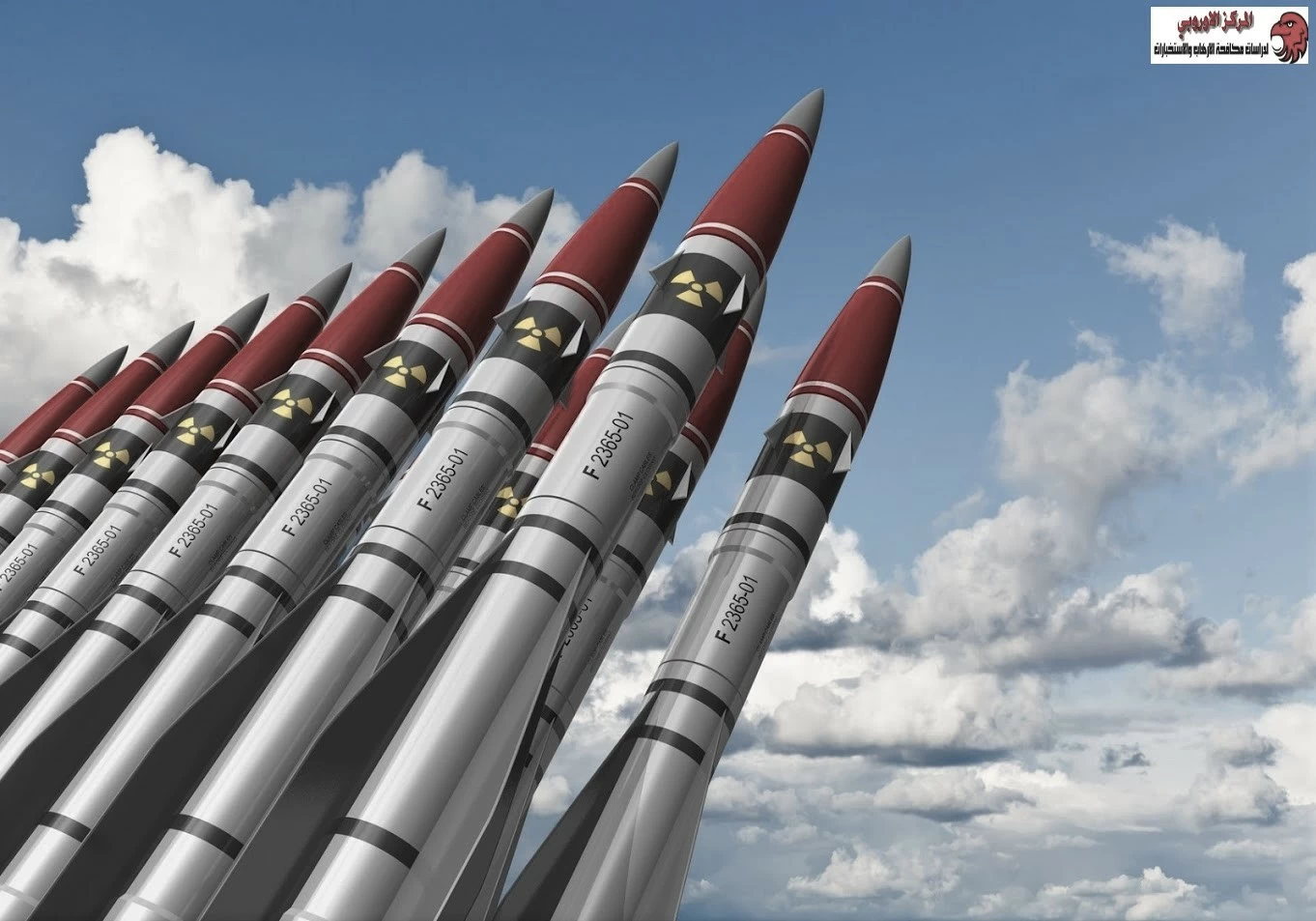
Bloomberg warns that the US-Israeli military operation against Iran could push the world towards a new round of nuclear arms race. Amid rising tensions, governments from the North Atlantic to the Western Pacific are increasingly and publicly discussing the need to possess their own nuclear arsenals.
In this context, some countries that previously relied on the US nuclear umbrella, such as Poland and Germany, have welcomed France's intention to expand its nuclear umbrella to include the European continent. These steps reflect a growing concern over security threats in the region and raise questions about the future of global nuclear stability.
Details of the Event
The agency noted that the United States, the only country in history to have used nuclear weapons against civilians, is currently considering the possibility of resuming nuclear tests. This comes at a time when fears are increasing that escalating conflict in the Middle East could lead to a new nuclear arms race, with discussions about possessing weapons of mass destruction even in countries that have pledged not to acquire them.
In this context, Rafael Grossi, the Director General of the International Atomic Energy Agency, stated that the possibility of possessing weapons of mass destruction is being discussed publicly, indicating that the presence of more nuclear weapons in more countries will not make the world a safer place, but rather the opposite. He emphasized the importance of adhering to non-proliferation standards that have served humanity for the past half-century.
Background & Context
At the same time, a draft report from the US Department of Defense (Pentagon) highlighted China's increasing military ambitions, revealing that Beijing has likely deployed over 100 intercontinental ballistic missiles at its latest three launch sites. Despite this, China has affirmed its commitment to a nuclear strategy for self-defense and follows a policy of no-first-use of nuclear weapons.
The US President had expressed a desire for the United States to resume nuclear weapons testing, but it is still unclear what form this will take. He also mentioned the possibility of working on a nuclear disarmament plan with China and Russia, yet the Pentagon draft report suggests that Beijing does not seem interested in this matter.
Impact & Consequences
Concerns are growing that these developments could escalate tensions between major nuclear powers, potentially threatening global security. If countries continue to develop their nuclear arsenals, this could lead to an unprecedented arms race, increasing the risk of armed conflicts that could have catastrophic consequences.
At the same time, these dynamics may affect international relations, as countries may seek to bolster their military alliances in the face of rising threats. This could reshape the balance of power in the world and complicate efforts to achieve international peace and security.
Regional Significance
For the Arab region, the escalation of nuclear tensions could negatively impact regional security. Some Arab countries may feel the need to enhance their military capabilities in response to potential threats, which could lead to the escalation of existing conflicts or the emergence of new ones.
These developments may also affect peace efforts in the region, as Arab countries may find themselves in a difficult position between the need to enhance their national security and the commitment to non-proliferation standards. Ultimately, maintaining stability in the region requires effective international cooperation and strong political will.
In conclusion, the escalation of military and nuclear tensions in the world poses a significant challenge to international security and peace. The international community must take urgent steps to ensure that we do not slip into a new nuclear arms race and work to enhance dialogue and cooperation among nations.