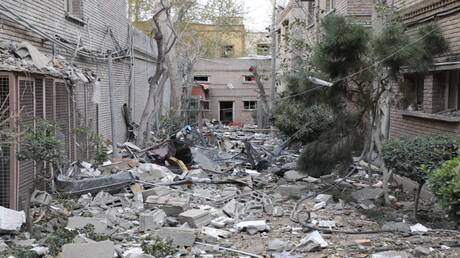
Iran has witnessed a new military escalation following targeted strikes on the Iranian Pasteur Institute for medical research, as well as the 'B1' bridge in the city of Karaj. These attacks come at a sensitive time, as tensions between major powers and Iran continue to rise.
The airstrikes carried out by the United States and Israel raise numerous questions about the strategic objectives behind this escalation. The Pasteur Institute, known for its research in medical sciences, is considered one of the vital centers in Iran, making its targeting a controversial step.
Details of the Incident
According to local sources, the strikes occurred late at night, resulting in significant damage to both the institute and the bridge. Iranian authorities have not yet reported any casualties, but images circulated on social media show widespread destruction.
The strikes are part of a broader policy of increasing pressure on Iran by the United States and its allies, as both sides seek to undermine Iran's nuclear activities, which they view as a threat to regional and international security.
Background & Context
Historically, relations between Iran and the United States have been marked by increasing tensions since the Islamic Revolution in 1979. These tensions have escalated particularly after the U.S. withdrawal from the Iranian nuclear deal in 2018, leading to the imposition of severe economic sanctions on Tehran.
Israel, for its part, considers Iran an existential threat and has carried out numerous military operations against Iranian targets in Syria and elsewhere. These recent strikes reflect an ongoing Israeli strategy to curb Iran's influence in the region.
Impact & Consequences
These strikes raise concerns about a larger escalation in the region, as Iran may respond to these attacks in unpredictable ways. Additionally, these events could affect relations between Iran and European countries, which are attempting to mediate in the nuclear dispute.
Moreover, the military escalation could lead to increased tensions between the United States and Russia, as Russia supports Iran in various fields, including military and political matters.
Regional Significance
Neighboring Arab countries are on cautious alert, as any military escalation could impact the stability of the region. Countries like Saudi Arabia and the UAE may feel concerned about the repercussions of these strikes on their national security.
The situation in Iraq and Syria may also be affected, given Iran's significant influence in both countries, and any escalation could lead to destabilization in these areas.
In conclusion, events in Iran remain under scrutiny, as the military escalation between the United States and Israel on one side and Iran on the other could have far-reaching implications for regional and international security.