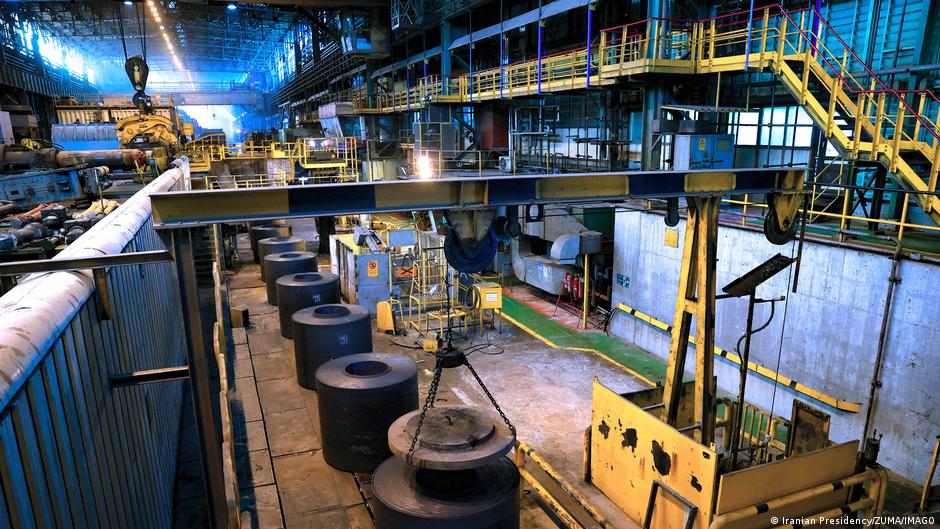
Airstrikes conducted by the United States and Israel on Iran's largest steel factories, namely the 'Mobarakeh' plant in Isfahan and the 'Khuzestan' facility, have sparked strong reactions within Iran. Discussions have centered around whether these sites are legitimate military targets. Some argue that these factories are linked to economic networks supporting the state and the Iranian Revolutionary Guard, while others view the strikes as an attack on the civilian industrial infrastructure of a country already under severe pressure from sanctions.
The steel industry is considered one of the most important industrial sectors in Iran, significantly contributing to the national economy. While the Iranian economy heavily relies on oil, Iran ranks among the top ten steel producers in the world, with an annual production of approximately 31.8 million tons, according to the World Steel Association. The 'Mobarakeh' plant alone generated export revenues of $860 million between March 2025 and January 2026.
Details of the Strikes
Reports indicate that the airstrikes caused severe damage to storage facilities and energy infrastructure at both plants. 'Argus Media', a specialist in energy and commodity markets, noted that the strikes are expected to reduce Iran's production and export capacity. While the 'Khuzestan' company has halted operations, the 'Mobarakeh' plant continues to operate despite the damages.
The steel industry is highly sensitive to electricity availability, as any damage to power plants or production lines significantly affects output. As the conflict continues, more resources and funding will be diverted towards the conflict, exacerbating the economic crisis in Iran.
Background & Context
Historically, the metals industry in Iran has been a major source of government revenue, but this sector has faced significant pressure due to international sanctions. In 2020, the U.S. Treasury Department imposed sanctions on entities linked to the 'Mobarakeh' plant, indicating that the Iranian metals industry generates billions of dollars in export revenues. Since then, this industry has become a primary target for political and military pressures.
Reports suggest that direct damages could range between $5 to $6 billion, but the broader impact on the national economy could be much larger, extending its effects to the construction and manufacturing sectors.
Impact & Consequences
Forecasts indicate that the damages resulting from the airstrikes could lead to a significant decrease in production, potentially forcing Iran to import steel instead of producing it locally. This situation highlights the long-term risk, as the visible damages from the strikes are just part of the story; failure to rebuild the affected parts could weaken production and supply chains.
The social consequences are also significant, as approximately 10,000 workers are employed at the 'Khuzestan' plant, meaning that a halt in production will directly impact these workers and their families. The reliance on the steel industry as a major source of foreign currency makes it essential to maintain stability in this sector.
Regional Significance
These events underscore the importance of the steel industry in the region, as Iran is one of the largest steel producers in the Middle East. Any decline in this industry could affect steel markets in neighboring countries, potentially leading to price increases or supply shortages. Additionally, economic stability in Iran has direct implications for neighboring Arab states, especially amid ongoing political tensions.
In conclusion, the airstrikes on Iranian steel factories demonstrate that military conflict extends beyond military dimensions, impacting economic and social factors that could complicate recovery efforts in the future.