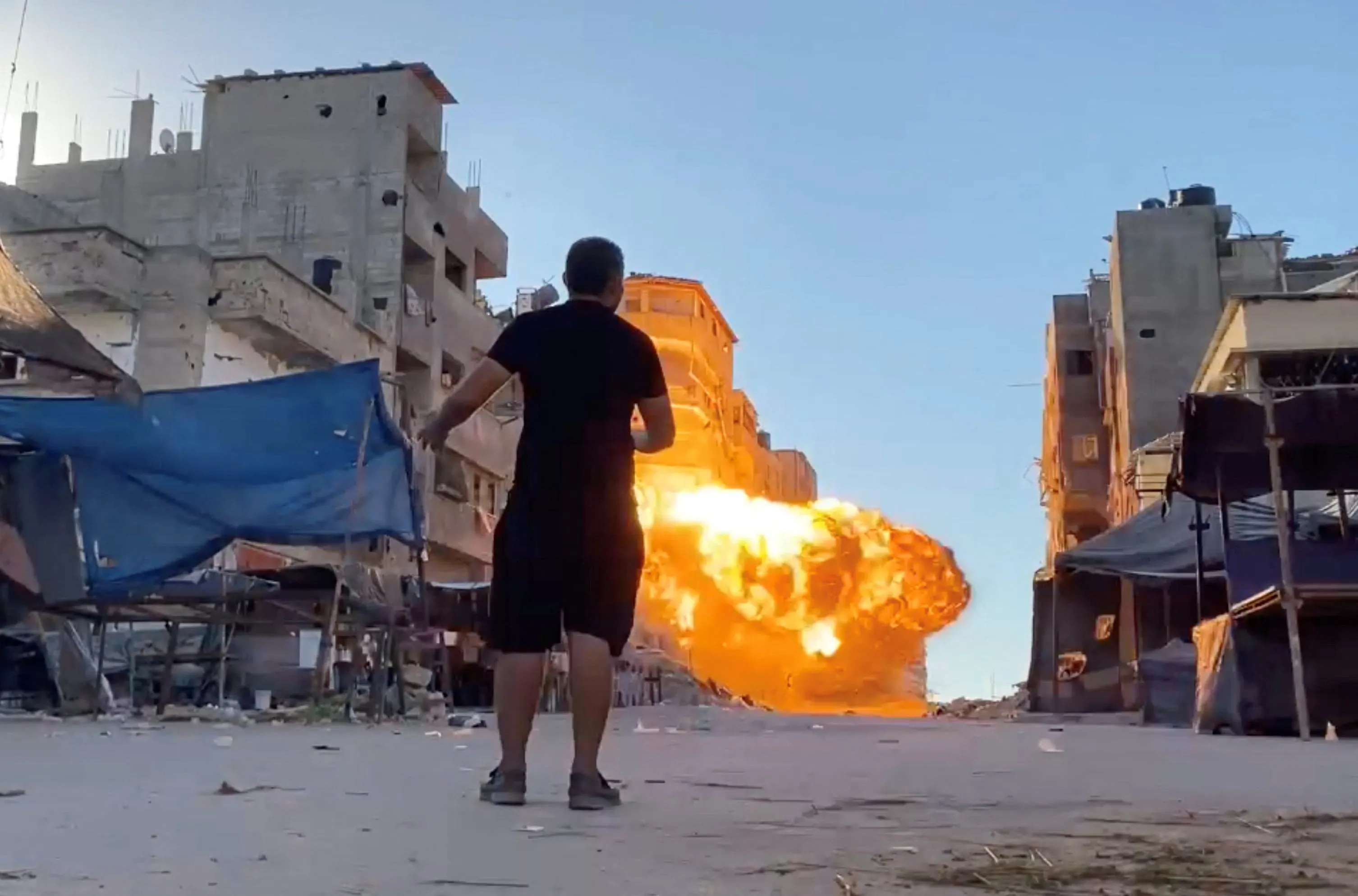
Tehran announced on Tuesday that military facilities in central Iran were subjected to airstrikes carried out by the United States and Israel, noting that the attacks also hit civilian locations. These developments come after clear threats from U.S. President Donald Trump, who warned of targeting energy facilities, oil wells, and water desalination plants in Iran.
These strikes represent a new escalation in the rising tensions between Iran and the United States, as Washington seeks to pressure Tehran by targeting its vital infrastructure. The Iranian Ministry of Defense confirmed that the attacks caused significant damage but did not provide precise details regarding the extent of the damage or the number of casualties.
Details of the Incident
According to reports, the airstrikes targeted several military sites in various regions of Iran, including facilities used for weapon storage and troop training. Civilian sites were also reported to be hit, raising concerns within the international community regarding the military escalation in the region.
These strikes come just days after Trump's statements indicating that the United States would not hesitate to use military force against Iran if it continued to threaten U.S. interests. Tehran considered these threats as a declaration of war, further intensifying tensions in the region.
Background & Context
The roots of the tensions between Iran and the United States date back several years, with relations deteriorating significantly after Washington's withdrawal from the Iranian nuclear deal in 2018. Since then, the United States has imposed severe economic sanctions on Iran, significantly impacting its economy.
In recent years, Iran has increased its military activities, including the development of its nuclear program, raising international concerns about its intentions. The presence of U.S. forces in the region, particularly in Iraq and Syria, adds another layer of tension between the two sides.
Impact & Consequences
Analysts suggest that these strikes could lead to a greater escalation in the conflict between Iran and the United States, which may negatively affect regional security. Iran is likely to respond to these strikes with retaliatory operations, increasing the risk of a large-scale armed conflict.
These events could also impact global oil prices, as Iran is one of the major oil-producing countries. Any escalation in the conflict could lead to a reduction in oil supplies, driving prices up and affecting the global economy.
Regional Significance
Neighboring Arab countries, such as Iraq and Saudi Arabia, are among those most affected by developments in Iran. Any military escalation could lead to an influx of refugees and increased sectarian tensions in the region.
Arab nations may find themselves compelled to take clear stances regarding these events, which could affect their relations with Iran, especially given the current tensions between Tehran and Riyadh.
In conclusion, the U.S. and Israeli strikes on Iran represent a turning point in the ongoing conflict, placing the region on the brink of military escalation that could have far-reaching implications for regional security and stability.